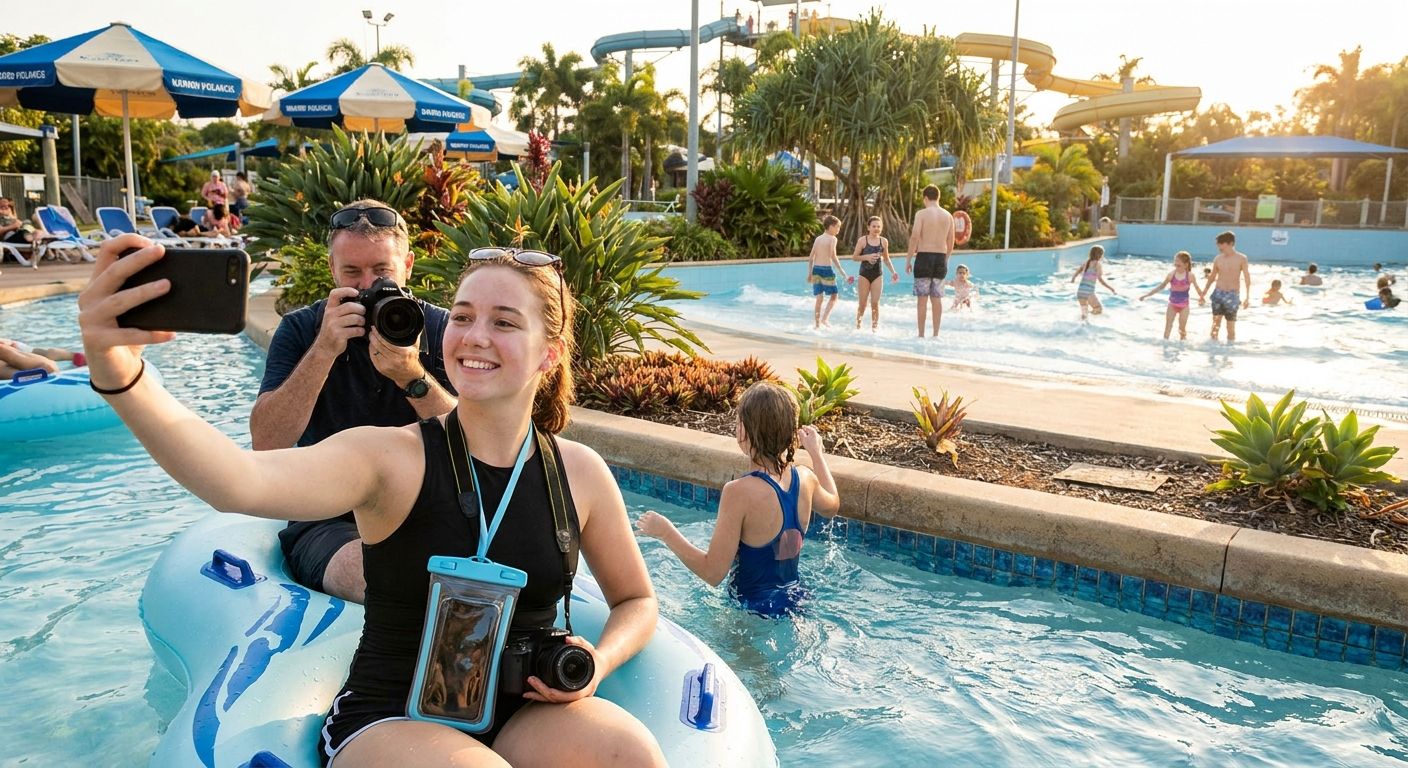
Influencer marketing for water parks is a paid and gifted content strategy that turns creators into your busiest ride: they show the splash, the queue-free fast lane, the cabana upgrade, and drive ticket sales during the exact weather window when demand spikes. Water parks live and die by short, weather-triggered booking windows, so the content needs to be fast to produce, fast to post, and built around visuals that sell a hot-day escape in under 15 seconds.
- Influencer marketing for water parks works best with a micro-plus-macro mix, not one big-name partnership.
- Weather-triggered posting windows beat pre-scheduled content for water parks — plan the brief, not the exact date.
- Track bookings and promo code redemptions from creator content, not just views and likes.
- Off-peak slots fill faster when influencer content is timed to shoulder-season weekdays, not just weekend peaks.
- FullyBooked runs influencer-to-paid-media handoffs for experience operators so creator content keeps selling after the post drops off feeds.
Why influencer marketing matters for water parks
Water parks sell an experience that's almost impossible to communicate in a static image — the scale of a slide, the speed of a drop, the temperature relief on a 30-degree day. Video-first platforms reward exactly that kind of motion content, and creators already own the audience that's actively planning a summer day out.
The other reason this channel matters in 2026: water park demand is brutally seasonal and weather-dependent, which means a huge share of bookings happen in short, unpredictable bursts. A single creator post that goes up the morning a heatwave is forecast can outperform a week of scheduled paid social, because it looks like a genuine same-day recommendation rather than an ad.
Operators who treat influencer marketing as a one-off summer stunt miss the bigger opportunity: creator content is reusable across paid retargeting, email, and organic social long after the original post stops getting reach.
Update your creator targeting before you reach out
Most water parks default to whoever has the biggest local following, and it's the wrong starting filter. Segment first, then find creators who already speak to that exact segment.
- Family day-trip creators (parents posting weekend plans, school holiday content)
- Local lifestyle and "things to do" accounts covering your region
- Teen and young-adult creators for thrill-ride and slide content
- Group and hen/stag content creators if you run adult sessions or after-hours events
- Fitness and wellness creators if you have a lazy river or wave pool wellness angle
Build a micro-plus-macro influencer mix
A single macro-influencer post gets reach; a spread of micro-influencer posts gets trust and local search visibility. Water parks get the best return blending both rather than betting the whole budget on one name.
- 1-2 macro or regional creators for a launch moment (new slide, park reopening, headline event)
- 6-10 micro-influencers (10k-80k followers) for sustained, believable coverage through the season
- A rolling family-creator gifting programme for recurring, low-cost content
- At least one creator with an audience outside your usual radius, to test new catchment areas
- A UGC-only tier (no paid fee, ticket comp only) to keep the content pipeline full between paid drops
Time campaigns to weather, not just the calendar
A scheduled post for "June 14th" is a guess. A brief that says "post within 24 hours of a confirmed 25-degree-plus forecast" turns creator content into a same-day booking driver. This is where an experienced operator or agency partner earns its keep — coordinating weather triggers, creator availability, and paid boosting all at once is a logistics job, not a content job.
- Build weather-trigger clauses into creator contracts, not fixed posting dates
- Keep a standing shortlist of creators who can turn content around same-day
- Pre-approve one flexible brief template so creators aren't waiting on sign-off
- Reserve part of the budget specifically for reactive, weather-driven boosts
Brief influencers on safety, logistics and permissions
Water parks carry more filming friction than most attractions — wet equipment, safety briefings, other guests in shot, and slide-specific filming restrictions. A generic influencer brief written for a retail brand will get you rejected footage or a safety incident.
- Confirm which rides and zones allow filming and which don't
- Provide waterproof phone cases or a designated GoPro slot for ride footage
- Brief creators on model-release requirements for other guests caught in frame
- Set a clear do-not-film list (staff-only areas, changing zones, queue overflow points)
Use TikTok and Reels to capture the wow moment
Short-form video is where water park content performs hardest, because the format rewards a single visual payoff — the drop, the splash, the reaction shot. A TikTok-first approach built specifically for experience brands outperforms a repurposed Instagram grid post nearly every time.
- Prioritise POV footage from the ride itself over third-person shots
- Cut the first 2 seconds to the payoff, not the walk-up
- Use trending audio only if it fits the pacing of the ride footage naturally
- Post the same content as both a Reel and a TikTok with native captions, not cross-posted watermarks
Turn creator content into paid retargeting
Organic reach on a creator post fades within 48-72 hours. The bigger return comes from lifting the best-performing clips into paid spend once you know which ones convert. This is the step most water parks skip, and it's the difference between one good week and a full-season lift in bookings. FullyBooked runs this handoff for experience operators — pulling the top-performing creator assets into paid media and lifecycle campaigns once organic engagement data confirms what's working.
- Pull top-performing clips by watch-time and comment rate, not just likes
- Run them as paid social ads with a booking link, not just a link-in-bio
- Layer retargeting ads to site visitors who watched but didn't book
- Rotate creative every 10-14 days to avoid ad fatigue during peak season
Measure bookings, not vanity metrics
Follower count and view count tell you reach, not revenue. The metric that matters is bookings tied to a specific creator, tracked through a unique promo code or UTM link.
- Give every creator a unique discount code or booking link
- Track cost-per-booking by creator, not just cost-per-post
- Compare creator-driven bookings against your standard paid media cost-per-acquisition
- Re-book only the creators whose codes actually converted last season
Influencer marketing options for water parks compared
| Option | Best for | Key limitation |
|---|---|---|
| DIY outreach via Instagram/TikTok DMs | Parks with in-house social staff and time to chase replies | Slow response rates, no vetting for audience quality |
| Influencer marketplace platforms | Parks wanting self-serve creator discovery at scale | Weak on weather-trigger timing and safety briefing |
| UGC-only gifting programme | Filling content gaps between paid campaigns | Inconsistent quality, no reach guarantee |
| Specialist agency (FullyBooked) | Parks that want creator content tied to a paid media and retargeting funnel | Requires a briefing and budget commitment up front |
Verdict: water parks get the strongest return from a micro-plus-macro creator mix paired with paid retargeting on the top-performing clips — a single influencer post without a media follow-up rarely moves the booking needle past its first 48 hours.
“A single creator post that goes live the morning a heatwave is forecast can outperform a week of scheduled paid social.”
Common mistakes water parks make with influencer marketing
- Booking creators too far in advance. Fixed-date contracts miss weather windows; water parks need flexible, trigger-based scheduling instead.
- Ignoring off-peak weekdays entirely. Creator content aimed only at weekends leaves midweek slots empty — pair campaigns with tactics from filling off-peak slots.
- Skipping the safety brief. Wet environments and slide restrictions catch first-time water park creators off guard, leading to unusable or unsafe footage.
- No unique tracking code per creator. Without a code or link, there's no way to prove which creator actually drove bookings.
- Treating it as a one-season tactic. Seasonal parks that only run influencer campaigns in peak summer miss shoulder-season demand covered in seasonal campaigns for family attractions.
Get an influencer plan built for your water park
FullyBooked runs creator, paid media and retention campaigns for experience operators.
FAQ
What's the best influencer type for water parks?
A mix of micro-influencers (10k-80k followers) for sustained local coverage and one or two macro creators for launch moments performs best for water parks in 2026. Micro-influencers convert better on cost-per-booking; macro creators drive reach for headline events like a new slide opening.
Is TikTok or Instagram better for water park marketing?
TikTok generally outperforms Instagram for water park content because short-form, POV ride footage matches the platform's native format. Instagram Reels still works well for repurposing the same clips to a slightly older, family-planning audience.
How much does influencer marketing cost for a water park?
Costs vary widely by creator tier, region and whether the arrangement is gifted, paid, or a hybrid. Water parks typically start with a UGC and micro-influencer mix before scaling spend toward paid creator partnerships once conversion data confirms return.
Should influencer content be tied to paid ads?
Yes — organic reach on a creator post typically fades within 48-72 hours, so pulling top-performing clips into paid social and retargeting extends their impact through the rest of the season.
How do you measure influencer marketing ROI for a water park?
Give each creator a unique promo code or booking link and track bookings, not just views or likes. Compare the cost-per-booking from creator content against your standard paid media acquisition cost.
Do influencer campaigns work for off-peak water park bookings?
Yes, when timed to shoulder-season weekdays rather than only weekend peaks. Off-peak-specific creator briefs help fill slots that standard peak-season content ignores.
What content works best for water park influencer posts?
POV ride footage cut to the payoff moment within the first two seconds performs best on short-form video. Third-person walk-up shots and slow intros underperform on TikTok and Reels.
Can small or independent water parks run influencer marketing?
Yes — a UGC-only gifting programme with local micro-influencers costs far less than paid creator partnerships and still builds a content pipeline through the season.
One last thing
The water park content that performs longest past its post date isn't the biggest splash shot — it's the clip that shows queue length or wait time, because it answers the exact question a parent is Googling on a hot Saturday morning: is it worth going today. Brief at least one creator per campaign to capture that specific angle.


