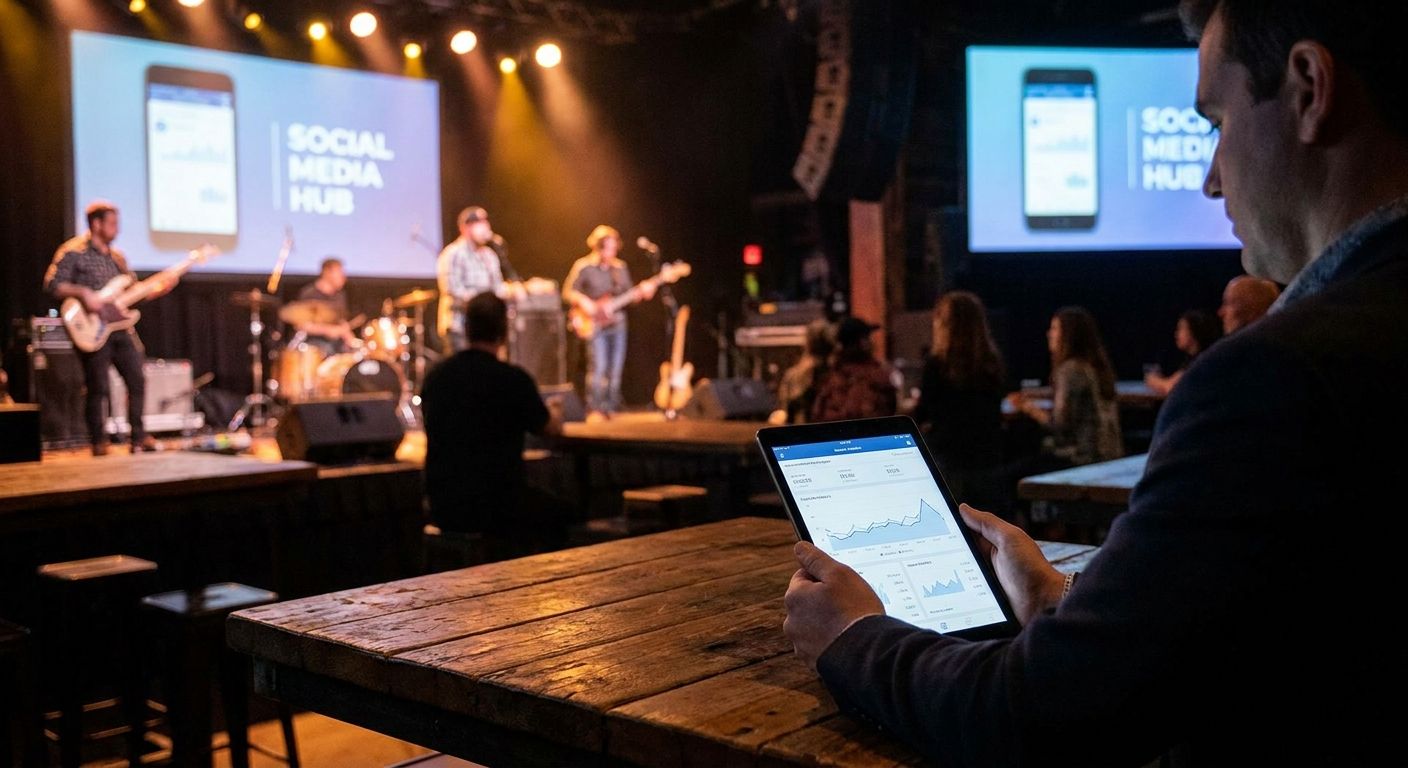
Entertainment venues that treat social media as a posting calendar lose the booking war to venues that treat it as a booking channel. Here's the ranked breakdown of what actually fills seats in 2026 — not what gets likes.
- The best social media strategy for entertainment venues in 2026 leads with short-form video, not static posts.
- Influencer and UGC partnerships close the trust gap branded content can't — a Buy for every venue type.
- Paid boosting of proven organic posts beats blanket ad spend on new creative. Wait before scaling budget.
- Retention content — loyalty shoutouts, repeat-visit reminders — keeps existing bookers coming back. Buy.
- Caption-only feed posts with no video or paid support are a Skip going into 2026.
Why this matters
Escape rooms, trampoline parks, comedy clubs and immersive experiences all compete for the same seven seconds of scroll time. Algorithms across every major platform reward watch time and shares heading into 2026 — not likes, not follower count.
A venue posting a static flyer twice a week loses to a venue posting nine-second walkthrough clips daily, even with a fraction of the follower count. Fully Booked has managed social alongside paid media and retention campaigns for 50+ operators, generating £85M+ in booking revenue and 3M+ tickets sold across venue types. That's the dataset behind this ranking, not guesswork. If you're still building the fundamentals, start with how to sell more tickets for your venue or event before layering on channel-specific tactics.
How this list is ranked
Each tactic is ranked on four things: booking conversion (does it move people from scroll to purchase), effort required relative to a small venue team, cost efficiency against paid spend, and repeatability across a 12-month calendar. Tactics that only work once — a viral fluke, a one-off stunt — score lower than tactics a venue can run every week without burning out its team.
The ranking draws on patterns seen across escape rooms, trampoline parks, comedy clubs, haunted houses, adventure parks and immersive experiences managed through 2026. Venue type changes the execution, not the ranking order.
The ranked list
1. Short-form video content — the format carrying the booking button
Vertical video — Reels, TikTok, Shorts — is the only format on every major platform's feed that gets algorithmic priority over static images in 2026. Entertainment venues have an unfair advantage here: the product is visual by default. A haunted house jump-scare, a trampoline park backflip, a comedy club crowd reaction — none of it needs a production budget, just a phone and a booking link in the caption.
The mistake most venues make is treating video as an afterthought to the feed grid instead of the lead format. Buy — this is the base layer every other tactic in this list sits on top of.
2. Influencer and UGC partnerships — the trust shortcut
A stranger's video of themselves at your venue converts better than your own polished ad, because it reads as proof rather than pitch. This is the tactic that closes the credibility gap fastest for new venues with no review history yet.
Adventure parks and theme parks run this particularly well because the experience is inherently shareable — see influencer marketing for adventure parks for how the seeding and briefing process works in practice. Buy — cheaper per booking than most paid channels once the creator relationships are set up.
3. Paid boosting of proven organic posts — the amplifier
Instead of building ad creative from scratch, take the organic post that already outperformed the rest of the feed and put spend behind it. The algorithm has already told you what works; paid media just extends the reach.
This works especially well for immersive experiences and pop-up formats with a fixed run date, where the booking window is short and every day of spend needs to count — see paid media for immersive experiences for the mechanics. Wait on committing full monthly budget until you've confirmed which organic post format is converting for your venue specifically.
4. Behind-the-scenes and staff-led content — the low-budget maintenance play
Staff prepping an escape room set, a bartender building a themed cocktail, a karting track mechanic checking a kart — this content is cheap, always available, and builds the kind of familiarity that turns first-time bookers into repeat ones.
It won't drive a spike in bookings on its own, but it fills the gaps between higher-effort content and keeps the feed from going stale. Hold — keep it running if you're already doing it, but don't expect it to carry the strategy alone.
5. Retention and community content — the repeat-visit engine
Most venues spend their entire social budget chasing new bookers and ignore the people who already showed up once. A loyalty shoutout, a "you were here last month, come back for X" post, or a members-only preview drives repeat visits at close to zero incremental cost.
Climbing gyms and museums run this well because the visit cadence supports it — see retention marketing for escape rooms for a version built around single-visit venues instead. Buy — the cheapest booking a venue gets in 2026 is the second one from the same customer.
6. Geo-targeted local awareness ads — the footfall driver
For venues that rely on local and regional foot traffic rather than destination travel, geo-targeted paid social reaches people who are physically close enough to book this weekend. It's a narrower audience than broad awareness campaigns, which is exactly why it converts better.
This tactic underperforms for destination attractions pulling from a wider radius. Wait until you've confirmed your booking data shows a genuine local-radius pattern before allocating budget here.
7. Generic branded graphic templates — the one to retire
A static graphic with your logo, a font, and an event date does not move through the feed in 2026. It gets buried under video content within minutes and rarely earns a share, which is the signal every algorithm now prioritises.
Venues still running this as their primary content format are spending time on the lowest-converting tactic on this list. Skip — redirect that design time into short-form video instead.
Get your venue's social strategy audited
See what's converting and what's wasting spend, venue-specific.
Comparison at a glance
| Tactic | Effort | Cost | Best for | Verdict |
|---|---|---|---|---|
| Short-form video | Low-medium | Low | Every venue type | Buy |
| Influencer/UGC partnerships | Medium | Low-medium | New venues, shareable formats | Buy |
| Paid boosting of top posts | Low | Medium | Time-limited or seasonal experiences | Wait |
| Behind-the-scenes content | Low | Low | Feed consistency | Hold |
| Retention/community content | Low | Low | Repeat-visit venue models | Buy |
| Geo-targeted local ads | Medium | Medium | Local footfall venues | Wait |
| Generic branded graphics | Low | Low | Nothing in 2026 | Skip |
How to put this into action
- Confirm which tactics fit your visit model first. A single-visit haunted house and a repeat-visit climbing gym need different weighting across this list, even though the ranking order holds for both.
- Track bookings, not engagement, as the success metric. Likes and comments are a proxy signal at best — the number that matters is tickets sold against the post or campaign.
- Don't run all seven tactics at once with a two-person team. Sequence short-form video and retention content first since they're the lowest-effort, highest-repeatability items on this list, then layer in influencer partnerships and paid boosting once the content engine is running.
FAQ
What's the best social media strategy for entertainment venues in 2026?
The best social media strategy for entertainment venues in 2026 combines daily short-form video, influencer and UGC partnerships, and paid boosting of proven organic posts. Static, caption-only content underperforms across every venue type this year.
How often should an entertainment venue post on social media?
Daily short-form video outperforms a weekly posting schedule for entertainment venues, because feed algorithms reward consistency and watch time over posting volume alone. A venue posting three strong videos a week beats one posting seven weak static images.
Is TikTok better than Instagram for venue marketing?
Neither platform wins outright — both reward vertical video with strong watch time in 2026. The right split depends on where your existing bookers already spend time, which shows up in your own page analytics rather than a general rule.
How much should a venue spend on paid social ads?
Budget should scale with booking volume and average ticket price rather than follow a fixed percentage rule. Start by boosting the organic post that already converts best, then scale spend once that pattern repeats.
Do escape rooms and trampoline parks need different social strategies?
The tactic order stays the same, but the weighting shifts. Trampoline parks lean harder on influencer content because the activity is visually dramatic, while escape rooms lean on retention content because repeat bookings drive more of the revenue.
What social media mistakes cost entertainment venues the most bookings?
Running generic branded graphics as the primary content format is the costliest mistake, because it gets buried by video content within minutes on every major platform. The second most common mistake is ignoring retention content and only chasing new bookers.
How long does it take to see results from a new social media strategy?
Early signal on booking-attributed clicks usually shows within a few weeks once short-form video and retention content are running consistently. Meaningful lift in bookings typically follows once paid boosting scales behind the proven organic posts.
Should venues manage social media in-house or work with an agency?
It depends on team bandwidth more than budget size. A venue with someone dedicated to content daily can run this in-house; a venue relying on shared staff time across multiple roles usually sees faster booking conversion working with a specialist partner.
One last thing
The venues getting the most out of social media in 2026 aren't the ones with the biggest follower counts — they're the ones that stopped treating retention content as an afterthought. A repeat booker costs almost nothing to reach again through a loyalty shoutout or a returning-customer post, yet most venue social calendars are built entirely around chasing first-time visitors.


