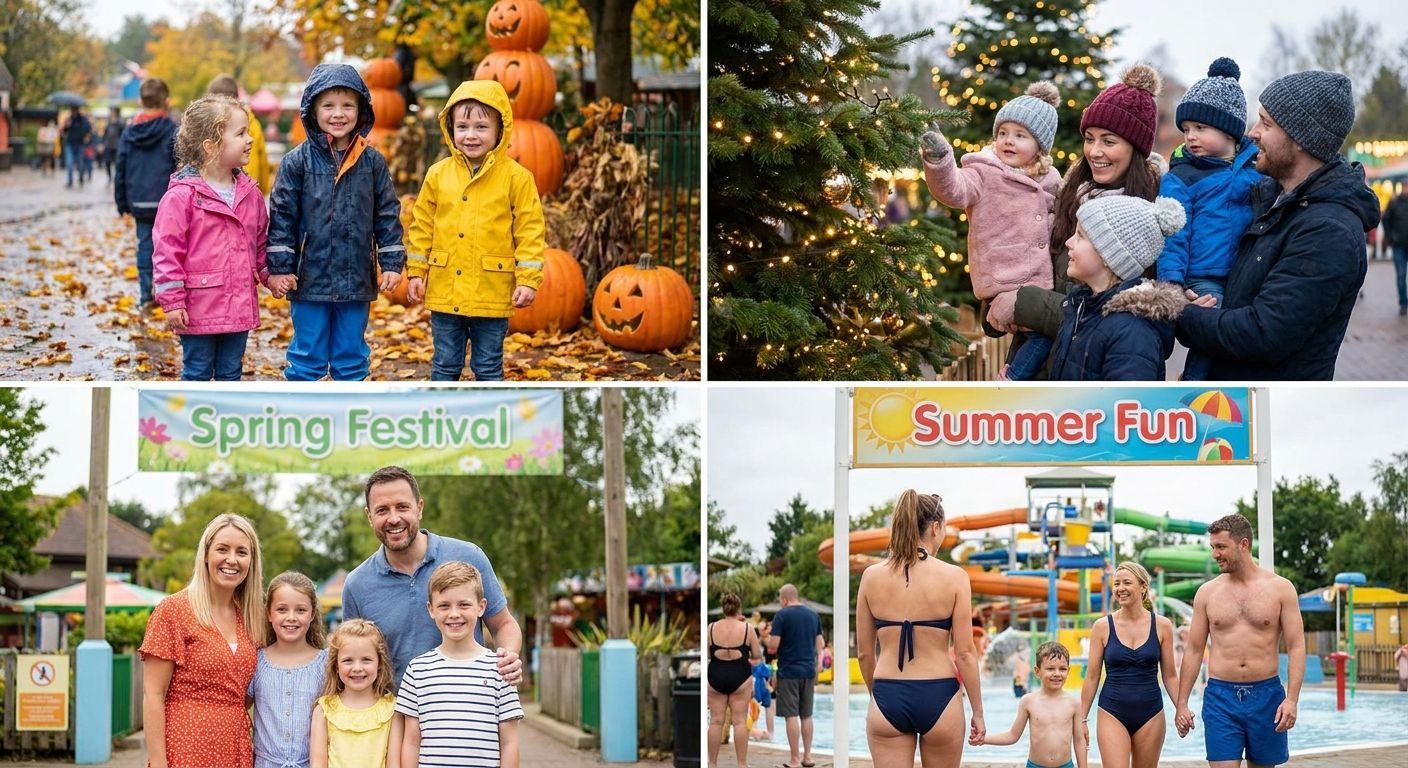
Family attractions live and die by the school calendar. Half-term, Halloween, Christmas and the six-week summer holiday decide whether a venue hits target or limps through a quiet month, and the best seasonal marketing campaigns for family attractions turn those fixed calendar dates into planned revenue, not lucky guesses.
- Halloween paid media for haunted attractions converts hardest in the two weeks before October 31, 2026 — Buy.
- Loyalty-led summer campaigns protect the six-week holiday without extra ad spend — Buy.
- Generic 'happy holidays' social posts with no offer or deadline get a Skip verdict every time.
- Easter influencer campaigns need booking six weeks before Easter Sunday, April 5, 2026, to land before the rush.
- Best seasonal marketing campaigns for family attractions in 2026 pair a fixed calendar date with a lead-time rule, not a vibe.
Why this matters
Most family attractions run the same three or four seasonal pushes every year — Halloween, Christmas, Easter, summer — and still get the timing wrong. The campaign goes live two weeks late, the offer copies last year's, and the budget gets spent evenly across the month instead of front-loaded before the date that actually drives bookings.
FullyBooked has planned seasonal campaigns across 50+ experience operators, generating £85M+ in ticket revenue from 3M+ tickets sold, and the pattern repeats: attractions that treat every season the same way leave money on the table in the two highest-earning months of the year. If you're still working out how to sell more tickets during peak season, the seasonal calendar is where the biggest single lever sits.
How this list is ranked
Each campaign type below is scored on three things: how reliably the season converts for family attractions, how much lead time it needs before the calendar date it depends on, and how it holds up against generic "seasonal" content with no offer attached. Fixed dates — Halloween on October 31, Bonfire Night on November 5, Easter Sunday on April 5, 2026 — are used as the anchor point for lead-time rules rather than vague "book early" advice. Campaigns that need CRM or past-booker data to work are flagged, because a loyalty push with no captured contact list isn't a campaign, it's a hope.
The ranked list
1. Halloween haunted-house paid media push — the reliable earner
October 31, 2026 is a Saturday, which means the single highest-converting weekend of the year lands with no competing school holiday to split attention. Haunted houses, escape rooms and immersive experiences see the sharpest spike in the fortnight before the date, and retargeting audiences built from earlier-October traffic convert at a materially lower cost than cold prospecting started in the same week.
Run paid social and search with Halloween-specific creative from the first week of October, not a generic "scary experience" ad recycled from summer. Attractions running paid media for haunted houses that start four weeks out consistently outsell campaigns launched inside the final ten days. Verdict: Buy.
2. Easter school holiday influencer campaign — the family reach play
Easter Sunday falls on April 5, 2026, giving family attractions a two-week school holiday either side of the date. Influencer content built around family days out reaches parents scrolling for half-term plans weeks before they book, which paid ads alone don't do as efficiently.
Booking creators six weeks ahead of the holiday matters more here than for any other season — Easter influencer slots fill fast because every theme park and adventure attraction wants the same creator calendar window. Theme parks running influencer marketing for theme parks in the run-up to Easter see content live before competitors lock in bookings. Verdict: Buy.
3. Six-week summer loyalty campaign — the quiet-month insurance
The UK summer holiday runs roughly mid-July to early September — six weeks of daily footfall potential, but also six weeks where a family attraction competes with every other day-out option in the country. New customer acquisition gets expensive across summer because every competitor is bidding on the same keywords.
The fix is retention, not more prospecting spend: past bookers who visited last Easter or half-term are cheaper to bring back than strangers found through cold ads. Attractions with structured loyalty programme ideas for experience brands turn a database of past visitors into repeat summer bookings without adding to the ad budget. Verdict: Buy.
4. October half-term flash campaign — the short fuse
Half-term in late October is a single week, not a season, and that changes the entire campaign shape. There's no time for a slow-burn content strategy — this is a paid-media sprint with a hard deadline, running from the Monday the school holiday starts to the Friday it ends.
The mistake most attractions make is running the same creative used for Halloween and calling it a half-term campaign. Trampoline parks and adventure venues that separate the two get a cleaner read on which offer actually moved bookings. Verdict: Consider — only worth a standalone push if the venue has a genuinely different offer to Halloween week.
5. Bonfire Night tie-in — the one-night wonder
November 5 is a fixed date every year, and it's a single-evening opportunity rather than a multi-week campaign. Venues with outdoor space, fireworks displays or evening entertainment slots can capture a spike of last-minute bookers searching in the 72 hours before the date.
This one lives or dies on local targeting and same-week urgency copy — "book tonight" performs, generic brand awareness doesn't. Verdict: Consider — strong for venues with an outdoor or evening offer, skippable for anyone without one.
6. Christmas grotto and festive pop-up campaign — the margin booster
December carries the highest average transaction value of the year for family attractions once grottos, festive add-ons and gift vouchers enter the mix. The campaign window is longer than Halloween's — realistically the first week of November through December 24 — which means creative needs to evolve three or four times rather than run static for eight weeks.
Attractions running festive pop-up formats alongside their core offer see the add-on revenue outperform ticket price alone. Verdict: Buy — the longest and most profitable seasonal window on the calendar.
7. New Year rebound campaign — the comeback play
January is the quietest month for most family attractions, but escape rooms, climbing gyms and axe-throwing venues buck the trend with "new year, new experience" positioning. The window to target is the first three weeks of January 2027 in the next cycle — after the Christmas spend hangover but before half-term picks back up.
This works as a retention play more than acquisition: past bookers respond to a January nudge better than cold prospects do in a month when everyone's ad budget is thin. Verdict: Consider — solid for activity-led venues, weak for anything purely seasonal like grottos.
Comparison at a glance
| Campaign | Anchor date (2026) | Lead time needed | Primary channel | Verdict |
|---|---|---|---|---|
| Halloween push | October 31 | 4 weeks | Paid media | Buy |
| Easter family reach | April 5 | 6 weeks | Influencer | Buy |
| Summer loyalty | Mid-July to early Sept | Ongoing (CRM) | Retention/email | Buy |
| October half-term | Last week of October | 2-3 weeks | Paid media | Consider |
| Bonfire Night | November 5 | 1-2 weeks | Paid social, local | Consider |
| Christmas festive | Nov 1 - Dec 24 | 5-6 weeks | Mixed | Buy |
| New Year rebound | Jan 2027 window | 2 weeks | Retention/email | Consider |
How to get these live
- Don't start Halloween or Christmas paid media inside the final two weeks. Retargeting audiences need time to build; a campaign launched ten days out is competing on cold traffic alone.
- Loyalty and retention campaigns are only as good as the contact list behind them. If past bookers were never captured at checkout, there's no audience to retarget in summer or January — fix the data capture before the campaign brief.
- Split the annual budget by season, not evenly by month. Halloween, Easter and Christmas carry more weight than a flat 12-way split allows — the marketing budget split for attraction operators should front-load spend into those three windows.
Get your 2026 seasonal calendar built
See how FullyBooked plans campaigns around your busiest dates.
FAQ
What's the best seasonal marketing campaign for family attractions in 2026?
Halloween and Christmas campaigns generally carry the highest revenue potential for family attractions in 2026, with Halloween converting hardest in the two weeks before October 31 and Christmas carrying the longest, highest-value window from early November through December 24.
Is Halloween or Christmas the bigger revenue period for attractions?
Christmas typically edges ahead on total revenue because of the longer campaign window and higher average transaction value from grottos and gift vouchers, while Halloween wins on conversion rate over a shorter, sharper period.
How much lead time does a half-term campaign need?
A half-term campaign needs 2-3 weeks of lead time given the single-week window, shorter than the 4-6 weeks recommended for Halloween, Easter or Christmas campaigns which run over longer periods.
Do family attractions need influencer marketing for every season?
No — influencer marketing performs best around Easter and summer when parents are actively researching family days out weeks ahead, while paid media and retargeting do more of the work for shorter windows like Halloween and Bonfire Night.
What's the cheapest way to run a summer campaign?
Retention marketing to past bookers is the cheapest route through the six-week summer holiday because it avoids the inflated cold-traffic costs every competitor is bidding on during the same period.
How early should Easter campaigns be booked in 2026?
Easter campaigns should be booked six weeks ahead of Easter Sunday, April 5, 2026, particularly influencer slots, which fill fast as every theme park and family attraction competes for the same creator calendar.
Is loyalty marketing worth it for family attractions?
Yes, loyalty marketing is worth it for family attractions with a captured database of past bookers, since it protects revenue during quiet months like January and reduces reliance on expensive summer acquisition spend.
What ruins a seasonal campaign for family attractions?
Launching creative inside the final two weeks before the anchor date, reusing the same offer across unrelated seasons, and running loyalty campaigns with no past-booker data all undercut a seasonal campaign's performance.
One last thing
The single biggest seasonal mistake seen across 50+ operators isn't the wrong season — it's running one static "book now" ad from October straight through January without refreshing it. Family attractions that swap creative every three weeks across the Halloween-to-New Year run keep audiences from going blind to the offer; the ones that don't watch performance flatten by December even while footfall stays high.


