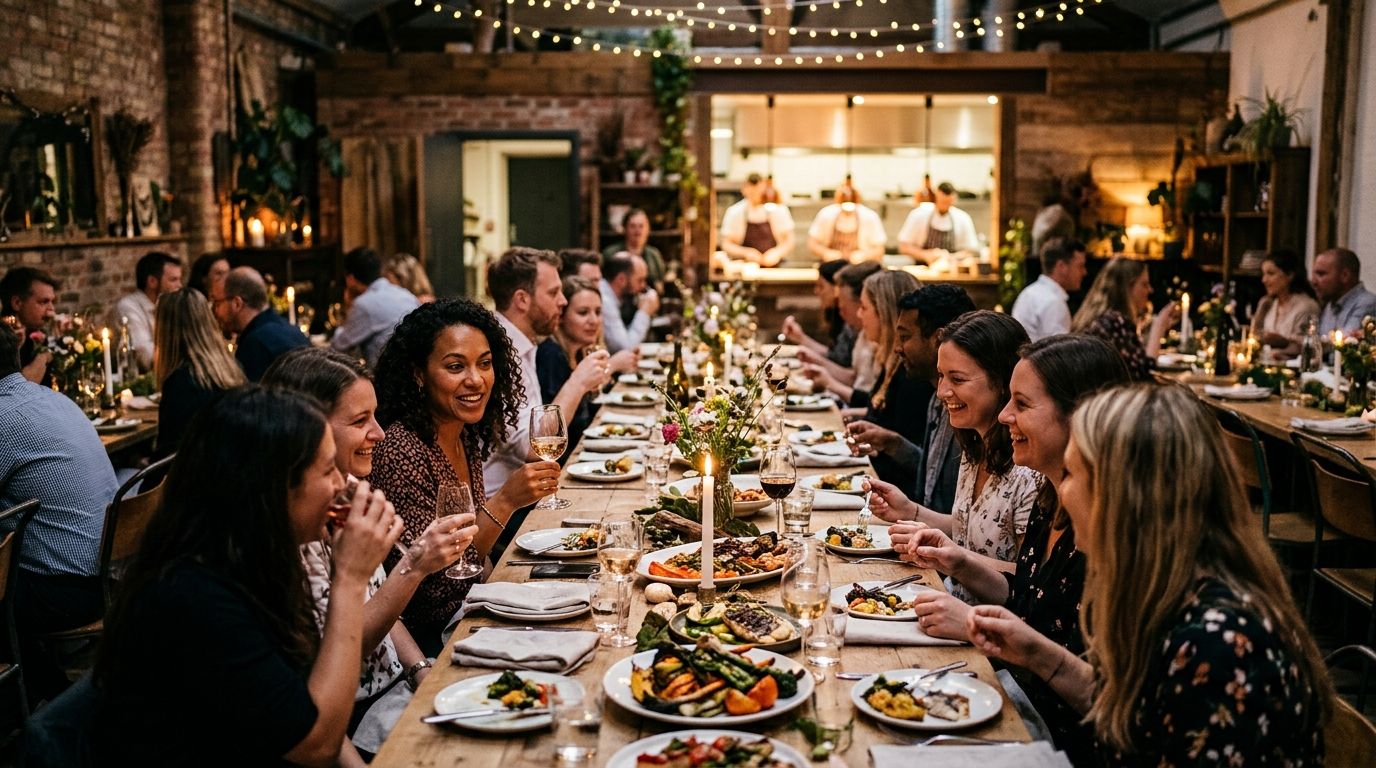
A supper club or pop-up restaurant sells out on scarcity, not brand awareness — the marketing job is to convert a fixed, disappearing capacity into a waitlist that outnumbers the seats. The fastest route in 2026 is a pre-launch email and SMS list, paid social retargeting on people who viewed the menu, and influencer seeding timed to the exact week bookings open — not general Instagram growth. The hidden cost most operators miss: a pop-up with no repeat-run plan burns its whole list on one date and starts from zero next time.
- Supper clubs sell out through scarcity marketing — waitlists and influencer seeding beat static Instagram posts.
- Build the email and SMS list before the first date is announced; it fills every future run.
- Paid social retargeting recovers people who saw the menu but didn't book — the highest-ROI spend for a limited run.
- FullyBooked has generated £85M+ in booking revenue for experience operators across 3M+ tickets sold.
Why this matters
A supper club has none of a restaurant's safety nets. There's no walk-in trade, no long tail of repeat covers across months, and often no permanent site — just a date, a menu, and a capacity that doesn't move. Get the marketing wrong and the whole run underperforms; there's no next Tuesday to recover the covers.
That's a different problem to standard hospitality marketing, and it needs a pop-up experience marketing playbook built around scarcity and urgency rather than awareness. The channels that carry a permanent restaurant — Google Business Profile, local SEO, long-run loyalty schemes — matter far less here. What matters in 2026 is compressing demand into the days before doors open.
How to market a supper club or pop-up restaurant
Run these in order. Skipping the list-building step and going straight to paid ads is the most common reason a supper club underfills its first date.
- Build the list before you announce a date. Collect emails and phone numbers from past guests, engaged Instagram followers and referrals. A waitlist marketing campaign gives you a reason to collect contacts months out — "join the list to hear first" converts far better than "follow us."
- Announce to the list first, publicly second. Give the list a 24-48 hour head start on booking before the date goes public. That creates real scarcity — the public post can then say seats are already going, because they are.
- Seed a handful of relevant food creators the week bookings open. Timing beats reach. A creator posting after sell-out does nothing for revenue; a creator posting the day tickets open drives direct bookings.
- Run retargeting ads against menu-page visitors. People who read the menu and didn't book are the warmest audience available. A short retargeting window matched to the campaign run, not an always-on budget, recovers a meaningful share of that traffic.
- Send a countdown sequence by email and SMS. Three to four touches in the final week — spots left, menu reveal, last call — consistently outperforms a single announcement email.
- Build a referral mechanic into the booking flow. Supper clubs are inherently social; guests bring friends. A referral incentive turns each booked table into a source of new sign-ups.
- Capture the list again at the event. Every guest who walks in is warmer than any cold audience bought later. Building an email list for a ticketed venue is a compounding asset across every future run in 2026, not a one-off task.
| Step | Primary channel | Best for |
|---|---|---|
| Pre-launch list build | Email + SMS opt-in | Guaranteeing a fast sell-out on day one |
| Influencer seeding | Instagram/TikTok creators | Reaching new local audiences fast |
| Retargeting ads | Paid social | Recovering menu-page visitors who didn't book |
| Countdown sequence | Email + SMS | Converting the undecided in the final week |
| Referral mechanic | Booking flow | Turning guests into new list sign-ups |
Why supper club marketing works differently to restaurant marketing
- Fixed capacity removes the upside of broad awareness spend. Once every seat is sold, extra reach is wasted — the budget should stop, not keep spending against a full date.
- There's no walk-in trade to fall back on. Every cover has to be pre-sold, which pushes the marketing timeline weeks earlier than a standard restaurant launch.
- Scarcity is a real signal here, not a manufactured tactic. A supper club genuinely has a small, fixed number of seats — communicate that directly rather than dressing it up.
- Each run is a separate campaign with its own deadline. Unlike a restaurant marketing continuously, a pop-up markets in short, intense bursts tied to a single date or short season.
- Word of mouth moves faster than paid reach. Referral and influencer seeding often outperform broad paid social, because a supper club is a shareable, visual, social experience by nature.
- The list is the only asset that survives the run. The venue, the menu, even the date disappear after service — the contact list is what carries into the next launch.
“The venue, the menu and the date all disappear after service. The guest list is the only thing that carries into the next run.”
How do you get a pop-up restaurant fully booked before opening?
A pop-up restaurant gets fully booked before opening by selling to a pre-built list first, then using paid retargeting and influencer seeding to convert the remaining seats in the final week. Operators running a limited-run pop-up campaign usually see bookings cluster in two windows: the 48 hours after the list opens, and the final 72 hours before the date.
The practical implication for 2026 planning is that your ad budget should be front-loaded and back-loaded, not spread evenly across a four-week flight. The dead middle of a campaign rarely converts a food audience.
How much should a supper club spend on marketing?
Spend should scale with the number of seats and the price per cover, not sit at a flat monthly figure. The more useful benchmark is channel mix: prioritise list-building and retargeting over broad top-of-funnel awareness, because awareness rarely converts fast enough for a one-off date.
Multi-site and multi-date operators handle this differently again — see how marketing budget splits work for attraction operators when you're running several events a year rather than one.
Is Instagram or TikTok better for pop-up restaurant marketing?
Instagram converts better for direct bookings because Stories and Reels link straight into a booking flow food audiences already trust. TikTok drives wider discovery and builds the pre-launch list faster, but the booking itself usually happens back on Instagram or via email.
Run TikTok for reach and list capture, Instagram and email for conversion. Treating them as one channel with one creative is the mistake that wastes most pop-up social budgets in 2026.
Get a sell-out plan for your next pop-up
Built for scarcity, not awareness. Talk to the team about your next date.
FAQ
How do you market a supper club with no existing following?
Build an email and SMS list from personal networks, past guests and local food communities before announcing a date. Then use influencer seeding and paid retargeting to convert that list once bookings open.
What's the best channel to sell out a pop-up restaurant fast?
A pre-launch email and SMS list is the fastest channel because it converts warm contacts before the public sees the announcement. Retargeting ads against menu-page visitors come second.
Is influencer marketing worth it for a small supper club?
Yes, when timed to the week bookings open rather than run as general brand awareness. A creator post on the day tickets go live drives direct sign-ups; one posted after sell-out drives none.
How do you build a waitlist for a supper club?
Collect emails and phone numbers from past guests and engaged followers ahead of any date announcement. Give that list a 24-48 hour head start on booking before the public post goes out.
Should a supper club use paid ads or organic social?
Both. Paid retargeting against people who viewed the menu outperforms organic reach for direct conversions, while organic and influencer content does the discovery work.
How early should a supper club start marketing before the event?
List-building should start weeks or months before a date is set. The active sell-through campaign, including retargeting and the countdown sequence, runs in the final one to two weeks.
Do supper clubs need a loyalty programme?
A full loyalty scheme is less relevant for a one-off pop-up, but the retention logic applies to repeat-run supper clubs. The guest list from each date should feed the marketing for the next one.
What's the biggest marketing mistake supper clubs make?
Announcing a date publicly before building any list. That forces the entire campaign to rely on cold reach instead of warm, pre-qualified contacts.
One last thing
The operators who consistently sell out a second and third run aren't the ones with the biggest social following — they're the ones who captured every guest's contact details at the first event and marketed to that list before spending a pound on ads for the next one. FullyBooked has managed marketing for 50+ experience operators and generated £85M+ across 3M+ tickets sold, and the pattern holds across food, entertainment and attractions in 2026: the list outperforms the reach, every time.


