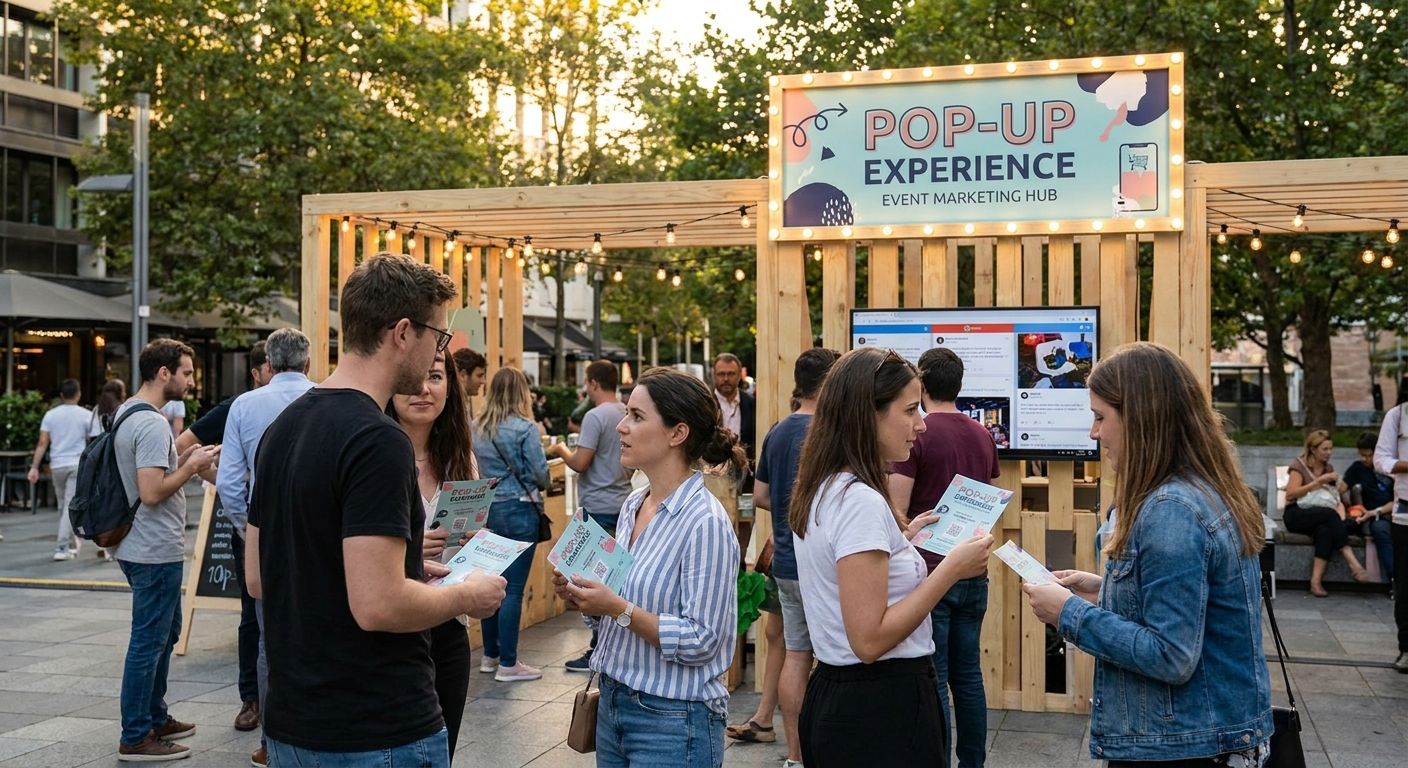
Pop-up experiences live and die on a fixed calendar, and that changes everything about how you market them. Event marketing for pop-up experiences in 2026 means compressing the usual awareness-to-booking funnel into weeks, not months, and picking channels that can ramp fast and stop just as fast.
- Paid social on a 2-4 week ramp cycle wins for pop-up launches in 2026 — buy it.
- Influencer seeding needs 3-4 weeks lead time to build FOMO before doors open — buy it.
- Skip slow-burn organic SEO for any run under eight weeks; it won't rank in time.
- Multi-wave retention and waitlist tactics only pay off if you're running more than one drop.
Why this matters
A permanent venue can afford to build an audience slowly over a year. A pop-up can't — the doors open, the run ends, and whatever momentum you didn't build in advance never gets a second chance. Get the sequencing wrong on event marketing for pop-up experiences and you're still warming up the algorithm the week your run closes.
FullyBooked has managed marketing across 50+ experience operators, and the pattern with pop-ups is consistent: the channels that work for a permanent attraction aren't the ones that work for a four-week installation. Speed and urgency beat reach and polish every time.
Who this is for
This guide is for anyone running a limited-run experience with a hard start and end date: pop-up bars, immersive art installations, seasonal drive-thru events, brand activation spaces and short-run entertainment concepts. If your event has a defined close date printed on the ticket, the rules below apply to you, whether you're doing one wave of six weeks or three waves across a year.
What to look for in event marketing for pop-up experiences
Speed to first ticket sale
A pop-up that takes three weeks to get its first paid campaign live has already burned a chunk of its run. Whatever channel you pick needs to go from brief to live in days, not weeks, because there's no slack in a pop-up's timeline.
FOMO and social proof velocity
Permanent venues can build reputation over years. A pop-up has to manufacture scarcity and social proof inside a few weeks, which means the channel needs to generate visible, shareable proof fast — sold-out notices, queue photos, countdown content.
Geo-targeting precision
A pop-up sells to people who can physically get there during a short window, so broad-reach campaigns waste spend on audiences who'll never book. Tight radius targeting around the venue matters more here than for a permanent location with repeat local traffic.
Budget flexibility to ramp and pause
You need to spend hard in the two to three weeks before opening, hold steady through the run, and cut spend the moment the last date sells out. Channels that lock you into long contracts or slow optimization cycles fight against that shape.
Multi-wave retention mechanics
Only relevant if you're running more than one drop — a waitlist, referral loop or repeat-buyer offer from wave one can sell out wave two before you spend a pound on new acquisition. Single-run pop-ups can skip this entirely.
The tactics that actually sell out a pop-up
Paid social (Meta and TikTok) — the workhorse channel. Run it on a 2-4 week ramp cycle before opening, not an always-on slow build, and pair spend with countdown creative that gets more urgent as dates fill. Verdict: Buy. See how this plays out on paid media for immersive experiences, where the same short-window logic applies.
Influencer seeding — the FOMO engine. It needs a 3-4 week lead-in before launch to generate the queue photos and "I got in" content that sells the next wave of tickets. Verdict: Buy. Influencer marketing for adventure parks runs on the same seeding-then-scarcity structure, adapted for a fixed-run format.
Local search and Google Business Profile — the safe pick most operators set up too late. It needs to go live the day the location and dates are confirmed, not the week before opening, because search intent for "things to do near me" starts building as soon as word spreads. Verdict: Consider.
Cross-promotion with adjacent venues — pairing your pop-up with a nearby attraction or event widens reach without new ad spend. It works best when the partner venue's audience genuinely overlaps with yours. Verdict: Consider. Event marketing for live music venues shows how cross-promotion and timed urgency work together for a fixed-date format.
Multi-wave retention and waitlist tactics — the wildcard. If you're running a single four-week pop-up, this is dead weight. If you're running three waves across 2026, a waitlist from wave one fills wave two before it launches. Verdict: Consider for multi-wave runs, Skip for single-run pop-ups.
“If your pop-up runs less than eight weeks, you don't have time for slow-burn SEO.”
What to avoid
- Slow-burn organic SEO as a primary driver. Content takes months to rank; most pop-ups don't have months.
- Generic brand awareness spend with no urgency messaging. Reach without a countdown or scarcity hook doesn't convert inside a short window.
- One-off influencer posts. A single post with no repeated seeding across the run loses momentum before word spreads.
How the tactics compare
| Tactic | Speed to launch | FOMO factor | Geo precision | Verdict |
|---|---|---|---|---|
| Paid social (Meta/TikTok) | Live in days | High | Strong with radius targeting | Buy |
| Influencer seeding | Needs 3-4 weeks lead time | Very high | Weak on its own | Buy |
| Local search/GBP | Instant once verified | Low | Strongest | Consider |
| Cross-promotion partnerships | Depends on partner timeline | Medium | Strong | Consider |
| Multi-wave retention/waitlist | Only works after wave one sells | Medium | N/A | Consider, multi-run only |
Get your pop-up marketing engineered
FullyBooked builds paid, influencer and retention campaigns for fixed-run experiences.
FAQ
What is event marketing for pop-up experiences?
It's the set of channels and tactics used to sell tickets for a limited-run event, compressed into the weeks before and during the run instead of a year-long campaign. Paid social, influencer seeding and local search do most of the work because they can activate fast.
How long before a pop-up opens should paid ads start?
Start paid social 2-4 weeks before opening so the algorithm has time to optimize before your run begins. Starting the week of launch leaves spend underperforming for the entire early run.
Is influencer marketing worth it for a single pop-up?
Yes, if seeding starts 3-4 weeks before launch to build visible FOMO ahead of opening day. A single post the week of launch rarely generates enough proof to drive bookings.
How much should a pop-up operator budget for marketing?
Budgets vary by run length and location, but the split should favor fast-activating channels like paid social and influencer seeding over slow-build channels like organic content. A short run has no time to recoup a slow-burn investment.
Does SEO work for pop-up experiences?
Rarely as a primary driver, because organic content takes months to rank and most pop-ups run under twelve weeks. Local search and Google Business Profile still matter for near-term intent, but they're not the same as a long-form content strategy.
What's the difference between marketing a pop-up and a permanent venue?
A permanent venue builds audience and reputation over years; a pop-up has to manufacture urgency and social proof inside a few weeks. That shifts budget toward fast, scarcity-driven channels over long-term brand building.
Can retention marketing work for a one-off pop-up?
Not really — retention tactics like waitlists and referral loops need a second wave to sell into. A single-run pop-up should put that effort into acquisition instead.
Who should run event marketing for pop-up experiences?
Anyone who can activate paid social and influencer seeding inside days, not weeks, since pop-ups don't have a long runway to fix a slow start. Operators without in-house speed on this often bring in a specialist agency for the run.
One last thing
If your 2026 pop-up run is under eight weeks, cut organic content out of the plan entirely and put that time into influencer outreach instead — it's the only channel that can build FOMO fast enough to matter before the doors close.