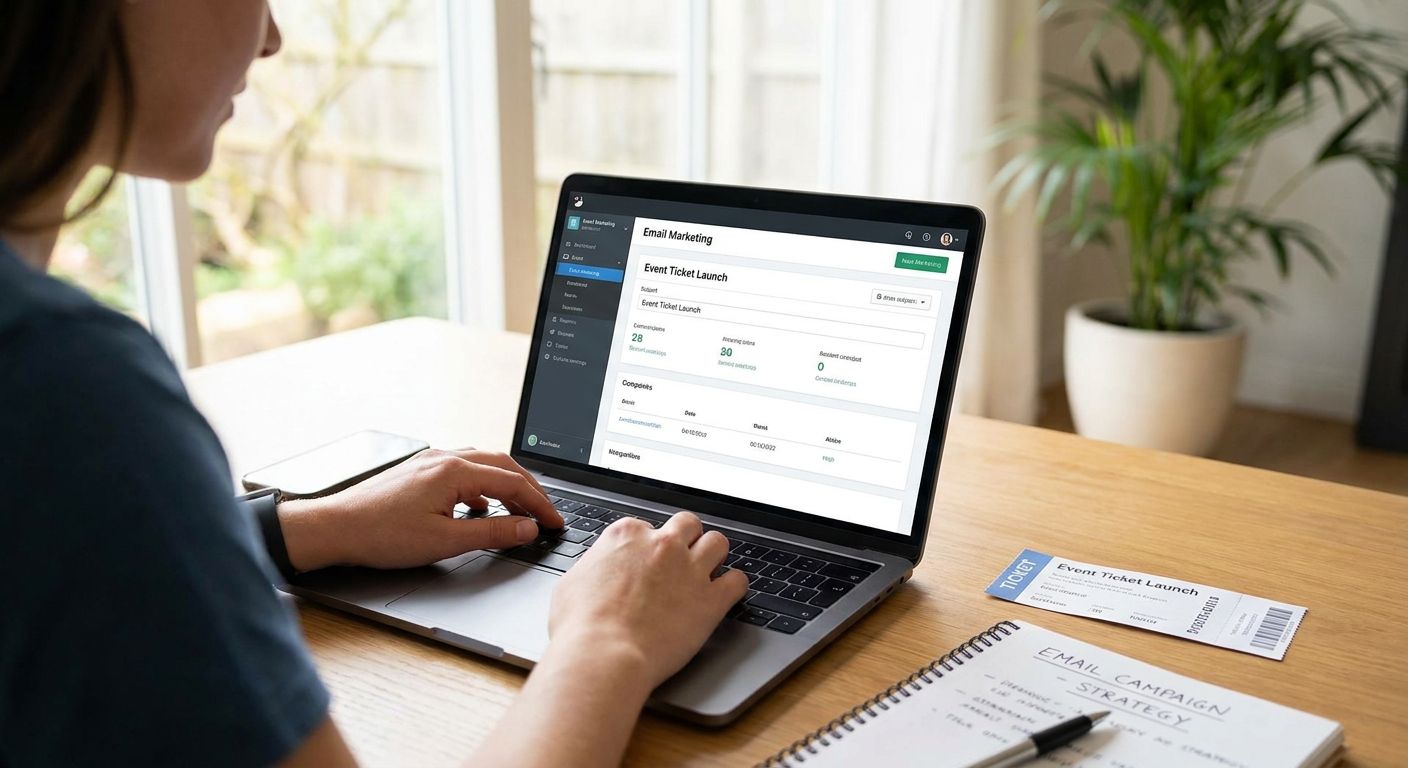
Ticketed events live or die on urgency, and email is the only channel where you own the list, the timing, and the message. This guide ranks the email tactics that actually move ticket sales for venues, festivals, escape rooms, and attractions in 2026 — and tells you which ones to skip.
- Segmented pre-event countdown sequences are the single highest-leverage tactic for ticketed events in 2026 — Buy.
- Abandoned booking recovery emails catch drop-offs at the payment step and belong in every operator's stack — Buy.
- A single generic monthly newsletter with no segmentation is the weakest email format for ticketed events — Skip.
- Win-back sequences targeting lapsed bookers at 60-90 days outperform blanket discount blasts — Buy.
How this list was ranked
Every tactic below is judged against three questions specific to ticketed events: does it react to a real behavioral trigger (browse, purchase, no-show), does it fit a fixed-date sale cycle instead of an evergreen retail one, and can a venue or attraction operator run it without a dedicated CRM team. Tactics that require heavy manual list-building or generic batch-and-blast sends rank lower, because they ignore the thing that makes ticketed events different from ecommerce: a hard deadline.
The operators cited across this guide run recurring or dated inventory — comedy clubs, escape rooms, live music venues, adventure parks — where the booking window closes the moment the event starts. That single constraint reshapes what "good" email marketing looks like versus a retailer selling the same product year-round. For a deeper breakdown of channel mix beyond email, the guide on best ticket sales strategies for live events covers paid and organic alongside lifecycle email.
Why this matters
Most venues in 2026 still treat email as a broadcast tool — one newsletter, sent whenever, to the whole list. That approach ignores the fact that a ticketed event has a countdown clock built into it. A wedding venue emailing its full list about a Saturday show has a completely different urgency profile than someone who abandoned checkout six hours ago. Ranking tactics by urgency fit, not by how easy they are to set up, is what separates operators who sell out from operators who discount to fill seats in the final 48 hours.
The ranked list
1. Segmented pre-event countdown sequences
The workhorse. A 3-email sequence fired at 14 days, 3 days, and 24 hours before an event date, segmented by whether the recipient has already booked or only browsed. Non-bookers get inventory urgency messaging; existing bookers get logistics and upsell content instead of a duplicate sales pitch. This single distinction — sending different content to bookers versus browsers on the same countdown — is what most generic email platforms miss out of the box.
Run this against your live event calendar for the year, not a one-off campaign, so every dated show or session gets the same cadence automatically. Buy — this is the foundation tactic every ticketed operator should have running before anything else on this list.
2. Abandoned booking recovery
Someone starts a checkout, gets to the payment screen, and closes the tab. A recovery email sent within 1-2 hours of that drop-off, followed by a second nudge at 24 hours, catches a meaningful share of that lost revenue before the inventory sells through or the recipient forgets. For high-demand dates this is close to free money — the person already decided to buy.
This tactic sits alongside paid retargeting rather than replacing it; see how the two combine in the guide on selling more tickets for your venue or event. Buy — trivial to set up in most booking platforms and it recovers sales that are otherwise gone entirely.
3. Post-purchase upsell flow
The moment after checkout is the highest-trust moment you'll ever have with a booker. A short flow — confirmation, then a single upsell email 48-72 hours later for add-ons like premium seating, merchandise, or a group package — converts at a level a cold send never will, because the recipient already trusts the brand enough to pay once.
Keep it to one upsell email, not three. Escape rooms and axe-throwing venues that stack multiple upsell attempts into the confirmation window see unsubscribe spikes instead of incremental revenue. Buy, with the one-email discipline attached.
4. Win-back sequence for lapsed bookers
Anyone who booked once and hasn't returned in 60-90 days is a warmer prospect than a cold acquisition lead, and cheaper to reach than paid media. A three-touch win-back sequence — a soft check-in, a new-event announcement, then a time-boxed incentive — brings a share of that list back without discounting your entire active base.
Climbing gyms and boutique fitness studios with recurring session inventory get outsized value here because the return visit is a repeatable behavior, not a one-off. The retention marketing tactics for experience businesses guide breaks this down by vertical. Buy for any operator with a list older than 90 days.
5. VIP/early-access segmentation by purchase history
Bookers who've paid for premium tiers before, or attended multiple events in a season, get access to new on-sales 24-48 hours ahead of the general list. This rewards your highest-value segment and creates a genuine reason to open the next email instead of scrolling past it.
The catch: this only works if your list is actually segmented by purchase value and frequency, not just by "has bought before." Comedy clubs and immersive experience operators running this without real segmentation just end up sending everyone the same "VIP" email, which erodes the label fast. Consider — high ceiling, but only if the segmentation groundwork is already in place.
6. SMS-email cross-channel sequencing
Pairing a 24-hour-before email with a same-day SMS reminder reduces no-shows for time-slot inventory — escape rooms, axe throwing, VR arcades — where a missed booking is a fully wasted slot rather than a resold seat. The email carries the detail, the SMS carries the urgency.
This needs a genuine reason for the second channel, not just duplication. Sending the same message on both channels within an hour of each other reads as spam. Consider — worth building once the core email flows above are live, not before.
7. Single generic monthly newsletter
One email, sent to the entire list, with every upcoming event crammed into it regardless of the recipient's history or interests. This is still the default setup for a large share of venues and attractions heading into 2026, and it's the weakest performer on this list because it treats a countdown-driven product like an evergreen catalog.
The fix isn't more content in the newsletter — it's replacing it with the segmented flows above. Skip as a standalone strategy; fine as a supplementary send once the lifecycle flows are running.
8. Loyalty and referral email triggers
An automated email triggered after a booker's third or fourth visit, inviting them into a referral or repeat-visit reward, keeps your best customers acquiring new ones without additional media spend. Museums, galleries, and trampoline parks with strong repeat-visit patterns get the most out of this because the trigger fires naturally off existing behavior.
See the budget split guidance for attraction operators for how much of your retention spend should sit in email versus paid loyalty tooling. Buy for operators with repeat-visit inventory; lower priority for single-visit experiences like most touring shows.
Comparison table
| Tactic | Best for | Trigger | Verdict |
|---|---|---|---|
| Pre-event countdown sequence | All ticketed events | Fixed date approaching | Buy |
| Abandoned booking recovery | High-demand dated inventory | Checkout drop-off | Buy |
| Post-purchase upsell | Add-on-heavy experiences | Completed purchase | Buy |
| Win-back sequence | Recurring-visit venues | 60-90 days inactive | Buy |
| VIP early access | Multi-tier ticketing | Purchase history | Consider |
| SMS-email sequencing | Time-slot inventory | 24hrs pre-event | Consider |
| Generic monthly newsletter | None specifically | Calendar-based | Skip |
| Loyalty/referral trigger | Repeat-visit venues | 3rd-4th visit | Buy |
Where to start
- Build the countdown sequence first. It's the single tactic every dated-inventory operator needs before anything else on this list works.
- Audit your abandoned booking data before building new campaigns. Most platforms already capture the drop-off event — you're often missing the automation, not the data.
- Don't run VIP segmentation until your list is actually segmented by purchase value. A mislabeled "VIP" email is worse than no VIP email at all.
Get your email lifecycle audited
See which of these flows are missing from your current stack.
FAQ
What's the best email marketing strategy for ticketed events in 2026?
A segmented pre-event countdown sequence combined with abandoned booking recovery is the strongest baseline strategy for ticketed events in 2026. Add a win-back flow for lapsed bookers once those two are running.
How many emails should a pre-event sequence include?
Three emails works for most ticketed events: 14 days out, 3 days out, and 24 hours before the event. Content should differ between people who've already booked and those who haven't.
Is SMS better than email for ticketed events?
SMS isn't a replacement for email, it's a complement for time-slot inventory like escape rooms or axe throwing where a no-show wastes a slot entirely. Email carries the detail, SMS carries same-day urgency.
How often should a venue send abandoned booking recovery emails?
Send the first recovery email within 1-2 hours of the checkout drop-off and a second at 24 hours. Waiting longer than that lets high-demand inventory sell through or the recipient lose intent.
Does a generic monthly newsletter still work for events marketing?
A single unsegmented monthly newsletter is the weakest format on this list for ticketed events in 2026 because it ignores the fixed-date urgency that drives bookings. It can supplement lifecycle flows but shouldn't replace them.
What's a win-back email sequence for events?
A win-back sequence targets bookers who haven't returned in 60-90 days with a three-touch flow: a check-in, a new-event announcement, then a time-boxed incentive. It's cheaper to run than cold acquisition for a repeat-visit venue.
Should VIP email access be based on spend or visit count?
Both work, but the segmentation has to be real — grouped by actual purchase value or visit frequency, not a blanket label applied to the whole list. A mislabeled VIP segment damages trust faster than having no VIP tier at all.
How does email fit alongside paid media for ticket sales?
Email handles retention and recovery on your owned list, while paid media drives new booker acquisition and retargets abandoned sessions. The two work together rather than competing for the same budget line.
One last thing
The operators getting the most out of email in 2026 aren't running more campaigns — they're running fewer, better-triggered ones. A single well-built countdown sequence tied to real purchase behavior consistently beats five disconnected newsletter blasts, because it reacts to what the recipient actually did instead of guessing at what they might want.


