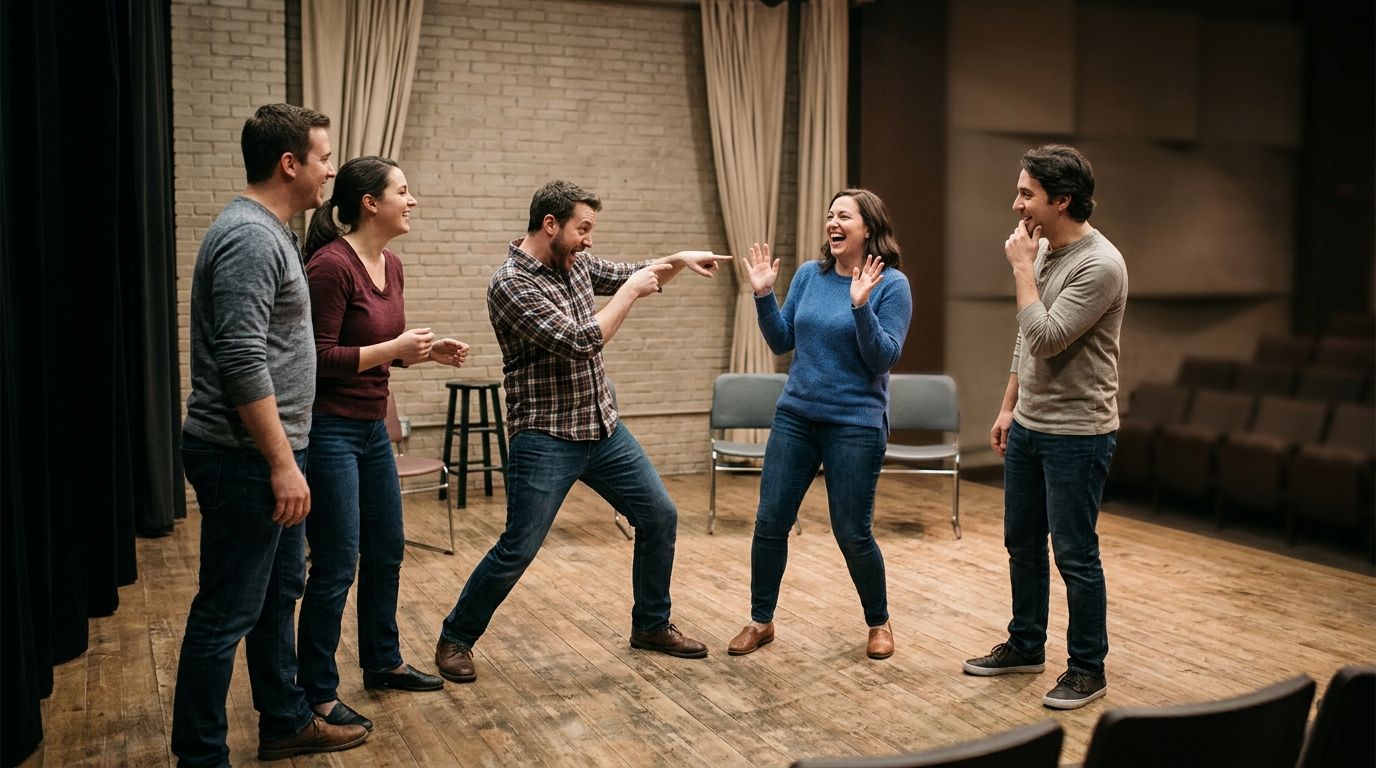
Selling out a comedy improv class in 2026 comes down to three things working together: local search visibility for "improv classes near me", paid social ads that target the right age and interest cohorts, and a retention system that turns one-off students into repeat bookers. Skip any one of the three and you're stuck refilling the same six seats every term.
- How to market a comedy improv class in 2026 starts with Google Business Profile optimisation and local SEO, not paid ads.
- Meta and TikTok ads targeting interest-based cohorts within a tight local radius fill beginner courses fastest.
- Referral and email retention convert one-term students into repeat bookers, which is where recurring revenue actually lives.
- FullyBooked has managed marketing for 50+ experience operators and generated £85M+ in bookings value across comparable venue categories.
Why this matters
Improv classes don't sell the way ticketed shows do. A comedy show is a one-night purchase decision; an improv class asks someone to commit to a six-to-eight-week course, show up weekly, and pay upfront. That's a bigger ask, which means the marketing has to do more than announce a date — it has to remove the fear of looking stupid in front of strangers, which is the actual objection most first-time students have in 2026.
Most improv schools market like comedy clubs: a poster, an Instagram post, a mailing list blast. That approach fills a one-off gig night. It does not fill a beginner cohort that needs a full room of paying students to run at a profit.
How to market a comedy improv class (step by step)
- Optimise your Google Business Profile for terms like "improv classes [city]" and "beginner comedy course" — this is where most first-time searchers land before they ever see a paid ad.
- Run a low-barrier taster session and market it separately from the full course — a single intro class converts nervous first-timers far better than asking for a full-term commitment upfront.
- Target paid social ads by interest, not just location — improv audiences skew toward people who already follow stand-up, sketch and theatre pages, not a generic broad-age catchment.
- Use student testimonials and real class footage, not polished brand video — improv sells on "these are normal people having fun", and that only lands with footage of real cohorts.
- Build an email and SMS list from every taster attendee, whether they book the full course or not — most conversions happen on the second or third touch, not the first.
- Launch a referral incentive for existing students to bring a friend — improv is inherently social, and word-of-mouth from someone already in the room outperforms cold ad spend.
- Time enrolment campaigns around January and September when "new year, new hobby" and back-to-routine searches spike — run ads two to three weeks ahead of each cohort start date, not on the day it opens.
Local SEO: get found by people searching "improv classes near me"
Most adults looking for an improv class in 2026 search locally before they search by brand name. A Google Business Profile built for a venue needs class times, photos of an actual session in progress, and reviews mentioning "beginner-friendly" — that phrase is what nervous first-timers are actually scanning for.
Paid social ads that fill beginner cohorts
The channel mix that works for comedy clubs running paid media applies directly to improv schools, with one difference: the creative needs to sell the experience of doing, not the experience of watching. Ads built around a 15-second clip of a beginner class laughing through a scene consistently outperform static graphics with a class schedule on them.
| Channel | Best for | Weakness |
|---|---|---|
| Google Search / GBP | High-intent "improv classes near me" searches | Limited reach beyond people already looking |
| Meta (Instagram/Facebook) ads | Interest-based targeting, video creative | Can burn budget without a taster-session offer |
| TikTok | Younger cohorts, viral class footage | Weaker for direct conversion, better for awareness |
| Email/SMS to past students | Repeat bookings, referral drives | Only works once a list exists |
Retention and referral: turn one class into a repeat student
A one-term student who never hears from the school again is a wasted acquisition cost. Building an email list from every ticket buyer — including taster no-shows and enquirers who didn't convert — gives a school a warm list to re-market the next cohort to without paying for a fresh click every time.
“A comedy class that only markets on Instagram is leaving its most reliable revenue — the students who already came once — on the table.”
Why demand for improv classes fluctuates
- Seasonality — January and September enrolment spikes are consistent across UK adult education and hobby classes.
- Local competition — a city with two or three established improv schools needs sharper positioning than one with none.
- Taster-session availability — schools without a low-commitment entry point convert far fewer cold leads.
- Word-of-mouth density — improv relies on social proof more than most classes because fear of embarrassment is the main barrier.
- Venue and time slot — evening weekday classes near transport links consistently outsell weekend daytime slots for working-age adults.
- Instructor visibility — schools that put a named, recognisable instructor in their marketing convert better than anonymous "our team" messaging.
Fill your next improv cohort
Paid media and retention marketing built for experience operators.
How much should a comedy improv school spend on marketing?
Spend should scale with how many empty seats a cohort has left two weeks before the start date — a school with a strong referral base and email list needs far less paid spend than one launching from zero. There's no fixed percentage that works across every city and price point in 2026, so the smarter approach is tracking cost-per-enrolled-student by channel and shifting budget toward whichever one converts cheapest.
Is Instagram or TikTok better for promoting comedy classes?
Instagram tends to convert better for direct enrolment because of stronger ad-to-landing-page flow, while TikTok builds wider awareness among younger audiences who aren't searching yet. Running both — TikTok for top-of-funnel reach, Instagram and Google for the actual booking — outperforms picking one exclusively in 2026.
How do you get your first full cohort for a new improv class?
The fastest path to a first full cohort is a low-cost taster session promoted through local Facebook groups, a Google Business Profile listing, and a referral push to anyone already connected to the instructor or venue. Cold paid ads alone rarely fill a brand-new class with zero social proof — a taster session generates the reviews and video footage that make the next round of ads convert.
FAQ
What's the best way to market a comedy improv class in 2026?
The best approach combines local SEO for improv-classes-near-me searches, interest-targeted paid social ads with real class footage, and a referral system for existing students. Relying on one channel alone consistently underfills beginner cohorts.
How much does it cost to advertise an improv class?
Cost depends on the city, competition, and how strong the school's existing list and referral base already are. Track cost-per-enrolled-student by channel rather than working from a fixed budget figure.
Is a taster session worth offering?
Yes. A taster session removes the biggest objection new students have, which is fear of embarrassment in a full-term commitment. It also generates the testimonial footage that makes paid ads convert better afterward.
Do improv classes need a website or just social media?
A basic booking page with class times and a Google Business Profile listing matters more than a full website for most improv schools. High-intent local searchers convert on that page, not on a social feed.
How often should an improv school post on social media?
Consistency matters more than frequency. Three to four posts a week showing real class footage outperforms daily posting of generic graphics.
When is the best time to launch a new improv cohort?
January and September see the strongest enrolment interest, tied to new-year-hobby and back-to-routine search behaviour. Start paid campaigns two to three weeks before the cohort opens, not on launch day.
Do referral programmes actually work for improv classes?
Yes. Improv is inherently social, and a current student bringing a friend converts at a far higher rate than a cold ad click. A simple incentive for both parties is enough in most markets.
One last thing
The schools that struggle most in 2026 aren't the ones with weak ads — they're the ones with no taster session and no list. Fix the entry point and the retention loop first; ad spend gets far more efficient once there's social proof and a warm list to remarket to. Filling last-minute seats close to a cohort start date is a proven way to plug the gap without discounting the whole course.


