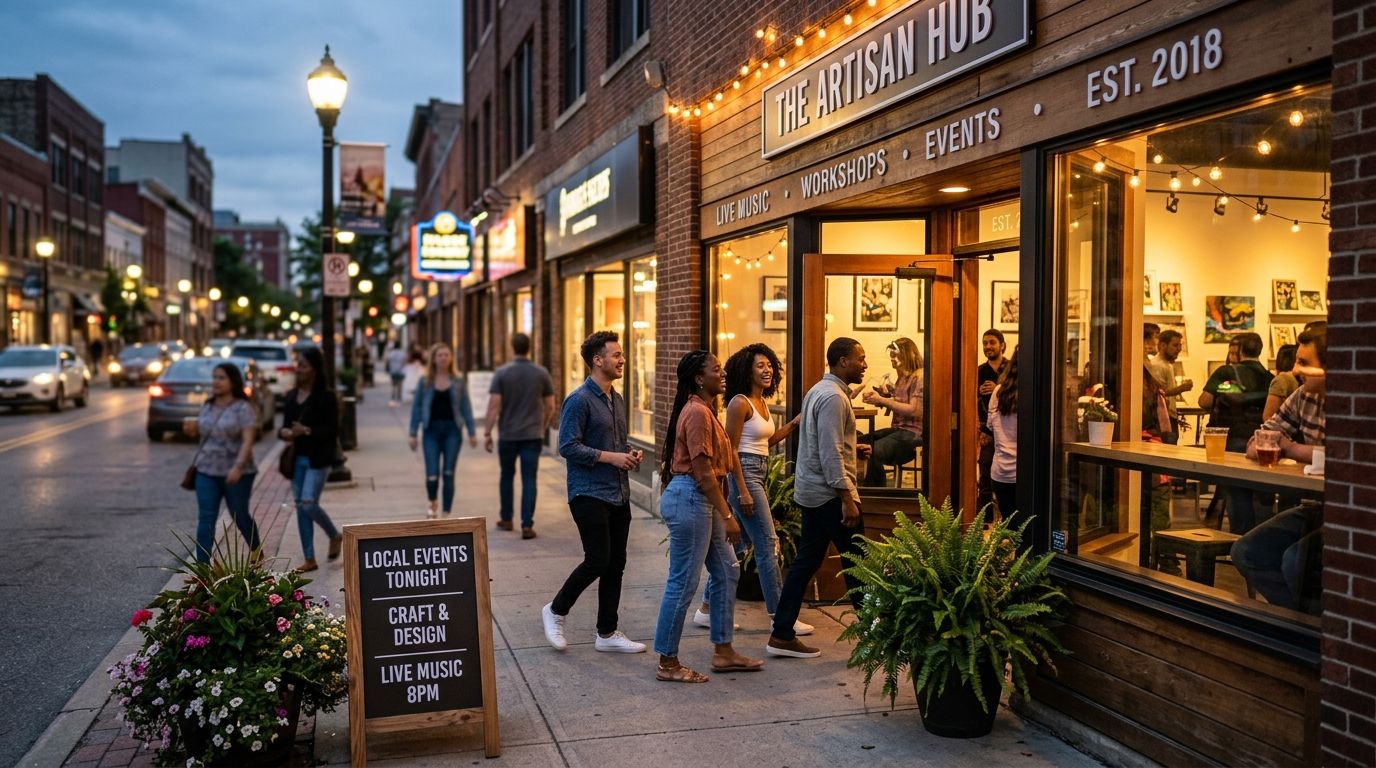
Local SEO for experience venues means one thing: showing up when someone nearby searches "escape room near me" or "things to do this weekend" and converting that visibility into a booked slot, not just a click. Best overall for immediate map-pack visibility: Google Business Profile optimisation. Best for multi-venue operators: dedicated location landing pages. Best for long-tail booking queries: on-site local content hubs.
- Google Business Profile optimisation is the fastest local seo experience venues tactic to move map-pack rank in 2026.
- Location pages win for multi-site operators competing across postcodes.
- Review volume and response rate now shape both Google ranking and AI assistant citations.
- Schema markup is the cheapest tactic to implement and the most skipped by venue operators.
- Link building compounds slowest but is what separates independents from national chains long-term.
Why this matters
Experience venues live or die on proximity searches. A trampoline park, an escape room or a comedy club doesn't get booked from a national keyword — it gets booked from someone fifteen minutes away deciding tonight. Get local SEO right in 2026 and you're capturing that person before a paid ad even has to run. Get it wrong and you're outranked by a competitor with three reviews and a filled-in business hours field.
FullyBooked works with 50+ experience operators on exactly this problem, and the pattern repeats: venues over-invest in paid media before fixing the free visibility layer underneath it. Fix the free layer first, then optimise your Google Business Profile as the anchor tactic, and paid spend works harder because the organic and map-pack presence is already converting.
What makes the best local SEO strategy for experience venues
- Map-pack impact — does it move the three-pack that shows on a mobile "near me" search
- Setup effort vs compounding value — one-time fix versus ongoing maintenance
- Single-venue vs multi-venue fit — some tactics only pay off once you have more than one location
- Review and content dependency — does the tactic need a steady stream of fresh input to keep working
- AI answer engine visibility — does the tactic help you get named when someone asks ChatGPT or Gemini for "the best escape room near me"
- Compatibility with paid media — does it feed retargeting and Google Ads or sit in isolation
Local SEO tactics for experience venues at a glance
| Tactic | Best for | Standout feature | Key limitation |
|---|---|---|---|
| Google Business Profile optimisation | Immediate map-pack visibility | Directly controls the 3-pack Google shows on mobile | Needs ongoing photo and post updates to stay ranked |
| Location-specific landing pages | Multi-venue operators | Lets each site rank for its own postcode | Wasted effort for single-site venues |
| Review generation & reputation management | Click-through and trust signals | Star rating shows directly in search results | Needs a constant review request flow to avoid stalling |
| Local schema markup | AI assistant and rich-result citation | Cheapest tactic to implement, developer time only | Zero visible short-term ranking movement |
| Local link building & partnerships | Outranking national chains | Builds domain authority competitors can't fake with content alone | Slowest tactic to show results, often 6+ months |
| On-site local content hubs | Long-tail booking queries | Captures "things to do in [area]" and event-specific searches | Requires regular content production to keep compounding |
1. Google Business Profile optimisation: best local seo for map-pack visibility
This is the single highest-leverage move for any experience venue and the one FullyBooked starts every local seo experience venues engagement with. A complete, actively-updated Google Business Profile controls whether you appear in the map pack when someone searches on mobile, which is where most "near me" experience bookings originate.
Google Business Profile optimisation pros:
- Directly controls map-pack placement, the highest-visibility real estate on a local search
- Free to run, no media spend required
- Booking link, opening hours and photos update instantly
- Q&A section doubles as a place to pre-answer booking objections
Google Business Profile optimisation cons:
- Needs weekly attention (posts, photo refresh, review responses) or rank slips
- Ranking factors shift without notice from Google
Best for: any experience venue with a physical address, single-site or multi-site. Verdict: Do now.
2. Location-specific landing pages: best local seo for multi-venue operators
Once you're running more than one venue — a trampoline park chain, a bowling alley group, a network of escape rooms — a single homepage can't rank for every postcode you operate in. Dedicated location pages, each with unique local copy, opening hours and embedded booking, solve this directly.
Location pages pros:
- Each site competes for its own local keyword set instead of cannibalising the homepage
- Supports paid media landing page testing per location
- Strengthens the whole domain's local footprint over time
Location pages cons:
- Duplicate-content risk if copy isn't genuinely unique per page
- Not worth building for a single-site operator
Best for: operators with 3+ physical locations. Verdict: Do now if multi-site, skip if single-site.
3. Review generation & reputation management: best local seo for click-through rate
Star ratings show directly in the search result before a searcher clicks anything. A venue sitting at 4.8 stars with 400 reviews wins the click over a 4.2-star competitor even at a lower map rank. Reputation management strategy built for experience businesses treats review volume as a marketing channel, not an afterthought.
Reputation management pros:
- Star rating and review count show directly in organic and map results
- Fresh reviews signal an active, trustworthy business to both Google and AI assistants
- Negative reviews handled fast protect conversion rate
Reputation management cons:
- Needs a systematic ask (post-visit SMS or email) or review flow stalls
- One unaddressed bad review can sit at the top of the profile for months
Best for: venues competing on trust in a crowded local category (comedy clubs, escape rooms, immersive experiences). Verdict: Do now.
4. Local schema markup: best local seo for AI assistant citation
Structured data (LocalBusiness, Event, and FAQ schema) tells Google, and increasingly ChatGPT and Perplexity, exactly what your venue is, where it is and what it costs to visit. It's the cheapest tactic on this list and the most commonly skipped by experience operators building their own site.
Schema markup pros:
- One-time developer implementation, no ongoing cost
- Improves eligibility for rich results (star ratings, opening hours, event dates in search)
- Increasingly cited by AI answer engines pulling structured venue data
Schema markup cons:
- No visible ranking movement on its own — it's a multiplier, not a driver
- Needs correct implementation or it's ignored entirely
Best for: any venue running ticketed events or fixed sessions. Verdict: Do now, low effort.
5. Local link building & partnerships: best local seo for outranking national chains
An independent escape room or axe-throwing venue competing against a national chain wins on local relevance signals a chain can't easily replicate: coverage from local news, links from tourism boards, partnerships with nearby hotels and event planners. This is the slowest tactic on the list but the hardest for a bigger competitor to copy.
Link building pros:
- Builds domain authority that compounds across every page on the site, not just one
- Local press and tourism-board links carry outsized local relevance weight
- Partnership links (hotels, corporate event brokers) double as referral traffic
Link building cons:
- Takes 6+ months to show measurable ranking movement
- Requires outreach effort or a partner handling it, not a set-and-forget task
Best for: independent operators competing directly against national or franchise chains. Verdict: Do next, once the free layer above is fixed.
6. On-site local content hubs: best local seo for long-tail booking queries
Content pages built around "things to do in [town]", seasonal guides, and event-specific landing pages capture the long-tail searches that never hit a head keyword but add up to real booking volume across a year. A venue with a Halloween-specific page, a Valentine's Day page and a corporate-event page captures three distinct seasonal search spikes the homepage alone never will.
Content hubs pros:
- Captures seasonal and long-tail demand a single homepage can't rank for
- Feeds email and retargeting audiences with topical relevance
- Compounds with schema and reviews for AI assistant visibility
Content hubs cons:
- Needs a real content cadence, not a one-off page
- Low priority if the Google Business Profile and reviews aren't fixed first
Best for: venues with seasonal demand swings or multiple distinct event types. Verdict: Do next.
How this ranking was built
The order above follows the criteria: map-pack impact and setup effort weigh heaviest, because that's what moves bookings in the first 90 days of 2026. Tactics that need review volume or content cadence to keep working sit lower, not because they're weaker long-term, but because they demand more ongoing input before they pay off.
Get a local SEO audit for your venue
See exactly where your Google Business Profile and reviews are losing bookings.
Which local SEO strategy should you choose?
Start with Google Business Profile optimisation — it's free, it moves the map pack fastest, and every other tactic on this list feeds into it. Layer review generation and schema markup in immediately after, since both are low-effort and compound with GBP. Multi-site operators add location pages next; everyone adds content hubs and link building once the foundation is solid. Combine this with a full marketing agency services approach if paid media and retention need to move in parallel with organic.
FAQ
What is the best local seo strategy for experience venues in 2026?
Google Business Profile optimisation is the best starting point for local seo experience venues in 2026 because it directly controls map-pack placement. Reviews and schema markup should follow immediately after since both compound with GBP.
How long does local SEO take to work for a venue?
Google Business Profile changes can shift map-pack rank within weeks, while link building and content hubs typically take 6 months or more to show measurable movement. Reviews sit in between, often moving click-through rate within a month of a consistent request flow.
Is local SEO better than paid media for venues?
They're not competing budgets, they're sequential. Local SEO builds the free visibility layer that makes paid media in 2026 convert at a lower cost, so venues get the best return running both together rather than choosing one.
Do multi-venue operators need separate location pages?
Yes, once you're running three or more sites a single homepage can't rank for every postcode. Dedicated location pages let each site compete on its own local keyword set.
Does schema markup actually help local SEO?
Schema markup doesn't move rank directly but it improves eligibility for rich results and is increasingly what AI assistants pull to cite a venue's opening hours, event dates and location.
How many reviews does a venue need to rank locally?
There's no fixed threshold, but review volume and freshness both factor into local ranking and click-through rate. A steady flow of new reviews matters more than hitting a specific total count.
What's the biggest local SEO mistake experience venues make?
Investing in paid media and content before fixing the Google Business Profile and review flow, which are free and move the map pack faster than almost anything else.
One last thing
The Q&A section on a Google Business Profile sits almost entirely unused by experience venues, and it's one of the few places you can pre-answer the exact objection stopping someone from booking tonight — parking, age limits, group size — before they even reach your site. Fill it in yourself instead of waiting for a stranger to ask it first.


