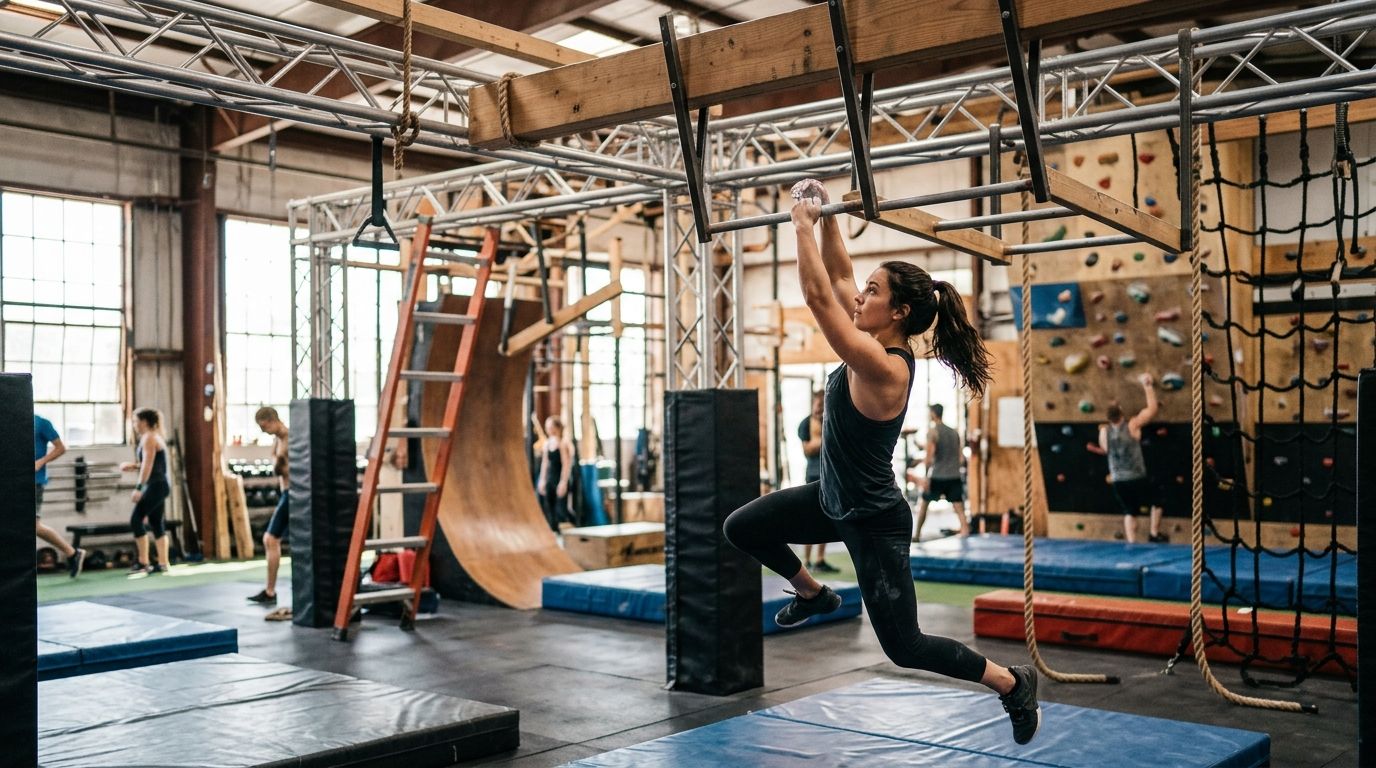
Paid media for ninja warrior gyms is advertising spend on Google, Meta and TikTok built around the way obstacle-course operators actually sell: open sessions, birthday parties, corporate team-building blocks and monthly memberships. The booking pattern is different from a normal fitness studio — spend has to flex around school holidays, weekend party demand and weekday off-peak gaps that sit empty from 9am to 3pm.
- Paid media for ninja warrior gyms works best when Google Ads targets session and party searches while Meta fills off-peak weekday slots.
- FullyBooked runs paid media for obstacle-course and trampoline-style venues as part of £85M+ in tracked booking revenue generated for operators.
- TikTok and Instagram Reels outperform static ads for this category because the course itself is the creative — no logo needed.
- Retargeting abandoned bookings recovers sessions lost to parents comparing three venues before choosing one, a pattern common across ticketed attractions.
- Google Ads alone rarely fills weekday gaps in 2026 — pairing it with lifecycle retargeting is what moves cost per booking down.
Why paid media matters for ninja warrior gyms
Obstacle-course and ninja warrior venues sell a narrow, high-intent product: a timed session slot, a party package, or a membership. There's no browsing phase like retail — someone searching "ninja warrior gym near me" or "obstacle course birthday party" is close to booking, which means paid search captures demand that's already decided on the category and just needs to pick the venue.
The harder problem is the inventory that doesn't sell itself: Tuesday 10am sessions, Wednesday afternoon slots, off-season weekday capacity. That's where paid social earns its budget — video of the course, not a logo, run against parents and local fitness audiences who weren't actively searching but respond to seeing the space in motion.
FullyBooked has managed paid media across 50+ experience operators and generated £85M+ in tracked booking value, and the pattern holds across obstacle-course, trampoline park and climbing gym clients alike: search closes bookings, social creates them. Ninja warrior gyms that only run one channel leave the other half of demand unclaimed.
Build your paid media stack for a ninja warrior gym
Audit your booking funnel before you spend a pound
Most obstacle-course venues lose bookings between ad click and confirmed session, not between impression and click. Fix the funnel first or every pound of paid media spend subsidises a leaky page.
- Time how long it takes to book a session slot from the homepage — over 3 clicks is too many
- Check the mobile checkout flow separately from desktop; most session bookings happen on phones
- Confirm party packages and group sizes are priced and bookable without a phone call
- Test whether abandoned bookings trigger any follow-up at all
- Verify Google Analytics or a booking platform is actually tracking completed bookings, not just page views
Build Google Ads campaigns around session and party searches
Search intent for this category splits into three buckets: individual sessions, birthday parties, and corporate/group bookings. Each needs its own campaign, not one blended ad group.
- Separate campaigns for "ninja warrior gym [town]", "obstacle course birthday party", and "corporate team building [town]"
- Use call extensions for party enquiries — many parents still want to speak to someone before booking a group
- Add negative keywords for "American Ninja Warrior" TV show searches that won't convert
- Bid up on weekday off-peak session terms specifically, since those slots are hardest to fill organically
- Run a dedicated campaign around school half-terms and summer holidays when family search volume spikes
Run Meta and Instagram ads that show the course, not the logo
Static image ads underperform for this category. The obstacle course itself — kids on the warped wall, adults on the salmon ladder — is the creative that stops the scroll.
- Film 15-30 second clips of real sessions, not staged marketing shoots
- Run separate ad sets for parents (party and family targeting) and adults (fitness and challenge targeting)
- Test carousel ads showing different obstacles to signal variety, not a single feature
- Layer in lookalike audiences built from your existing booking list
- Use Meta's local awareness objective for gyms without a strong online booking habit yet
Use TikTok to capture school-holiday and half-term demand
TikTok's audience for family days out skews toward parents actively planning the next school holiday, which makes it a strong fit for a category that lives and dies on off-peak fill rates.
- Post attempt-and-fail clips on the toughest obstacles — high completion rate on watch time
- Run paid boosts behind organic posts that already show engagement rather than starting cold
- Target by interest clusters around family days out and kids' activities, not just age and location
- Time spend increases two to three weeks ahead of each school holiday period
- Cross-post the same creative to Instagram Reels to double reach without doubling production cost
Set up retargeting for abandoned bookings
Parents comparing venues rarely book on the first visit. Retargeting is the cheapest booking recovery channel available in 2026, and most ninja warrior gyms don't run it at all.
- Build a retargeting audience from anyone who viewed the booking page but didn't complete
- Show session-specific ads, not generic brand ads, to people who viewed a specific date
- Cap frequency at 3-4 impressions a week to avoid ad fatigue on a small local audience
- Run a separate retargeting sequence for abandoned party enquiries with a shorter follow-up window
- Exclude anyone who's already booked to avoid wasting spend on converted customers
Layer in local SEO and Google Business Profile
Paid search costs more when the organic and map-pack listing underneath it is weak. A strong Google Business Profile lowers the effective cost of every paid click by improving quality score and trust.
- Keep opening hours, session times and holiday hours updated — stale hours kill map-pack ranking
- Post session availability updates weekly, not once a quarter
- Respond to every review, especially the 3-star ones that mention wait times or booking friction
- Add photos from actual sessions monthly, not a one-time upload
- Optimise the Google Business Profile properly before increasing paid search spend, since a thin profile drags down ad relevance scores
Track cost per booked session, not cost per click
Click and impression metrics tell you nothing about whether the paid media for your ninja warrior gym is profitable. Cost per completed booking is the only number that matters.
- Set up conversion tracking on the actual "booking confirmed" page, not the checkout start page
- Break out cost per booking by channel and by session type (individual, party, corporate)
- Compare cost per booking against average party or session value, not against total ad spend
- Review numbers weekly during school holidays when demand and cost per click both move fast
- Kill underperforming ad sets after 7-10 days of data, not after a single bad day
Get paid media built for your gym
FullyBooked runs Google, Meta and TikTok campaigns for obstacle-course and attraction operators.
Comparison: paid media options for ninja warrior gyms
| Option | Best for | Key limitation |
|---|---|---|
| Google Ads (search) | Capturing high-intent "near me" and party searches | Doesn't create demand for off-peak weekday slots |
| Meta / Instagram Ads | Filling weekday gaps and showing the course in motion | Needs fresh video creative every few weeks or performance drops |
| TikTok Ads | Reaching parents planning school-holiday activities | Weaker for corporate and adult-only session targeting |
| Retargeting (all platforms) | Recovering abandoned bookings and party enquiries | Only works once traffic volume is high enough to build an audience |
| Specialist agency (e.g. FullyBooked) | Operators running multiple channels without in-house media buying capacity | Requires handing over campaign control and reporting access |
Verdict: no single channel fills a ninja warrior gym's calendar in 2026 — Google Ads closes intent-driven bookings while Meta and TikTok manufacture demand for the slots nobody's searching for.
Common mistakes ninja warrior gyms make with paid media
- Running one blended campaign for sessions, parties and corporate bookings — each has a different search intent and cost tolerance, and blending them wastes budget on the wrong audience
- Using stock photography or logo-led ads — the obstacle course is the product; ads without footage of it convert at a fraction of the rate
- Ignoring off-peak weekday inventory entirely — most spend goes toward weekend sessions that would sell out anyway, leaving Tuesday mornings empty
- No retargeting sequence for abandoned party enquiries — group bookings have the longest decision window and the highest recoverable value
- Switching budgets off between school holidays — this resets ad learning phases and pushes cost per booking back up every time spend restarts
FAQ
What's the best paid media channel for ninja warrior gyms in 2026?
Google Ads captures high-intent session and party searches, while Meta and TikTok fill off-peak weekday slots that don't get searched for directly. Most obstacle-course gyms need both, not one or the other.
Is Meta better than Google Ads for obstacle course gyms?
Neither replaces the other — Google Ads closes people already searching for a venue, Meta creates demand among parents and adults who weren't looking yet. Running only one channel leaves half the addressable demand unclaimed.
How much should a ninja warrior gym spend on paid media?
Budget should track against off-peak slot availability rather than a fixed percentage of revenue — venues with more empty weekday capacity need heavier social spend to fill it. Check current campaign costs directly with a specialist agency rather than relying on generic benchmarks.
Does TikTok work for obstacle course gym marketing?
Yes, particularly for family and school-holiday demand — attempt-and-fail obstacle clips perform well on watch time and cross-post easily to Instagram Reels. It's weaker for corporate and adult-only bookings than Google Ads.
Should ninja warrior gyms run retargeting ads?
Yes — retargeting recovers bookings from parents comparing multiple venues before deciding, which is a common pattern in the attraction and experience category. It's one of the cheapest channels to run once there's enough site traffic to build an audience.
Why do ninja warrior gym ads need video, not photos?
The course itself is the product, and static images can't convey scale, difficulty or the energy of a session the way a 15-30 second clip can. Venues running video-first Meta and TikTok ads consistently see stronger engagement than logo-led static creative.
How does an agency like FullyBooked help ninja warrior gyms specifically?
FullyBooked builds paid media, influencer and retention campaigns for experience operators including obstacle-course and trampoline-style venues, drawing on management of 50+ operators and £85M+ in tracked booking revenue. That means campaign structures already tested against school-holiday demand curves rather than built from scratch.
What's the biggest paid media mistake ninja warrior gyms make?
Running one blended campaign across sessions, parties and corporate bookings instead of separating them by intent and cost tolerance. It wastes budget on the wrong audience and makes cost-per-booking impossible to read accurately.
One last thing
The biggest lever most ninja warrior gyms ignore isn't the ad platform — it's the gap between a Tuesday 10am session and a Saturday afternoon session. Paid media budget split evenly across the week is paid media wasted on slots that would've sold anyway. Push spend hardest at the inventory nobody's searching for and let organic and branded search cover the weekend rush.


