Paid media for high ropes courses means running Google Search, Meta and video campaigns that turn weather-checking, thrill-curious browsers into booked slots on your calendar — not just clicks on your ad. Zip line and aerial adventure operators sell a shorter season, a bigger fear-of-heights hurdle and a more visual product than most attractions, so the channel mix and the creative have to work harder per pound spent than a generic leisure ad ever will.
- Paid media for high ropes courses works best with weather-triggered Google Search and video-led Meta ads running together, not one after the other.
- Group and corporate bookings are the highest-margin segment high ropes and zip line operators leave on the table in paid campaigns.
- FullyBooked has generated 85M+ pounds in booking revenue and sold 3M+ tickets across 50+ experience operators.
- Cost per booking, not cost per click, is the only metric that should decide whether a 2026 campaign stays live.
Why this matters for high ropes and zip line operators
A ropes course or zip line site does not sell like a bowling alley or an escape room. Demand swings hard with the forecast, the school calendar and daylight hours, and a booker deciding between your course and a competitor 20 minutes away is often making that call from a weather app, not a search results page.
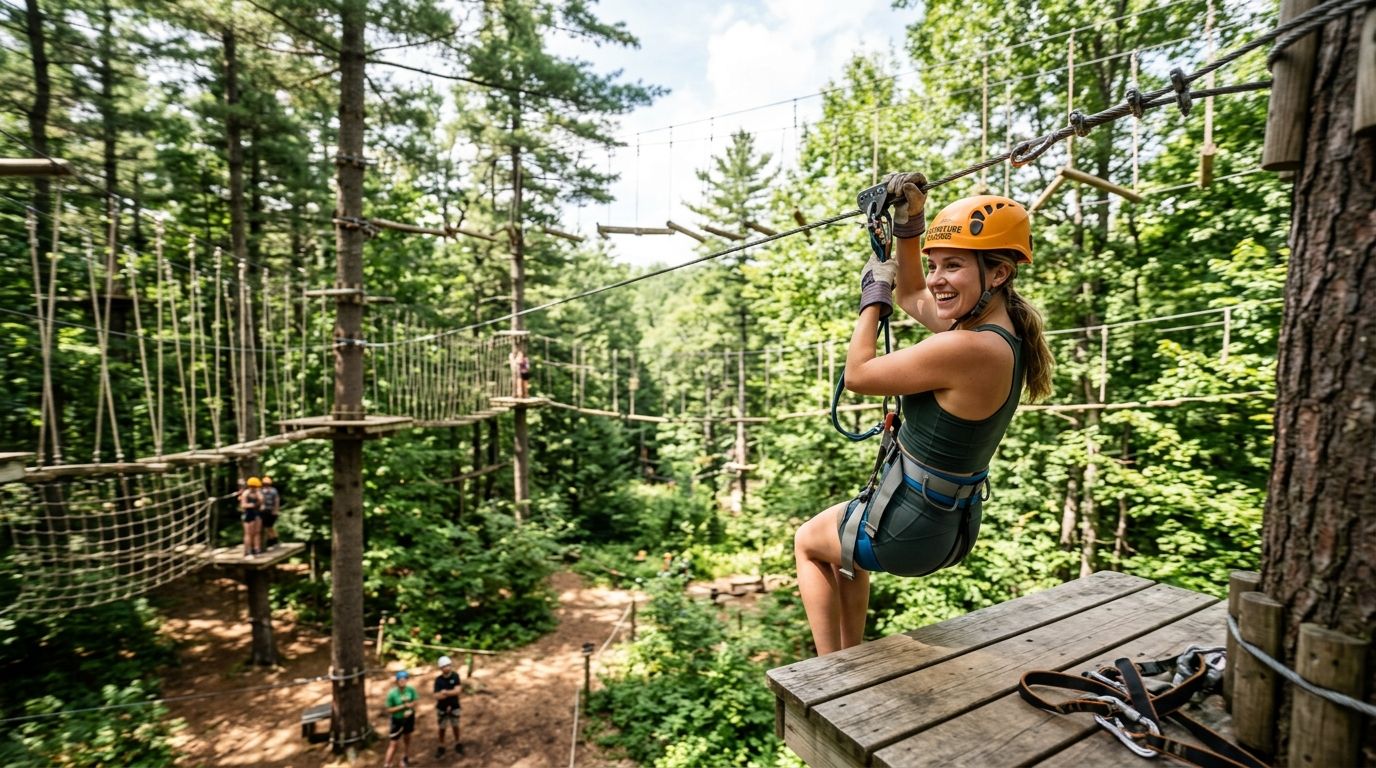
That changes how PPC strategy for attraction operators needs to be built for this segment. Search terms like "zip line near me" and "high ropes course" plus a town name spike the moment a sunny forecast lands, and an operator running flat, always-on spend misses the days that matter most. The visual sell matters too — a static image of a wooden platform does not convert the way a 12-second POV clip of someone launching off a zip line does.
Group, school and corporate bookings are the other lever most operators under-market in 2026. High ropes and adventure courses are a natural fit for team-building days and stag and hen parties, yet most paid campaigns in this category are built entirely around solo or family bookers.
How to run paid media for high ropes and zip line courses
Audit your booking funnel before you spend a penny
Before any ad goes live, know where bookers drop off between click and confirmed slot. A ropes course funnel usually leaks at the same three points: no availability shown upfront, weight and height restrictions buried in the FAQ, and a checkout that does not clearly separate individual, family and group pricing.
- Check whether your booking calendar loads within two seconds on mobile
- Confirm height, weight and age restrictions are visible before checkout, not after
- Map the exact page a booker lands on from each ad — never the homepage
- Flag any step that requires a phone call to complete a group booking
Segment audiences by weather, season and drive-time
A zip line course in 2026 competes for the same Saturday as every other outdoor activity within a 30-minute radius. Segmenting by drive-time and weather window turns a generic campaign into one that spends when demand is actually rising.
- Build separate Google Search campaigns for today intent and this-weekend intent
- Layer bid adjustments around 3-day forecasts, not just the season
- Geo-target Meta and Google to a realistic drive-time radius, not a blanket county
- Split school-holiday audiences from term-time weekend audiences
Build video-first creative that sells the height, not the harness
Static photography undersells a product built on adrenaline. POV footage, drone shots of the course layout and short clips of first-timers screaming with laughter consistently outperform staged imagery for this category.
- Shoot vertical POV clips from the zip line and the highest platform
- Cut a 6-8 second hook that shows the launch moment, not the safety briefing
- Use real bookers in creative wherever consent allows, not stock talent
- Test drone establishing shots against ground-level action-cam footage
Run Google Search and Meta in parallel, not sequentially
Most high ropes operators lean entirely on Search or entirely on social. Running both together catches the booker searching with intent and the booker who did not know the course existed until it appeared in their feed.
- Run non-brand Search on zip line experience, high ropes course and local variants
- Run Meta campaigns against lookalikes built from past bookers
- Match ad copy and landing pages by intent — search clicks go to a booking page, social clicks can go to a video-led page
- Keep brand Search live at all times to protect against competitor bidding
Retarget every browser who did not book
A ropes course booking decision often takes more than one session — someone checks the price, checks the weather, then comes back three days later. Retargeting ads for event ticket sales close that gap instead of losing the booker to a competitor's ad in the meantime.
- Build a 7-day site visitor retargeting audience across Meta and Google Display
- Exclude anyone who has already completed a booking
- Serve a different creative angle on retargeting than on cold prospecting
- Add urgency messaging around limited weekend slots, where genuinely true
Push group, corporate and stag or hen packages hard
Group bookings carry higher average order value and lower acquisition cost per head than solo tickets, yet they rarely get a dedicated campaign.
- Run a standalone campaign targeting team building day out and stag do activities
- Build a landing page that shows group pricing tiers without requiring a phone call
- Retarget HR and events-manager job titles on LinkedIn for corporate packages
- Cross-sell group add-ons such as catering and photography inside the booking flow
Measure cost per booking, not cost per click
Click volume is vanity for a seasonal, weather-dependent product. A campaign with a low cost-per-click but no bookings on a rained-off Tuesday is not working, however good the dashboard looks.
- Pass booking confirmations, not page views, back into ad platforms as the conversion event
- Set a target cost-per-booking based on your average order value, not a generic CPC benchmark
- Review spend against a 3-day forecast weekly, not monthly
- Kill any ad set that has not produced a booking in 14 days of live spend
Bring in a specialist once volume outgrows manual management
Manual campaign management works while spend is small and the season is short. Once a course runs Google, Meta and retargeting simultaneously with weather-triggered rules, most in-house teams run out of hours before they run out of ideas. FullyBooked has managed paid media for 50+ experience operators and generated 85M+ pounds in booking revenue, including outdoor formats where seasonality and creative are the two biggest levers.
Comparing your options for paid media on a high ropes or zip line course
| Option | Best for | Key limitation |
|---|---|---|
| DIY Google Ads | Solo operators testing near-me search intent themselves | Bid and copy optimisation stalls once the season ramps up |
| DIY Meta and Instagram ads | Single-site parks proving creative before scaling spend | Attribution stays weak without a CRM feed |
| Freelance PPC contractor | Sites focused on one channel with a tight budget | No cross-channel view linking paid spend to retention |
| Generalist marketing agency | Brands wanting a single point of contact across services | Rarely models the weather-driven demand curve correctly |
| FullyBooked (specialist agency) | Multi-site or ambitious single-site operators scaling paid plus retention | Not built for one-off pop-up activations with no ongoing calendar |
FullyBooked is the pick for operators ready to move past single-channel testing into a managed paid media and retention programme; a freelance contractor is the better fit for a single site running one channel on a tight budget.
Talk to a specialist about your course
Get a paid media plan built around your season, not a generic template.
Common mistakes high ropes and zip line operators make
- Running flat, always-on spend regardless of weather — demand for a ropes course moves with the forecast, not the calendar month, so static budgets burn money on rained-off weeks.
- Selling the course instead of the feeling — generic wide shots of a wooden platform convert worse than POV launch footage in this category.
- Ignoring group and corporate bookings in paid campaigns — the highest-margin audience for this segment usually gets zero dedicated ad spend.
- Losing weather-cancelled bookings instead of rebooking them — a cancelled slot should trigger an automated rebooking prompt, not a silent refund.
- Reviewing performance monthly instead of weekly — a seasonal, weather-driven product changes too fast for monthly reporting cycles to catch what is working.
A sensible starting split between prospecting, retargeting and group-focused spend is covered in the marketing budget split for attraction operators, which applies directly to seasonal outdoor sites in 2026.
FAQ
What is paid media for high ropes courses?
Paid media for high ropes courses is running Google Search, Meta and retargeting campaigns built around weather-driven demand and visual, height-based creative rather than generic leisure templates. It is judged on cost per booking, not clicks, because the buying window is short and seasonal.
Is Google Ads or Meta better for zip line marketing?
Neither works alone. Google Search catches bookers already looking for a zip line experience, while Meta reaches people who did not know the course existed until it appeared in their feed, and running both in parallel outperforms a single channel.
How should a high ropes course budget for paid media in 2026?
Budget against your average booking value and season length rather than a flat monthly figure, weighting spend toward weekends and clear-weather windows. The linked budget split guide breaks this down channel by channel.
Does retargeting work for a seasonal attraction?
Yes. Most ropes course bookers check price and weather before returning days later, so a 7-day retargeting window closes that gap and stops the booker drifting to a nearby competitor.
How do you market a zip line course in the off-season?
Off-season spend shifts toward gift vouchers, corporate team-building outreach and early-bird next-season offers rather than same-week booking intent. Video shot during peak season can be recut for off-season prospecting.
Can paid media fill corporate and group bookings for adventure courses?
Yes, and it is the most under-used segment in this category. LinkedIn retargeting toward HR and events-manager titles plus a dedicated group-pricing landing page lifts group volume, yet most operators run no paid spend against it.
Is FullyBooked a good fit for high ropes and adventure park marketing?
FullyBooked is built for experience operators running paid media, influencer marketing and retention together, with 85M+ pounds in booking revenue across 50+ operators. It suits multi-site or ambitious single-site adventure operators scaling past manual, single-channel management.
How do you measure ROI on high ropes course ads?
Track cost per completed booking by passing booking confirmations back into the ad platform as the conversion event. Review weekly against a rolling 3-day forecast rather than a monthly average, because demand shifts too fast for monthly cycles.
One last thing
The biggest lever most high ropes and zip line operators ignore in 2026 is the rebooking flow after a weather cancellation. A refunded booking is a lost customer; an automated rebooking prompt sent within the hour recovers that slot without a penny of extra ad spend.