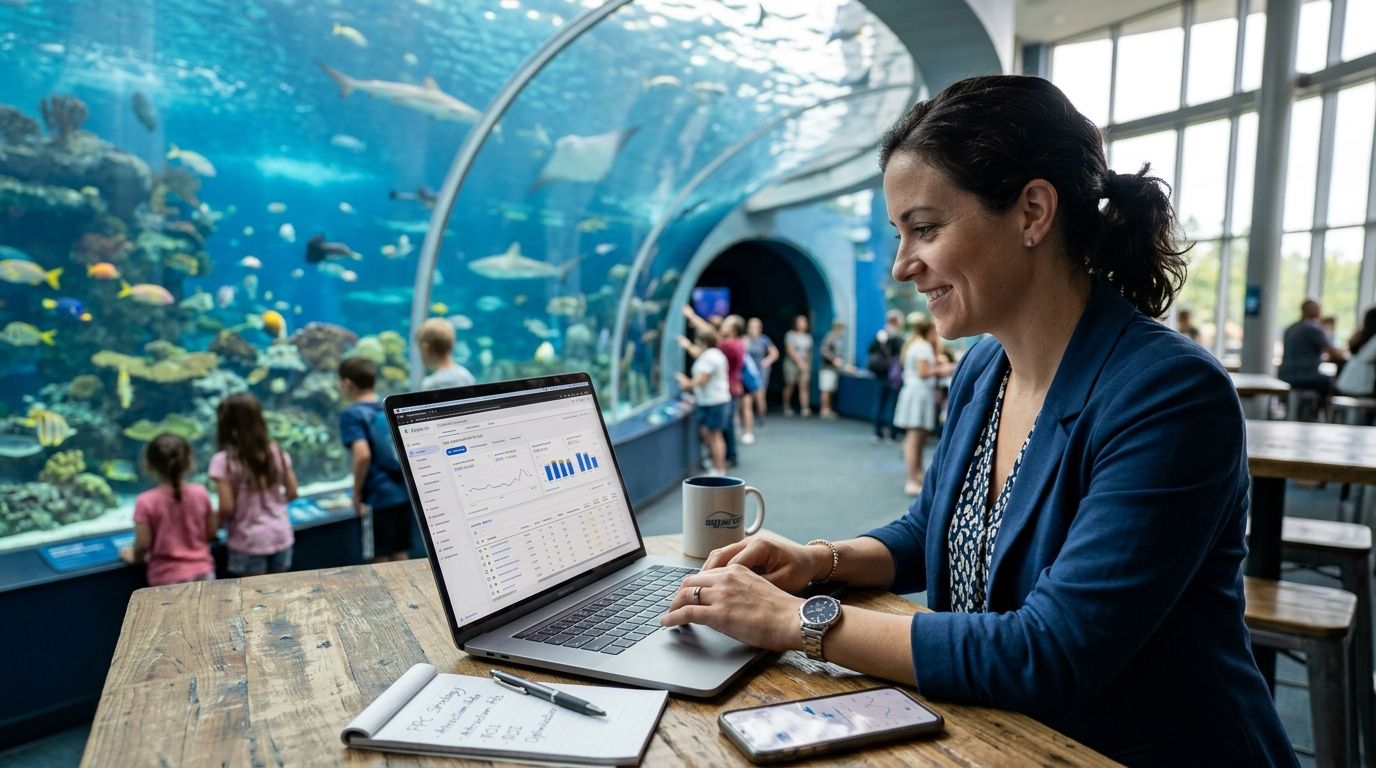
Google Search branded and high-intent campaigns win the best PPC strategy for attraction operators in 2026, with a cross-channel retargeting stack close behind for cutting no-shows and Meta Advantage+ campaigns leading on new-booker prospecting.
- Google Search high-intent campaigns are the best overall PPC strategy for attraction operators in 2026 — verdict: Run.
- Meta Advantage+ wins for prospecting new bookers via lookalike audiences.
- A cross-channel retargeting stack recovers abandoned checkouts and cuts no-shows fastest.
- Performance Max suits operators with large ticket inventories across multiple time slots.
- TikTok Spark Ads are the lowest-cost option for filling last-minute, under-35 demand.
Why this matters
Most attraction operators still run PPC the way a retailer would — one campaign type, one platform, hope for the best. That fails because tickets are perishable inventory: an unsold Tuesday 2pm slot at an escape room or trampoline park is gone forever the moment the clock hits 2:01pm.
The marketing budget split for attraction operators that works in 2026 treats paid media as a portfolio, not a single bet. Google Search catches the booker who already decided; retargeting catches the one who almost booked; Meta and TikTok build the audience that hasn't decided yet. Running only one of these leaves bookings on the table.
What makes the best PPC strategy for attraction operators
- Cost per booking versus average ticket value — a channel that costs more per booking than the ticket is worth isn't a strategy, it's a leak.
- Speed to fill off-peak slots — weekday mornings and shoulder-season weeks need a channel that can be switched on fast.
- Attribution to redeemed bookings, not just clicks or add-to-carts — clicks don't pay rent.
- Seasonal flexibility — the same setup needs to flex for Halloween, Christmas grottos and Valentine's Day without a rebuild.
- Compatibility with the booking platform feed — ticket inventory needs to sync into the ad account automatically.
- Reach into last-minute, short-lead-time bookers, since a large share of attraction bookings happen within 72 hours of the visit.
PPC strategies for attraction operators at a glance
| Strategy | Best for | Standout feature | Key limitation |
|---|---|---|---|
| Google Search (high-intent) | Capturing bookers who already decided | Near-instant intent match on "book now" terms | Limited reach for building new demand |
| Meta Advantage+ | Prospecting new bookers | Lookalike targeting off existing customer lists | Needs a warm audience seed to perform |
| Performance Max | Multi-surface inventory promotion | Automated placement across Search, Display, YouTube | Less control over exact placements |
| Cross-channel retargeting stack | Recovering abandoned checkouts, cutting no-shows | Follows the exact visitor who nearly booked | Needs enough site traffic to build audiences |
| YouTube / video ads | Pre-launch and seasonal awareness | Builds recall before the booking window opens | Longer payback period than search |
| TikTok Spark Ads | Last-minute fills for under-35 audiences | Lowest CPMs of the six channels | Weaker for over-45 audience segments |
1. Google Search (high-intent): best PPC strategy for capturing "book now" searches
Google Search campaigns built around exact and phrase-match terms like "escape room near me tonight" or "trampoline park tickets this weekend" catch bookers at the exact moment of intent. This is the channel that converts fastest because the searcher has already decided to visit something — the job is just being the venue they pick.
Google Search pros:
- Converts at the highest rate of any PPC channel for attraction operators
- Works for both branded terms and generic "[activity] near me" searches
- Scales up cleanly during a seasonal peak like Christmas or Halloween
Google Search cons:
- Doesn't build awareness for a brand-new attraction with no search demand yet
- Costs rise fast in dense city-centre markets with several competing venues
Best for: operators who already have search volume on their name or category and need to convert it. Verdict: Run.
2. Meta Advantage+: best PPC strategy for prospecting new bookers
Meta's Advantage+ campaigns use a seed list — past bookers, email subscribers, loyalty members — to build lookalike audiences that resemble the operator's best customers. For attractions selling group experiences, this is often how the next 20% of bookings gets found without more search volume existing.
Meta Advantage+ pros:
- Builds new demand rather than just capturing existing demand
- Performs well alongside a group booking marketing push, since group organisers respond well to social proof creative
- Automated placement testing across Reels, Stories and feed reduces manual guesswork
Meta Advantage+ cons:
- Needs a decent-sized seed audience (thin customer lists underperform)
- Creative fatigue sets in faster than on Search, so assets need refreshing every few weeks
Best for: operators with an existing customer list who want to grow beyond their current booker base. Verdict: Run.
3. Performance Max: best PPC strategy for multi-slot ticket inventory
Performance Max pulls ticket inventory feeds and places ads across Search, Display, YouTube and Gmail automatically. For an attraction with dozens of time slots and price tiers — think an immersive experience with multiple show times — this removes the manual work of building separate campaigns per slot.
Performance Max pros:
- Automates placement across every Google surface from one campaign
- Handles complex, high-SKU-count inventory better than manual Search campaigns
- Learns fast when fed accurate conversion data from redeemed bookings
Performance Max cons:
- Offers less control over exact placements than a standard Search campaign
- Needs at least 30 days of clean conversion data before it optimises properly
Best for: operators with many time slots or price tiers who want automated coverage. Verdict: Test.
4. Cross-channel retargeting stack: best PPC strategy for cutting no-shows
A retargeting stack layers Meta, Google Display and email remarketing against the same audience: people who viewed a booking page, started checkout, or booked but haven't shown up yet. This is the highest-ROAS channel on this list because the audience already knows the venue.
Retargeting stack pros:
- Cheapest cost per booking of any channel, since the audience is already warm
- Directly reduces no-shows when combined with pre-visit reminder creative
- Pairs naturally with a wider retention marketing plan
Retargeting stack cons:
- Needs enough site traffic to build a usable audience pool — very low-traffic sites can't sustain it
- Diminishing returns if the same creative runs for more than two to three weeks
Best for: operators already running Search or Meta who want to squeeze more bookings from existing traffic. Verdict: Run.
5. YouTube and video ads: best PPC strategy for pre-launch awareness
Video ads on YouTube build recall before a booking window opens — useful when launching a new attraction, a seasonal event, or a limited-run pop-up. The payback is slower than Search, but it's the channel that makes every other channel cheaper later, because searchers already recognise the name.
YouTube pros:
- Builds brand recall ahead of ticket release, which lowers Search CPCs afterwards
- Strong fit for pop-up experience marketing with a fixed run date
YouTube cons:
- Longest payback period of the six strategies
- Requires decent video creative, which costs more to produce than static ads
Best for: operators launching something new with no existing search demand. Verdict: Test.
6. TikTok Spark Ads: best PPC strategy for last-minute, younger audiences
TikTok Spark Ads boost existing organic content rather than running standalone ads, and CPMs stay lower than Meta or YouTube in most experience categories through 2026. This is the fastest way to fill a slot 48 hours out for an under-35 audience.
TikTok pros:
- Lowest cost per impression of the six channels
- Boosts creator or UGC content that already has organic traction
TikTok cons:
- Weaker performance for audiences over 45
- Needs a steady supply of native-feeling video content, which not every operator can produce in-house
Best for: operators targeting under-35 audiences who need to fill slots fast. Verdict: Test.
How we ranked these PPC strategies
Each channel was weighed against the six criteria above: cost per booking, speed to fill off-peak slots, attribution to redeemed tickets, seasonal flexibility, feed compatibility and reach into last-minute bookers. Google Search and the retargeting stack scored highest because both convert against existing intent rather than trying to manufacture it, which keeps cost per booking lowest. Channels that build new demand — Meta, YouTube, TikTok — rank lower on immediate ROAS but higher on long-term audience growth, which is why they're positioned as prospecting tools rather than the primary spend.
“If the cost per booking is higher than the average ticket price, kill the campaign, not the budget.”
Which PPC strategy should attraction operators choose?
For most attraction operators in 2026, the right starting stack is Google Search for existing intent, a retargeting layer to catch the almost-bookers, and Meta Advantage+ to grow the customer base beyond current search volume. Performance Max, YouTube and TikTok earn their place once the first three are running cleanly and there's budget left to build new demand rather than just capture existing demand.
Operators who skip retargeting are usually the ones with the highest no-show rates — that single gap costs more than most people realise across a full year of ticketed sales.
Get a PPC strategy built for your venue
FullyBooked has managed paid media for 50+ experience operators since launch.
FAQ
What's the best PPC strategy for attraction operators in 2026?
Google Search campaigns targeting high-intent terms win overall, paired with a retargeting stack to recover abandoned checkouts. Together they produce the lowest cost per booking of the six strategies compared here.
Is Meta or Google Search better for attraction PPC?
Google Search converts existing intent faster and cheaper, while Meta Advantage+ is better for finding new bookers who aren't searching yet. Most operators need both running at the same time.
How much does PPC cost for an attraction operator?
Cost varies by market density and category, so the right benchmark is cost per booking against average ticket value, not a fixed spend figure. A campaign is working if cost per booking stays comfortably below the ticket price.
Does retargeting actually reduce no-shows?
Yes, when the retargeting creative includes a pre-visit reminder rather than just a discount push. It reaches people who already booked, which is a different job to prospecting cold audiences.
Is TikTok worth it for attraction marketing?
TikTok Spark Ads work well for filling last-minute slots with under-35 audiences due to lower CPMs, but they underperform for older demographics. Treat it as a fast-fill channel, not a core strategy.
Should a new attraction start with Search or Display?
A brand-new attraction with no existing search demand should start with video or awareness ads to build recall before switching spend to Search. Running Search first against zero search volume wastes budget.
How often should PPC creative change?
Meta and TikTok creative needs refreshing every two to three weeks to avoid fatigue, while Search ad copy can run longer since it's matched to intent rather than shown repeatedly to the same feed audience.
One last thing
The operators getting the most out of PPC in 2026 aren't spending more — they're spending on the retargeting layer that most competitors skip entirely, because it's less exciting than launching a new TikTok campaign. That gap in cost per booking compounds every month it's left unfixed.


