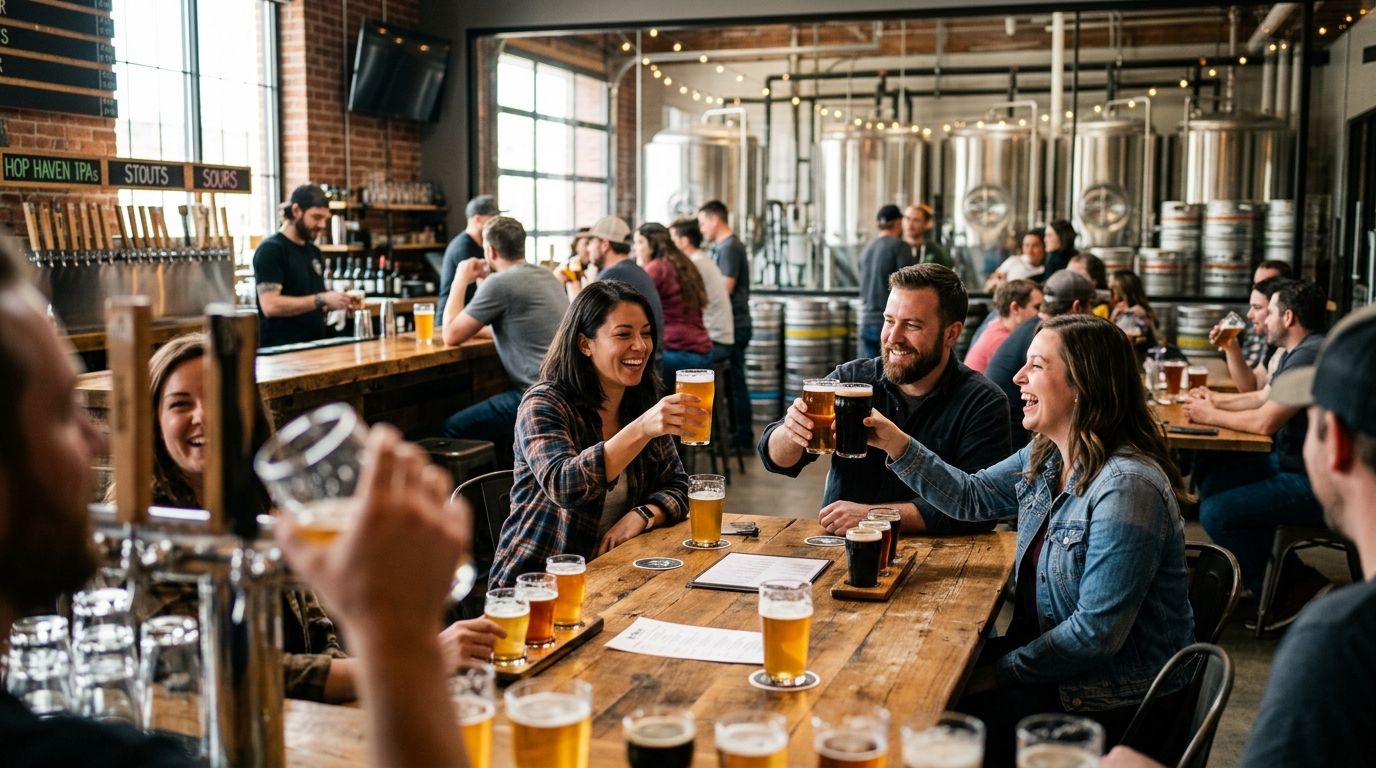
Paid media for brewery tap rooms means running targeted Google Ads, Meta Ads and retargeting campaigns built specifically to fill session slots, private hire and event nights at a taproom, converting local search intent into pre-booked revenue rather than walk-ins you can't forecast. Tap rooms have a different buying pattern than restaurants or bars: bookers search close to the visit date, decide fast, and care more about what's on tonight than a menu.
- Paid media for brewery tap rooms works best when Google Ads captures last-minute local search and Meta drives event awareness 7-10 days out.
- Tap room bookers decide within 3-7 days, so campaign structure matters more than budget size.
- Retargeting booking-page visitors who didn't convert recovers revenue organic and social leave behind.
- FullyBooked has managed paid media for 50+ experience operators and generated over £85M in tracked revenue.
- Skip broad-match Google Ads with no negative keyword list; it burns budget on brewery tour searches with zero booking intent.
Why paid media matters for brewery tap rooms
A tap room doesn't sell a ticket weeks ahead the way a comedy club or escape room does. Most bookers decide within 3-7 days of visiting, often searching "brewery near me open tonight" or "tap room events this weekend" on a phone. That's a paid search problem, not a brand awareness problem.
Meta and Instagram carry a different job: making the case for a specific event night — a beer launch, a live band, a quiz — far enough ahead that people plan around it. Run both channels with the same generic message and you waste budget on the wrong intent at the wrong stage. FullyBooked builds these as two separate campaigns, never one blended budget.
The tap room category also has a repeat-visit ceiling most operators underuse. One visitor who becomes a monthly regular is worth more than five one-off bookings, and paid media should be structured to capture both the first visit and the return.
Build the campaign: step by step
Audit your booking funnel first
Before any ad spend, find where bookers drop off between seeing an ad and confirming a table or event slot.
- Time a booking from a mobile browser — anything over 90 seconds loses bookers
- Check whether your booking page loads a live calendar or forces an email exchange first
- Confirm session slots and event nights show real-time availability, not a static events page
- Test the exact landing page your ads will point to, not the homepage
Set up conversion tracking before you spend a pound
You can't optimise paid media for brewery tap rooms without knowing which sessions and events actually convert.
- Fire a conversion event on booking confirmation, not on page load
- Track "book a table" and "buy event ticket" separately — they are different funnels
- Run Meta's conversions API alongside the pixel so tracking loss doesn't undercount results
- Pull a 28-day baseline before launch so you know what better looks like
Run Google Ads against local, last-minute search terms
Search intent for tap rooms clusters around location and immediacy. Structure campaigns around that, not brand terms.
- Bid on "[town] brewery tap room", "beer garden near me", "tap room events tonight"
- Add call and location extensions — most of these searches happen within walking distance
- Build a negative keyword list excluding "brewery tour", "jobs", "franchise" so budget stops leaking to non-buyers
- Use dayparting to concentrate spend Thursday to Saturday afternoons, when same-day bookers search hardest
If search is the only channel you run, Google Ads for selling more event tickets covers the account structure in more depth.
Run Meta and Instagram ads around named event nights
Generic "come visit us" ads underperform against a named event with a date attached.
- Build one campaign per event — quiz night, live band, beer launch — not one evergreen ad set
- Use Reels over static images; taproom atmosphere footage beats product shots for this audience
- Layer lookalike audiences off your existing customer list instead of broad interest targeting alone
- Go live 7-10 days before the event, with a second push 48 hours out
Retarget visitors who didn't book
Most people who land on a tap room booking page and leave never come back on their own.
- Build an audience of booking-page visitors from the last 14 days who didn't convert
- Serve different creative than the original ad — show the specific event, not the brand
- Cap frequency at 3-4 impressions a week; retargeting fatigue kills tap room click-through fast
- Exclude converters so you stop paying to reach people who already booked
This is the point where most operators either keep managing spend in-house or hand it to a specialist. Retargeting ads for event ticket sales sets out the audience windows that work for ticketed venues.
Tie paid media to your local search presence
Paid and organic local visibility reinforce each other for a physical venue.
- Update your Google Business Profile weekly with real event photos, not stock brewery shots
- Reply to every review within 48 hours — tap rooms live on local reputation signals
- Post event-specific updates to the profile so they surface alongside your paid ads
- Match paid landing pages to the keywords your profile already ranks for
Build a retention loop after the first visit
A first-time visitor costs more to acquire than a returning one, so the campaign shouldn't end at the booking confirmation.
- Trigger an email or SMS 3-5 days after a first visit inviting them to the next event
- Segment by what they booked — a quiz night visitor and a private hire client need different follow-up
- Report repeat visit rate as a paid media KPI, not just cost per booking
- Feed retargeting audiences from your CRM so lapsed visitors see ads before they forget you
Comparing paid media channels for tap rooms
| Channel | Best for | Key limitation |
|---|---|---|
| Google Search Ads | Last-minute, high-intent local searchers | Weak at building awareness for a new event |
| Meta / Instagram Ads | Event-specific awareness 7-10 days out | Needs fresh creative per event or it fatigues |
| TikTok Ads | Reaching a younger, social-first audience | Smaller effective radius for hyper-local venues |
| Retargeting | Recovering visitors who browsed but didn't book | Only works with clean conversion tracking already live |
| Google Business Profile | Free, compounding local visibility | Too slow to fill a slot by Friday |
Verdict: run Google Search Ads for immediate bookings and Meta for event awareness — in 2026 neither channel alone covers the full tap room booking cycle.
Get a paid media plan for your tap room
FullyBooked has generated £85M+ in tracked bookings across 50+ experience operators.
Common mistakes tap rooms make with paid media
- One campaign for everything. Blending session bookings, event tickets and private hire into a single ad set makes it impossible to see what drives revenue.
- Ignoring dayparting. Tap room search volume spikes Thursday to Saturday afternoons; spreading spend evenly across the week funds low-intent hours.
- No negative keyword list. Bidding on brewery terms without exclusions pulls in tour bookers, job seekers and franchise researchers who never convert.
- Treating retention as an afterthought. Paying to acquire a first-time visitor and never following up hands the repeat revenue to someone else.
- A stale Google Business Profile. A listing untouched for months loses to competitors posting weekly event photos, even against a bigger ad budget.
FAQ
What's the best paid media channel for a brewery tap room?
Google Search Ads wins for last-minute local bookings, while Meta and Instagram drive awareness for specific event nights 7-10 days out. Most tap rooms need both, not one or the other.
How much should a tap room spend on paid media?
Budget depends on session capacity and event frequency, so there is no fixed figure. Track cost per booking against average spend per visit to judge whether the budget is working.
Is Meta or Google Ads better for brewery events?
Google Ads captures people already searching for something to do tonight; Meta builds demand for a named event before it happens. Running both covers more of the booking window than either alone.
How far in advance should tap room event ads run?
Launch Meta and Instagram campaigns 7-10 days before an event with a second push 48 hours out. Google Search Ads should run continuously because last-minute intent has no fixed lead time.
Does retargeting work for tap room bookings?
Yes, retargeting recovers visitors who browsed the booking page without confirming, provided conversion tracking is set up first. Cap frequency at 3-4 impressions a week to avoid fatigue.
Should a tap room run TikTok ads?
TikTok reaches a younger, social-first audience but has a smaller effective radius for hyper-local venues than Google or Meta. Treat it as a supplementary channel in 2026, not a primary one.
Can local SEO replace paid media for a tap room?
No. Local SEO and Google Business Profile build compounding free visibility over time but will not fill a specific slot by Friday the way paid search can. The two work best together.
What's the biggest paid media mistake tap rooms make?
Running one blended campaign across session bookings, event tickets and private hire instead of separating them. Without separation you cannot see which offer converts.
One last thing
Tap rooms that treat every visitor as a one-off booking cap their own revenue ceiling. The structure that works in 2026 pairs acquisition — Google Ads and Meta for new bookers — with a retention loop triggered 3-5 days after the first visit. Operators running both consistently hold a higher share of returning visitors than those running acquisition alone, and the cost per booking falls as the returning share grows.