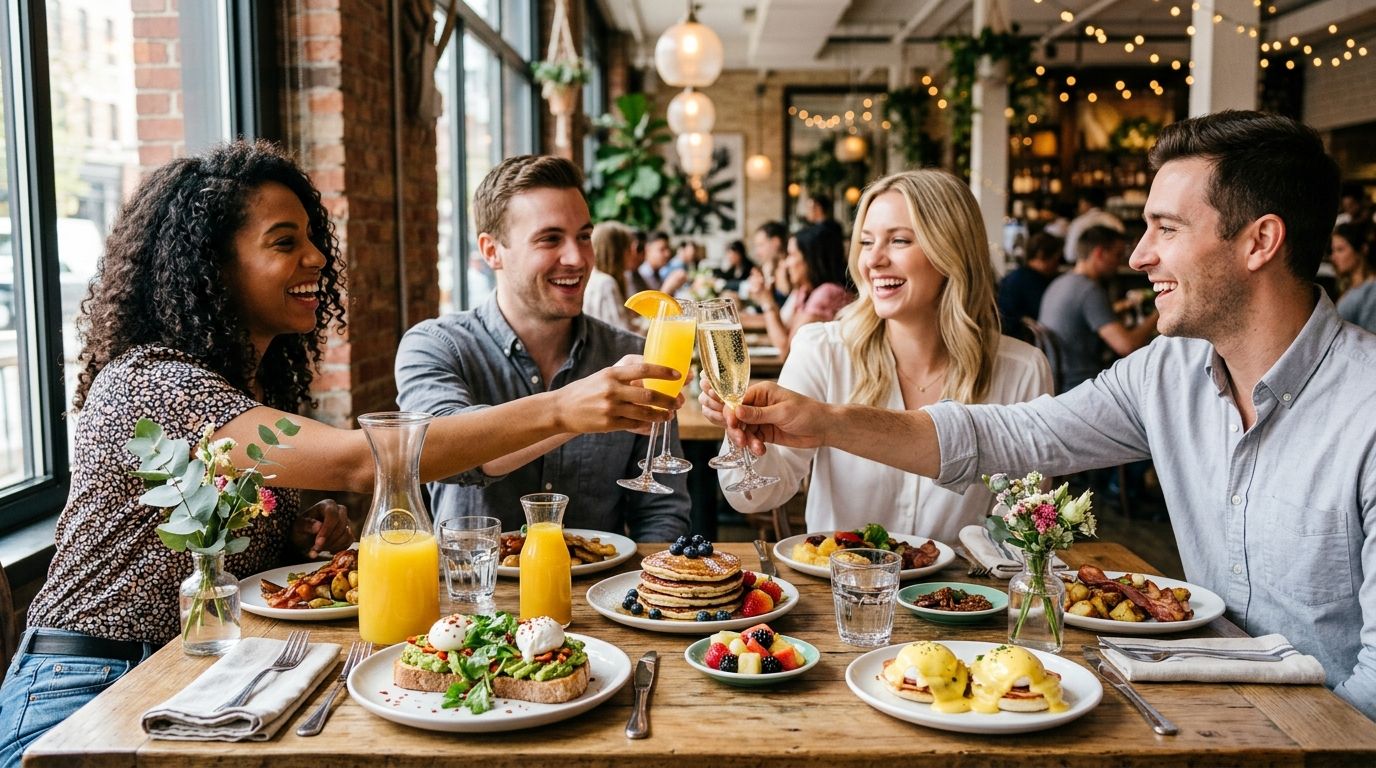
Bottomless brunch paid media is the targeted ad spend on Meta, Google and TikTok that keeps every weekend sitting booked out, with the aim of hitting consistent covers on Saturdays and Sundays without cutting prices to get there. Brunch is a perishable, recurring product — an empty 11am sitting on 14 June 2026 can't be resold on 15 June — so the media plan has to move on a weekly cycle, not a quarterly one.
- Paid media bottomless brunch campaigns perform best when built around group organisers, not solo diners.
- Meta and TikTok drive visual discovery; Google Ads catches high-intent 'bottomless brunch near me' searches.
- FullyBooked has generated £85M+ in bookings revenue and sold 3M+ tickets across 50+ experience operators.
- Deposit-gated ads and SMS reminders cut no-shows on paid-driven bottomless brunch bookings.
- Venues running 3+ sittings a week fill fastest when Meta retargeting and a deposit policy run together.
Why paid media matters for bottomless brunch venues
Brunch bookers behave differently from other venue audiences: they search close to the date, they book in groups of four to ten, and the decision is almost always made in a WhatsApp group chat, not by one person. That means the ad has to sell the group leader, not the individual diner.
FullyBooked has managed paid media for operators running weekly bottomless brunch slots, and the pattern holds across venues: campaigns built around group organisers and deposit-gated bookings fill sittings faster than generic "book now" ads aimed at anyone in the local area. A venue with three sittings a week and no paid strategy is relying on organic reach alone in a feed that increasingly favours paid placement — that gap only widens through 2026 as more brunch concepts launch and compete for the same Saturday slot.
The other reason paid media matters here: bottomless brunch is visually driven. Bottomless prosecco towers, drag hosts, live DJs — these are the exact assets that perform in paid social, which means the creative cost of testing is low compared to categories that need studio production.
Map ad spend to your sitting calendar
Start with the free version before layering on spend: pull last quarter's booking data and mark which sittings undersell every week. Most brunch venues have a predictable soft spot — early sittings on wet Sundays, or the 2pm slot that always fills last.
- Pace weekly budget higher against the sitting that historically undersells, not evenly across the week
- Set a floor of 10-14 days out to start remarketing before the sitting, since brunch bookers commit late
- Flag bank holiday weekends and local events (festivals, football fixtures) that shift demand up or down
- Review sell-through by sitting every Monday, not monthly — brunch inventory moves too fast for a monthly cadence
Target group organisers, not solo bookers
A solo diner rarely books a bottomless brunch table for one. The person clicking your ad is almost always booking for a hen do, a birthday, or a work leaving do — build the targeting and the copy around that person.
- Use interest layering for hen party, birthday and "girls brunch" signals rather than broad "brunch" interest targeting
- Write ad copy that speaks to the organiser ("round up the group") rather than the attendee
- Build lookalike audiences from your highest-value group bookings, not your full customer list
- Test group-size prompts in the primary text ("tables for 6+ get priority seating") where that's genuinely true
Build creative around the bottomless hook
Static flatlays of a mimosa glass stop converting after a few weeks of the same asset in the same feed. Refresh the hook, not just the photo.
- Rotate between the drink pour, the room atmosphere, and the host/performer if the venue has one
- Cut 15-second vertical video for Reels and TikTok showing the sitting in full swing, not an empty room
- Test price-anchoring copy against experience-anchoring copy ("2 hours unlimited" vs "the loudest brunch in town")
- Refresh creative every 10-14 days on Meta to avoid frequency fatigue on a weekly-repeat product
Retarget lapsed bookers before they book a competitor
Anyone who viewed a booking page and didn't convert is your cheapest remaining audience — and the most time-sensitive, because bottomless brunch has direct local competitors doing the exact same retargeting. This is where a structured retargeting ads for event ticket sales approach earns its spend back fastest.
- Build a 7-day website visitor audience and serve a different creative than the prospecting ad
- Exclude anyone who already booked in the last 14 days to avoid wasting spend on converted customers
- Layer a cart-abandonment sequence for anyone who reached the booking form but didn't submit
- Add urgency copy only when it's true ("3 tables left for Saturday 2pm") — false urgency erodes trust fast in a repeat-visit category
Add Google Search Ads for high-intent local searches
Someone typing "bottomless brunch near me" or "bottomless brunch [city] Saturday" is closer to booking than anyone scrolling Instagram. Google Search Ads catch that intent at the moment it happens.
- Bid on your venue name plus "bottomless brunch" to defend against competitors bidding on your branded terms
- Run location extensions so the ad shows distance and opening hours directly in the search result
- Send search traffic straight to the booking page for the relevant sitting, not the homepage
- Pair search spend with an optimised Google Business Profile so paid and organic local results reinforce each other
Deposit-gate your paid traffic to cut no-shows
Paid-driven bookings no-show at a higher rate than direct bookings unless the funnel forces a commitment. A deposit at the point of booking is the single biggest lever here.
- Require a deposit on every paid-sourced booking, even a small one, before the table is confirmed
- Send an automated SMS or WhatsApp reminder 24 hours and 2 hours before the sitting
- Build a no-show policy into the booking confirmation, not just the terms page nobody reads
- Review the practical steps to reduce no-shows for ticketed events if no-show rate sits above 8-10% of paid bookings
Fill every brunch sitting in 2026
Talk through your current booking data and where paid media is leaking spend.
Comparing paid channels for bottomless brunch
| Channel | Best for | Key limitation |
|---|---|---|
| Meta Ads (Instagram/Facebook) | Visual brunch content and group-organiser targeting via lookalikes | Creative fatigues fast on a weekly-repeat product |
| Google Search Ads | Capturing high-intent "bottomless brunch near me" searches | Only pays off once branded search volume already exists |
| TikTok Ads | Younger group bookers and drag/bottomless-format virality | Production-heavier, slower to scale spend confidently |
| SMS/WhatsApp retargeting | Winning back lapsed bookers and filling last-minute gaps | Needs a clean, opted-in contact list to work at all |
| Agency-managed media (FullyBooked) | Operators without an in-house media buyer or the time to test weekly | Requires handing campaign control to an external team |
Verdict: bottomless brunch venues doing three or more sittings a week get the fastest fill-rate from Meta prospecting plus retargeting, backed by a deposit policy — Google Search Ads then defend the branded terms competitors bid on.
Common mistakes bottomless brunch venues make
- Running one static creative for months. The same mimosa flatlay stops converting once the audience has seen it a dozen times — refresh every 10-14 days.
- Targeting "brunch" broadly instead of group organisers. Solo-diner targeting wastes spend on an audience that rarely books a bottomless table alone.
- Skipping the deposit on paid-sourced bookings. No-show rates run highest on the exact bookings that cost the most to acquire.
- Spending evenly across the week. Most venues have a known soft sitting — pacing budget flat across all seven days ignores the data already sitting in the booking system.
- Ignoring the cart-abandonment audience. Anyone who reached the booking form and left is warmer than any cold prospecting audience, yet most venues never retarget them.
FAQ
What's the best paid media channel for bottomless brunch venues in 2026?
Meta Ads paired with retargeting performs best for most bottomless brunch venues in 2026 because the format is visual and group-driven. Google Search Ads then defends branded terms once search volume for the venue name exists.
Is TikTok better than Instagram for bottomless brunch marketing?
TikTok works well for younger group bookers and drag or performance-led brunch formats, but it needs more video production than Instagram. Most venues run both, weighting spend toward whichever platform their existing audience skews younger or older on.
How much should a bottomless brunch venue spend on paid media?
Spend should scale against the sittings that undersell, not run flat across the week. Check current budget guidance directly rather than applying a fixed rule, since venue size and sitting count both change the number.
Does paid media increase no-shows for bottomless brunch bookings?
Paid-sourced bookings tend to no-show more than direct bookings unless a deposit is required at the point of booking. Adding a deposit and an SMS reminder sequence closes most of that gap.
How do you target group bookings with paid ads?
Layer interest signals for hen parties, birthdays and work leaving dos rather than broad brunch interest targeting. Ad copy should speak to the group organiser, since they're almost always the one clicking.
Can Google Ads work alongside Meta Ads for bottomless brunch?
Yes — Meta drives visual discovery earlier in the decision, while Google Search Ads catch high-intent local searches like "bottomless brunch near me" closer to the booking moment. Running both covers the full funnel.
How often should bottomless brunch ad creative be refreshed?
Refresh creative every 10-14 days for a weekly-repeat product like bottomless brunch. The same audience sees the ad multiple times a month, so static creative fatigues faster than in lower-frequency categories.
Should a bottomless brunch venue hire an agency or run paid media in-house?
In-house media buying works if someone owns it weekly and reviews sell-through by sitting every Monday. Venues without that capacity typically move faster working with a specialist agency that already manages paid media across similar experience operators.
One last thing
The brunch operators seeing the strongest sell-through in 2026 aren't spending more — they're pacing spend against the specific sitting that undersells, week by week, instead of running one flat campaign across the whole weekend. That single change in how budget is allocated matters more than any creative refresh.


