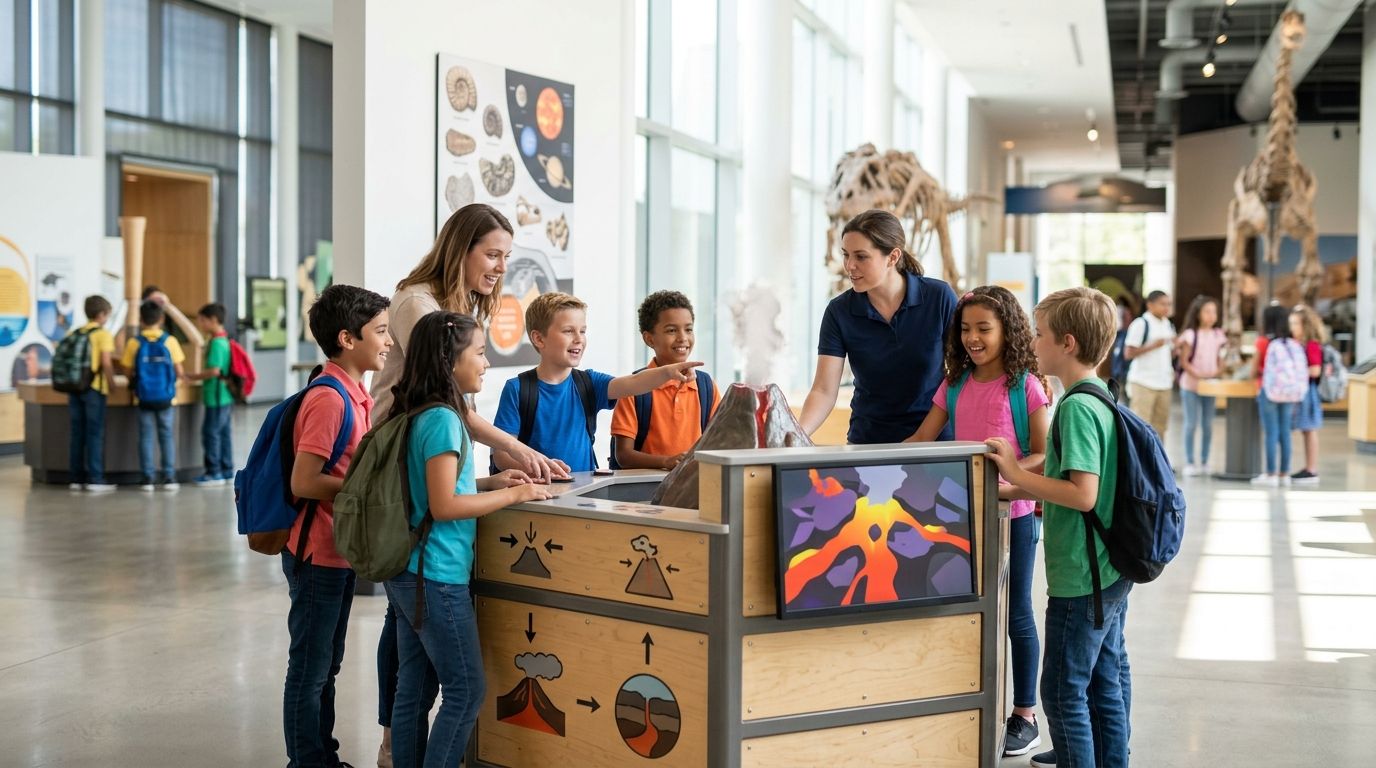
To market school trip bookings in 2026, create a dedicated education offer, show its curriculum value, give teachers the practical information needed for approval, reach school decision-makers directly and make every enquiry easy to progress. The main caveat is that family-focused campaigns rarely transfer unchanged: the buyer is a teacher or organiser who needs evidence, clarity and internal approval before booking.
- How to market school trip bookings in 2026: combine curriculum-led pages, direct outreach, paid search and prompt follow-up.
- School decision-makers need educational value, visit logistics and approval information before they can progress an attraction booking.
- Paid search captures active demand; segmented email creates demand among schools that already fit the attraction.
- FULLYBOOKED® is best suited to experience operators that need specialist acquisition and retention support.
Why this matters
School trips can turn weekday capacity into planned group bookings, but the sales journey has more stakeholders than a standard family purchase. A teacher can like the attraction and still be unable to proceed without suitable educational content, clear logistics and information that supports the school's approval process.
That makes school-trip acquisition a distinct part of group booking marketing for venues. The campaign must sell the visit to the organiser, help that organiser explain it internally and remove avoidable questions before the enquiry reaches your team.
The strongest 2026 plan connects marketing and operations. Ads cannot fix an education page with no curriculum context. A polished page cannot fix unanswered enquiries. Direct outreach cannot fix a visit format that is difficult for teachers to understand.
How to market an attraction for school trip bookings
Use this sequence to build a school-trip booking campaign without treating teachers like ordinary leisure customers.
-
Define the school visit clearly. State which age groups, subjects or learning outcomes the experience supports. Explain what pupils do during the visit and what teachers can use before or after it. Avoid calling the attraction educational without showing the connection.
-
Create a dedicated education landing page. Put the essential information in one place: visit format, suitable groups, curriculum relevance, accessibility, arrival process, facilities, supervision expectations and the next step. Do not force a teacher to assemble the answer from consumer pages.
-
Prepare approval information. Schools need to assess educational visits and manage health and safety responsibilities. Make venue information, accessibility details and relevant visit documentation easy to request or download, while making clear that the school completes its own assessment and approval process.
-
Build a relevant school list. Segment schools by location, pupil age and subject fit. A generic database blast produces weak messages; a focused list lets you explain why the attraction suits that specific audience.
-
Contact the right role. Depending on the visit, that person can be a subject lead, educational visits coordinator, head of year, school office contact or group organiser. Address the operational question as well as the educational benefit.
-
Capture active searches. Teachers searching for school trip ideas, educational visits or subject-specific attractions are showing stronger intent than broad family-day-out audiences. A focused PPC strategy for attraction operators should separate education searches from consumer ticket campaigns.
-
Make the enquiry route simple. Ask only for information needed to progress the conversation, such as school name, preferred visit period, group profile and contact details. Long forms create work before the organiser knows whether the visit is suitable.
-
Follow up with a usable answer. Reply with the relevant visit information and a clear next action. An acknowledgement without answers leaves the organiser to continue comparing alternatives.
-
Record the outcome. Track the school, contact, visit interest, enquiry source and next follow-up. This creates a usable education pipeline rather than a collection of disconnected inbox conversations.
-
Plan repeat contact. A completed visit creates a relationship with the school. Retain the organiser's details under the appropriate consent and data-protection basis, then communicate relevant future visit opportunities instead of restarting acquisition from zero.
The 2026 rule is simple: market the attraction as an approvable school visit, not merely an enjoyable day out.
Which channels work for school trip bookings?
No single channel covers the full journey. Search reaches teachers already researching, while outbound email introduces the attraction before a search starts. Local visibility, partnerships and remarketing support those two core routes.
| Channel | Best for | Strength | Limitation | 2026 verdict |
|---|---|---|---|---|
| Segmented school email | Relevant schools within the attraction's catchment | Lets you match the message to age, subject and location | Weak lists and generic copy get ignored | Use for targeted outreach |
| Paid search | Teachers actively researching visits | Captures clear intent at the point of research | Broad keywords can attract family traffic | Use with education-only campaigns |
| Organic search | Sustained visibility for school-trip queries | Builds a discoverable answer around curriculum and logistics | Needs a focused page and ongoing maintenance | Build as the long-term base |
| Local search | Schools comparing reachable attractions | Reinforces location, travel practicality and venue information | A consumer profile alone will not explain the school offer | Support with a clear landing page |
| Partnerships | Trusts, local networks and education contacts | Adds credibility through an existing relationship | Access depends on relevance and relationship quality | Pursue selectively |
| Paid social | Awareness among defined professional audiences | Can introduce the visit before active research begins | Intent is usually lower than search | Test after the core funnel works |
Start with the landing page, segmented outreach and paid search. Add supporting channels when the enquiry process is working and source tracking can show which route produced each lead.
Build a school-trip landing page that answers approval questions
A school-trip page has two jobs: create interest and help the organiser progress the idea internally. Consumer imagery and a short booking button do not cover the second job.
Use this page structure:
- Clear visit summary: explain what the group experiences and what makes it relevant to a school visit.
- Age and subject fit: name the groups and curriculum areas supported by the experience where that fit genuinely exists.
- Learning format: describe workshops, guided elements, independent exploration or supporting materials only when the attraction offers them.
- Visit logistics: cover arrival, duration, accessibility, facilities, lunch arrangements and weather considerations where relevant.
- Teacher information: explain how organisers can obtain the documentation needed for their own planning and assessment.
- Enquiry route: provide one obvious next step and identify the information needed from the school.
- Follow-up expectation: tell the organiser what happens after submitting an enquiry without promising a response time the team cannot maintain.
Search visibility matters because teachers often combine the type of visit with a location or subject. The principles in local SEO for experience venues help attraction operators connect location signals with a dedicated education page rather than relying on the homepage to rank for every intent.
Do not hide important school information inside a PDF alone. Keep the core answer in crawlable page copy, then use downloadable documents for material that teachers need to share or retain.
Write outreach that teachers can act on
The email should answer why this visit fits the school before asking for a booking. Lead with relevance to the recipient, not a broad description of the attraction.
A practical message contains:
- The reason the attraction is relevant to that school, age group or subject.
- A concise description of the pupil experience.
- The educational connection, stated without inflated claims.
- The location and essential visit format.
- A link to the dedicated education page.
- One clear response action for the organiser.
Avoid sending the same message to every school. Primary schools, secondary subject departments and specialist settings do not share one set of needs. Segmentation changes the examples, practical information and contact role used in the campaign.
Follow-up should add information rather than repeat the first email. A useful second message can answer a common planning question, explain how the visit runs or point the organiser to relevant documentation. Repetition without new value trains recipients to ignore the sender.
Why school-trip booking results vary
- Curriculum relevance: a precise link between the visit and classroom learning gives the organiser a stronger internal case.
- Travel practicality: journey time, coach access and arrival arrangements affect whether a school can operate the visit.
- Age suitability: broad claims create uncertainty; clearly defined pupil groups make comparison easier.
- Documentation: accessible planning information reduces the number of unresolved questions in the approval journey.
- Response quality: a complete answer progresses the enquiry; a generic acknowledgement does not.
- Internal capacity: school campaigns fail when sales, education and operations teams give different answers.
Review these factors before increasing media activity. More traffic magnifies funnel problems; it does not remove them.
How should attractions measure school-trip marketing?
Track the journey from qualified enquiry to confirmed visit, not page traffic alone. Record source, school, relevant group details, enquiry status, follow-up action and outcome so each channel can be judged on the bookings it creates.
Keep school leads separate from consumer ticket sales in reporting. The buying journey, decision-maker and follow-up process are different, so combining both audiences hides where enquiries stall.
Should school-trip campaigns run all year?
Keep the education page and search coverage active throughout 2026, then schedule outbound activity around the planning windows relevant to your target schools. Use previous enquiry and booking dates to shape timing rather than copying a generic calendar.
The campaign should also account for operational capacity. Promote visit periods the attraction can support properly, then align the message, enquiry handling and availability process before outreach starts.
Is paid search better than email for school bookings?
Paid search is better for capturing active demand; email is better for introducing a relevant visit to selected schools. Use both when the attraction has a clear landing page and a process for identifying which channel generated the enquiry.
Search usually carries clearer immediate intent, but it cannot reach every suitable school before research begins. Email expands the reachable audience, while search converts existing interest.
Where FULLYBOOKED® fits
FULLYBOOKED® is best suited to experience operators that need specialist paid media, influencer marketing and retention strategy tied to ticket and booking growth. The agency has sold 3M+ tickets, generated £85M+ in revenue and managed 50+ operators across experience-based businesses.
For school-trip acquisition, FULLYBOOKED® can support the marketing system around the offer: audience strategy, paid media, campaign messaging and retention planning. The limitation is clear: no agency can replace accurate curriculum information, workable group operations or prompt responses from the attraction itself.
Build your booking campaign
Discuss acquisition and retention strategy for your attraction.
FAQ
How do you market an attraction to schools in 2026?
Create a dedicated education page, show genuine curriculum relevance, contact suitable school roles and capture active search demand. Connect every campaign to a clear enquiry and follow-up process.
What should a school-trip landing page include?
A school-trip page should include age and subject fit, the visit format, learning relevance, accessibility, facilities, arrival details and a clear enquiry route. It should also explain how teachers obtain planning and assessment information.
Who should an attraction contact at a school?
Contact the role connected to the proposed visit, such as a subject lead, educational visits coordinator, head of year or school office. The right contact varies by age group, subject and school structure.
Is email effective for school-trip marketing?
Email is effective when the school list and message are tightly segmented by location, age and educational fit. Generic database blasts give recipients little reason to consider the visit.
Do Google Ads work for school-trip bookings?
Google Ads can capture teachers and organisers actively searching for educational visits or school-trip ideas. Keep education campaigns separate from family ticket campaigns so the keywords, advert copy and landing page match the buyer.
What information do schools need before booking an attraction?
Schools need enough information to assess educational value, logistics, accessibility and health and safety considerations. The school remains responsible for its own approval and risk-management process.
How should school-trip enquiries be tracked?
Track the school, contact, campaign source, group details, enquiry stage, next action and final outcome. Report school enquiries separately from consumer ticket purchases because the sales journeys differ.
Can FULLYBOOKED® market school-trip bookings for attractions?
FULLYBOOKED® provides performance marketing services for experience and events operators, including paid media and retention strategy. The attraction still needs an accurate education offer and an operational process that can support group visits.
One last thing
The most useful school-trip campaign asset is often not another advert. It is a single, accurate page that a teacher can send to colleagues without adding an explanation.
Audit that page as a decision document in 2026. If the educational case, visit format, practical details or next step remain unclear when the page is read alone, fix the page before buying more reach.


