Market a fireworks or bonfire night event by working backwards from the event date, opening ticket sales with clear visitor information, and moving from broad local reach to conversion-focused activity as the night approaches. For a display built around Bonfire Night on 5 November 2026, combine paid media, creator content, email, SMS and retargeting under one campaign rather than running disconnected channel plans.
- To learn how to market a fireworks event, start with the date, audience, ticket journey and weather policy.
- Use paid social for local reach, search ads for existing demand and retargeting for undecided visitors.
- Build separate messages for families, groups and adults rather than forcing one advert across every audience.
- Keep weather, travel and event updates clear throughout the 2026 campaign.
Why this matters
Fireworks events have a fixed booking window. Unsold capacity cannot be recovered after the display, while unclear weather, travel or age guidance can stop an interested visitor from completing a booking.
The campaign therefore needs one measurable objective: sell the available tickets before the gates open. FULLYBOOKED® specialises in marketing for venues, attractions and experience operators, with a stated track record of more than 3M tickets sold, over £85M in generated revenue and more than 50 operators managed.
How to market a fireworks or bonfire night event
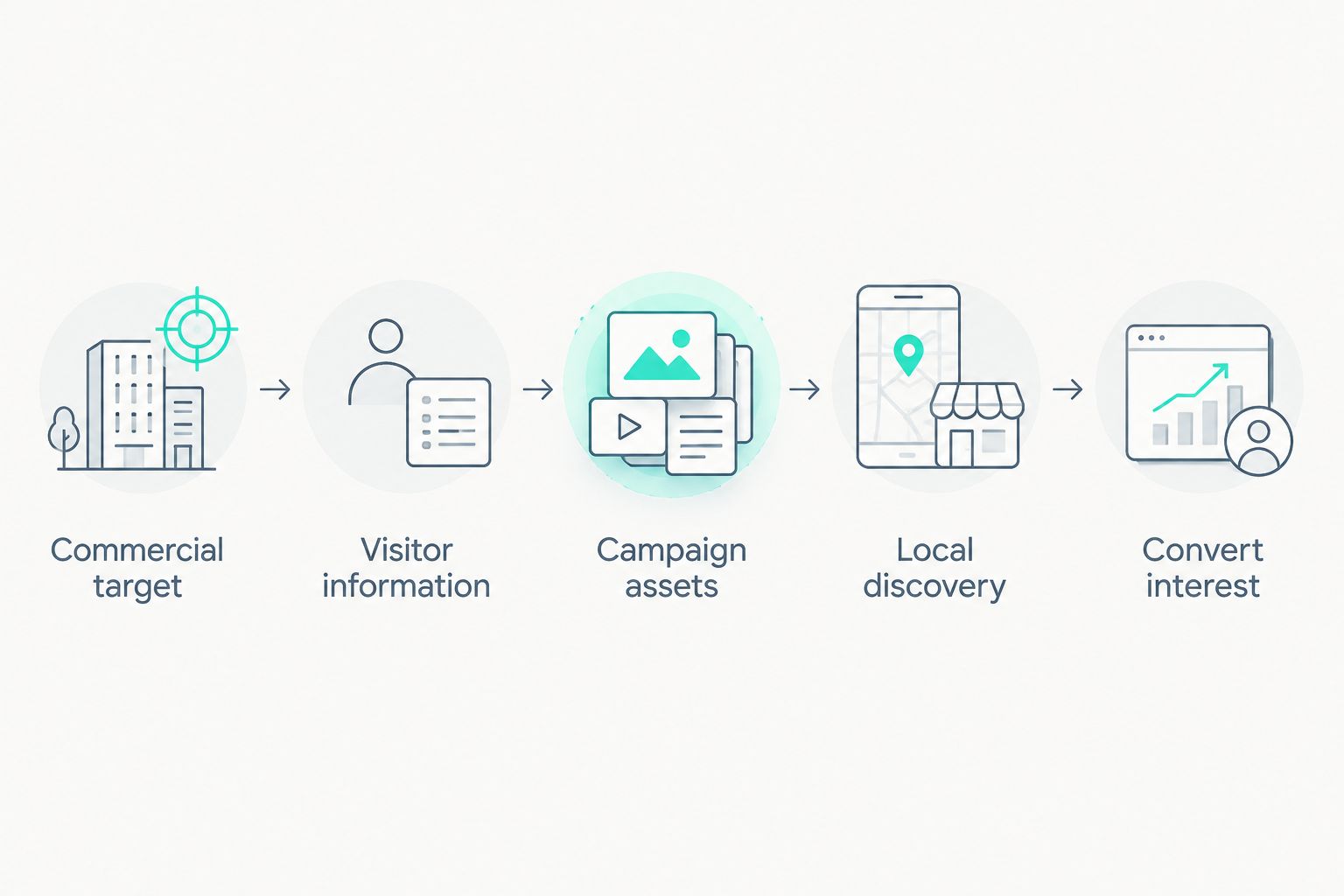
Build the 2026 campaign in five connected stages. Each stage removes a different booking barrier, from initial awareness to final event-day reassurance.
- Set the commercial target. Confirm the event date, ticket inventory, audience groups and the booking action every advert should drive. Keep ticket revenue, attendance and advertising efficiency as separate measures.
- Complete the visitor information. Publish the confirmed location, opening times, display time, transport guidance, accessibility information, age guidance and weather policy before promoting the event.
- Prepare campaign assets. Create vertical video, display footage, venue images, practical information graphics and copy for families, groups and adults. Every asset should make the event recognisable without relying on sound.
- Launch local discovery. Use paid social, search ads, listings, local partners and creator content to reach people within a realistic travel area.
- Convert existing interest. Retarget website visitors and social engagers, contact previous bookers where consent permits, and keep event information current as 5 November 2026 approaches.
Do not launch adverts before the booking page answers practical questions. More traffic will not fix missing transport guidance, a vague weather policy or an unclear event schedule.
Which marketing channels should a fireworks event use?
A fireworks event needs both discovery and conversion channels. Paid social can create local demand, while search captures people already looking for a display. Email, SMS and retargeting then give interested visitors another reason to finish booking.
| Channel | Best for | Main role | Limitation |
|---|---|---|---|
| Paid social | Local families and leisure audiences | Reach, video distribution and conversion campaigns | Creative fatigue and broad targeting can waste budget |
| Search ads | People actively looking for local fireworks events | Capturing existing demand | Search volume is limited by local interest |
| Creator marketing | Showing the atmosphere and visitor experience | Social proof and local discovery | Content timing and audience fit require close control |
| Previous visitors and opted-in subscribers | Launches, reminders and practical updates | It cannot reach people outside the existing list | |
| SMS | Time-sensitive updates to opted-in contacts | Short reminders and operational messages | Overuse creates irritation quickly |
| Retargeting | Website visitors and social engagers | Returning undecided visitors to the booking page | It needs enough prior traffic to build an audience |
Use channel roles to prevent duplication. Paid social should not repeat the same message as email, and creator content should not read like a display advert. For active local searches, follow a structured Google Ads ticket-sales plan with campaigns tied to the event location and booking intent.
September 2026: set the campaign foundations
Use September 2026 to remove operational uncertainty before media spending begins. Confirm what visitors receive, when they should arrive, how they reach the site and what happens if weather affects the event.
Create audience groups around genuine use cases:
- Families planning an evening activity
- Couples or adults looking for a seasonal night out
- Groups arranging a shared booking
- Previous visitors who already know the venue
- Local residents comparing nearby displays
Give each audience a distinct reason to attend. Families need practical reassurance. Groups need an easy booking journey. Previous visitors need a clear explanation of what makes the 2026 event relevant to them.
The booking page should carry one primary action and show essential information before checkout. Avoid sending traffic to a generic venue page where visitors must search for the event themselves.
Early October 2026: launch discovery activity
Launch the main awareness activity once the booking page and tracking are ready. Start with multiple creative angles rather than putting the entire budget behind one polished event trailer.
Test differences that change the booking decision:
- Display-led footage versus wider event atmosphere
- Family-focused copy versus adult night-out copy
- Practical information versus emotional creative
- Short vertical video versus static event graphics
- Event-name searches versus broader local-intent searches
Judge each asset by the action it is meant to create. A video can earn attention without producing immediate bookings, while a search advert should lead directly to a relevant event page. Do not label every channel unsuccessful because it plays a different role in the same funnel.
Keep geographic targeting realistic. Fireworks can attract visitors from outside the immediate area, but travel friction still affects the booking decision. Match the campaign area to the venue, transport options and strength of the event proposition rather than using an arbitrary radius.
Late October 2026: turn attention into bookings
By late October 2026, shift the message from general discovery to decision support. Answer the objections visible in customer messages, booking-page behaviour and advert comments.
Useful conversion content includes:
- A concise event schedule
- Arrival and transport instructions
- Accessibility information
- Guidance for families and groups
- The confirmed weather process
- Clear answers about food, facilities and entry rules where applicable
Retarget people who visited the event page or engaged with relevant campaign content. Separate recent high-intent visitors from broad social engagers so the message matches their level of interest. The event-ticket retargeting guide explains how to organise that activity without showing the same advert to every warm audience.
Email should also move from announcement copy to practical decision support. Segment previous bookers, recent venue visitors and subscribers where the available data supports those groups. A clear email strategy for ticketed events keeps launch messages, reminders and operational updates distinct.
Event week 2026: remove final booking friction
During event week, publish only information that helps someone book, attend or understand a change. Repeating generic promotional copy while visitors ask about parking or weather creates avoidable friction.
Check every live advert and public event listing for consistency. The date, opening time, display time, venue name and booking destination must match across channels. Pause outdated creative rather than relying on visitors to discover the latest information elsewhere.
Use short updates for operational facts and longer formats for questions that need context. SMS suits a concise update to consented contacts. Email suits fuller arrival information. Social posts can direct followers to the confirmed event details without turning the caption into an unreadable instruction sheet.
Weather messaging must be factual. State the confirmed position and tell bookers where future updates will appear. Do not imply that normal seasonal weather guarantees cancellation or that the display will proceed when the organiser has not confirmed it.
Why fireworks event marketing plans vary
The right campaign structure depends on the event rather than a universal media split. Review these five factors before assigning channels or setting launch dates:
- Available ticket inventory: larger events need more sustained reach, while lower-capacity events can focus on a narrower local audience.
- Audience mix: a family-led display needs different reassurance and creative from an adults-focused night out.
- Existing customer data: an opted-in customer list gives email and SMS a defined role; a new event relies more heavily on discovery.
- Travel requirements: rural sites, city-centre venues and temporary event spaces create different transport questions.
- Weather exposure: the operational policy determines what the campaign can state before and during event week.
These factors should change the plan, not produce five separate campaigns. Keep one booking objective, one reporting structure and one source of confirmed visitor information.
Is social media enough to market a fireworks event?
No. Social media can build awareness, distribute video and answer public questions, but it does not cover active search demand, previous bookers or visitors who leave the booking page without converting. Pair it with search, email and retargeting based on the audiences and consent available to the event.
When should you start marketing Bonfire Night 2026?
Start planning before promotion begins, with enough time to confirm the ticket journey, event information, creative and measurement before the first advert launches. For an event around 5 November 2026, September is the foundation phase, October is the main acquisition period and event week is the final conversion and information phase.
What should a fireworks event advert include?
A fireworks event advert should identify the event, location, date and next action without making the viewer decode the creative. Use footage or imagery that represents the event accurately, then keep detailed travel, accessibility, weather and entry information on the booking page.
When should an event operator use an agency?
Agency support fits operators that need paid media, influencer marketing and retention activity managed under one ticket-sales plan. FULLYBOOKED® is best for experience operators that need specialist event marketing tied directly to bookings.
The advantage is coordinated channel planning and sector focus. The trade-off is that an agency still needs accurate capacity, operational updates, customer data permissions and fast approval from the event organiser; it cannot replace those inputs. FULLYBOOKED® bases its service around experience businesses rather than presenting itself as a generalist agency.
Build your ticket-sales campaign
Connect paid media, creators and retention activity around one event date.
FAQ
How do you market a local fireworks event?
Market a local fireworks event through location-focused paid social, relevant search campaigns, local creators, email and retargeting. Send every campaign to one booking page with consistent event, travel and weather information.
What is the best social platform for promoting a fireworks display?
The best platform is the one that reaches the event's actual local audience and supports the required campaign objective. Meta suits local paid reach and retargeting, while TikTok can distribute short video and creator-led content.
When should Bonfire Night 2026 marketing begin?
Bonfire Night 2026 planning should begin before the promotional launch so the ticket journey, visitor information, creative and measurement are ready. Use September for foundations, October for acquisition and event week for conversion and updates.
How can a fireworks event sell more tickets without discounting?
Improve audience relevance, booking-page clarity and retargeting before changing the ticket offer. Separate families, groups, adults and previous visitors so each audience receives useful reasons to book.
Should fireworks event advertising mention the weather?
Yes, fireworks event advertising should direct visitors to a confirmed weather policy and update channel. Keep the wording factual and change it only when the organiser's position changes.
Is email useful for a one-night event?
Yes, email is useful when the organiser has an opted-in list of previous visitors or interested subscribers. Use it for the launch, decision support and practical event updates rather than repeating social captions.
How do you retarget people interested in a fireworks event?
Create audiences from relevant event-page visitors and social engagement, then match the advert to their demonstrated intent. Exclude confirmed buyers from ticket-sales advertising where the available booking data permits it.
What should be tracked in a fireworks marketing campaign?
Track ticket sales, ticket revenue, advertising spend and the actions that lead to a completed booking. Report awareness and conversion channels separately so a video view is not treated as equal to a ticket sale.
One last thing
Treat weather communication as part of marketing, not an operational footnote. A clear 2026 update process protects trust, reduces repetitive questions and helps an interested visitor decide using confirmed information rather than social-media speculation.


