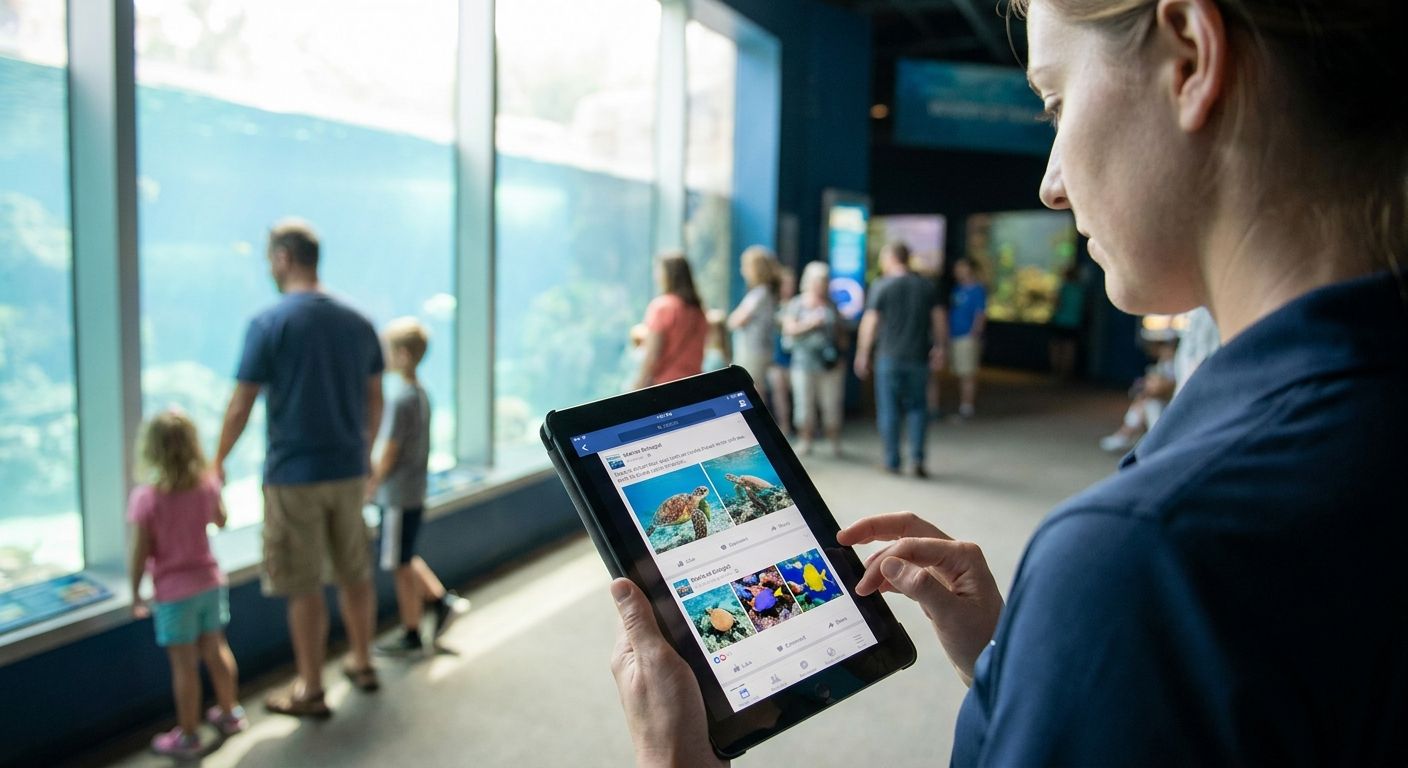
Best overall: short-form video built around live-animal moments — feeding times, keeper encounters, enclosure reveals — wins as the best social media strategy for aquariums and zoos in 2026. Best for filling off-peak slots: live-streamed underwater and enclosure cams. Best for group bookings: user-generated tagging campaigns that turn visitor photos into free reach. Best budget option: keeper takeovers shot on a phone, no production spend required.
- Short-form video wins the best social media strategy for aquariums in 2026 — start there.
- Live streams fill off-peak slots without new content production costs.
- User-generated tagging campaigns convert group bookings better than paid ads alone in most attraction accounts.
- Influencer partnerships work fastest for reaching new local audiences within weeks, not months.
Why this matters
Aquariums and zoos have a content advantage most venues don't: a live cast of animals that people want to watch even when they're not planning a visit. That's a bigger reach opportunity than a comedy club or an escape room gets, but most attractions still post static graphics and event flyers instead of using it.
The result is low reach, no booking link in sight, and a social following that never converts. A social media strategy for entertainment venues built for a bar or a live music room doesn't transfer directly to a zoo or aquarium — the content source is different, the audience is more family-led, and the booking window is longer because trips get planned weeks ahead around school holidays.
This guide ranks six social tactics by the specific booking problem each one solves in 2026, so you're matching the tactic to the gap in your calendar instead of copying whatever a bigger attraction is doing.
What makes the best social media strategy for aquariums and zoos
- Built around live animals, not graphics — feeding, movement, and keeper interaction outperform static posts on every major platform in 2026
- Native vertical video first — Reels and TikTok algorithms favour platform-shot content over repurposed horizontal clips
- A booking link in every post or bio, not just brand awareness — reach without a path to purchase doesn't fill seats
- Cadence tied to seasonal footfall — school holidays, half-terms and Halloween need a different posting rhythm than a quiet February
- Tracked to ticket sales, not just likes — UTM-tagged links or booking-page click data, so you know which content actually sells
- Low production friction — the strategy has to survive being run by an in-house team, not just an agency crew
Aquarium and zoo social media strategies at a glance
| Strategy | Best for | Standout feature | Key limitation |
|---|---|---|---|
| Short-form video (feeding time, keeper content) | New-visitor discovery | Algorithmic reach without paid spend | Needs a consistent filming routine |
| Live-streamed enclosure cams | Filling off-peak slots | Runs passively, low editing effort | Doesn't drive urgency to book |
| User-generated tagging campaigns | Group bookings | Free reach from visitors' own networks | Slow to build without a prompt |
| Influencer and creator partnerships | Fast reach to new local audiences | Access to an audience you don't already have | Inconsistent quality without a brief |
| Keeper takeovers / behind-the-scenes | Retention and repeat visits | Zero production budget | Limited reach outside existing followers |
| Seasonal UGC contests | Seasonal spikes (half-term, Halloween) | Concentrated bursts of engagement | Only works a few weeks a year |
1. Short-form video: best social media strategy for aquariums for new-visitor discovery
Vertical video of feeding times, shark tank cleans or a penguin waddle gets pushed by the TikTok marketing for experience brands algorithm to people who've never heard of the venue. It works because the content is the attraction itself, not an ad for it.
Short-form video pros:
- Reaches non-followers through the algorithm, not just your existing audience
- Costs nothing beyond a phone and 20 minutes a week
- Repurposes across TikTok, Reels and YouTube Shorts from one shoot
Short-form video cons:
- Needs a consistent weekly filming habit to keep the algorithm interested
- Doesn't guarantee a booking without a link in the bio or caption
Best for: attractions with low brand awareness that need new households finding them for the first time. Verdict: Buy. Start here before any other tactic on this list.
2. Live-streamed enclosure cams: best social media strategy for aquariums for filling off-peak slots
A fixed camera on a tank or enclosure, streamed on Facebook or YouTube during quiet weekday hours, gives people a reason to check in without a production team. It's the same logic used across attraction marketing to fill off-peak slots — content that runs itself while footfall is soft.
Live-stream pros:
- Runs with minimal daily editing once set up
- Builds a habit of checking in, which supports repeat visits
- Works well for weekday and term-time audiences with flexible schedules
Live-stream cons:
- Rarely creates urgency to book a specific date
- Viewership drops fast without a fresh hook (feeding time, new arrival)
Best for: attractions with a quiet midweek period that needs a low-effort content anchor. Verdict: Hold. Test it against a slow week before committing daily hours to it.
3. User-generated tagging campaigns: best social media strategy for aquariums for group bookings
A branded hashtag or geotag prompt at the exit, paired with a repost incentive, turns every family or school trip into free reach among their own network. This is the same principle behind group booking marketing tactics — word of mouth from people who already converted.
UGC campaign pros:
- Free distribution through visitors' personal networks
- Builds social proof that converts better than brand-produced content
- Cheap to run — signage and a repost habit, no ad spend required
UGC campaign cons:
- Takes weeks to build enough volume to matter
- Needs a clear, simple prompt or most visitors won't bother tagging
Best for: venues that already get school groups, birthday parties or family bookings and want those visits to sell the next one. Verdict: Buy. Cheap, compounding, and it directly supports group sales.
4. Influencer and creator partnerships: best social media strategy for aquariums for fast reach to new audiences
A local family or lifestyle creator posting a visit gets you in front of an audience that took years to build, in a single week. This sits alongside broader influencer marketing platforms for hospitality brands work but is specific to family and education-led audiences for zoos and aquariums.
Influencer partnership pros:
- Fastest way to reach an audience you don't already have
- Creator's existing trust transfers to the venue
- Content can be repurposed on the venue's own channels with permission
Influencer partnership cons:
- Quality and tone vary wildly without a tight brief
- Reach doesn't always translate to trackable bookings without a unique code or link
Best for: venues launching a new exhibit or targeting a new postcode radius. Verdict: Hold. Worth testing with one or two creators before scaling spend.
5. Keeper takeovers and behind-the-scenes content: best social media strategy for aquariums for retention
Handing Instagram Stories or a weekly video slot to a keeper or educator builds a following that feels connected to the animals, not just the venue. It's the lowest-cost tactic on this list and the one most likely to bring people back.
Keeper takeover pros:
- No production budget — filmed on a staff phone
- Builds a personal connection that supports repeat visits and membership renewal
- Differentiates the venue from bigger, glossier competitors
Keeper takeover cons:
- Reach stays mostly within existing followers
- Depends on staff willingness and time, which can be inconsistent
Best for: venues with an annual pass or membership base they want to keep engaged between visits. Verdict: Buy. Cheapest tactic here and it directly supports retention.
6. Seasonal UGC contests: best social media strategy for aquariums for seasonal spikes
A half-term photo contest or a Halloween-themed enclosure trail gives a short, sharp reason to post, tag and share within a fixed window. It concentrates attention around the exact dates you need footfall.
Seasonal contest pros:
- Concentrates engagement around a specific booking window
- Easy to tie a prize to a return visit or upgrade
- Reuses the UGC tagging mechanics from strategy #3
Seasonal contest cons:
- Only effective a few weeks a year
- Needs planning at least a month ahead to build entries before the window closes
Best for: attractions with a known seasonal spike — half-term, Halloween, festive holidays — that want to maximise it. Verdict: Wait. Save the effort for your actual peak weeks rather than running it year-round.
Want more bookings from social?
FullyBooked runs paid, influencer and retention campaigns for visitor attractions.
How we ranked these strategies
Each tactic was scored against the six criteria above — live-animal content, native video format, a booking link, seasonal cadence, trackability, and low production friction. Short-form video and UGC tagging scored highest because they combine free reach with a direct path to a booking page.
This ranking draws on patterns from managing social and paid campaigns across 50+ experience operators, work that's contributed to £85M+ in generated revenue and 3M+ tickets sold. Attractions with live animals consistently outperform static-content venues once video becomes the default post type, and that pattern held again through 2026 booking data across the sector.
If a post doesn't include a booking link or a reason to visit this month, it's brand awareness, not a sales tactic.
Which social media strategy should you choose?
Start with short-form video if reach is the problem — it's free, it's algorithm-favoured, and it works for any zoo or aquarium regardless of size. Layer in user-generated tagging campaigns once you have steady footfall, because they turn visitors into your distribution channel for group bookings.
Use live cams to plug a specific off-peak gap, not as your main strategy. Save influencer partnerships for a launch moment — new exhibit, new season, new audience you're trying to reach fast. Keeper takeovers cost nothing and should run alongside everything else as your retention layer. Reserve seasonal UGC contests for the two or three weeks a year when footfall actually spikes.
The attractions getting this right in 2026 aren't posting more — they're posting the right format for the right booking gap, with a link attached every time.
FAQ
What is the best social media strategy for aquariums in 2026?
Short-form vertical video built around feeding times and keeper encounters is the best social media strategy for aquariums in 2026, because it drives algorithmic reach to new audiences without paid spend. Pair it with a booking link in every post to convert that reach into ticket sales.
Is TikTok or Instagram better for zoo and aquarium marketing?
Both matter, but TikTok's algorithm pushes native video to non-followers faster, making it stronger for discovery. Instagram Reels and Stories work better for retention once someone already follows the venue.
How often should a zoo or aquarium post on social media?
A weekly short-form video habit is the minimum to keep the algorithm interested, with daily Stories or live content during peak seasons like half-term and Halloween.
Do influencer partnerships work for aquariums and zoos?
Yes, particularly for reaching new local audiences fast around a launch or new exhibit. They work best with a tight brief and a trackable link or discount code so the booking impact is measurable.
How do you get more group bookings for a zoo or aquarium through social media?
User-generated tagging campaigns turn every school trip or birthday visit into free reach among the visitor's own network, which converts better for group bookings than paid ads alone.
What social media content keeps zoo and aquarium visitors coming back?
Behind-the-scenes keeper takeovers build the personal connection that drives repeat visits and membership renewal, at close to zero production cost.
Should attractions run social media contests?
Seasonal UGC contests work best concentrated around known peak weeks like half-term or Halloween, rather than running year-round where engagement fades quickly.
How do you track whether social media content actually sells tickets?
Use UTM-tagged links or a unique booking-page URL on every post so ticket sales tie back to the specific content that drove them, not just likes or follower counts.
One last thing
The most common mistake across attraction social accounts isn't posting too little — it's posting content with no booking link at all. A feeding-time video that gets 50,000 views and zero clicks to the booking page is a missed sale, not a marketing win. Fix the link before you fix the content in 2026.


