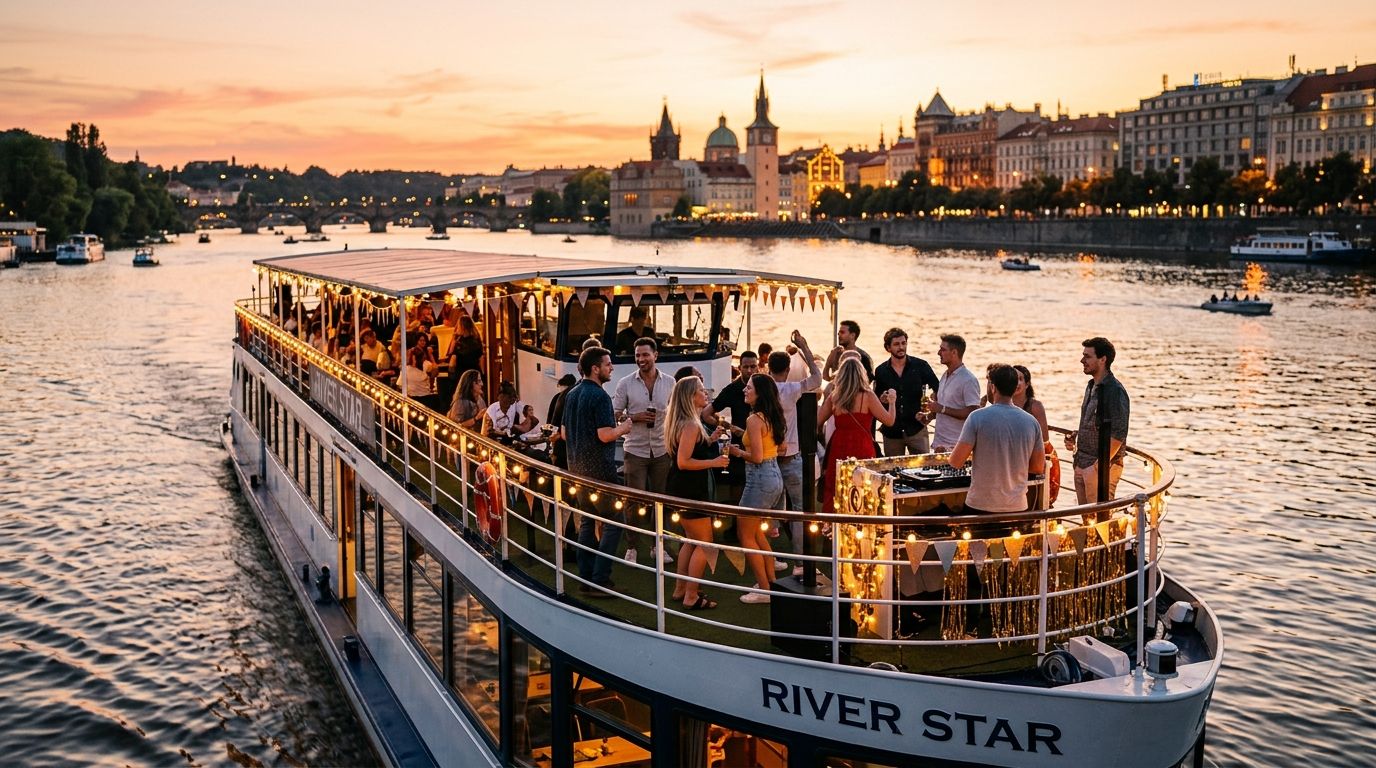
Paid media for river boat party cruises is targeted ad spend across Meta, Google and TikTok built to fill sailings before the boat pulls away from the dock empty. Boat party operators face a problem most venues don't: a fixed departure time, a hard capacity ceiling, and zero ability to sell that seat once the ropes come off. That combination makes paid media less about brand awareness and much more about hitting a booking number before a deadline that can't move.
- Paid media for boat party cruises works best when campaigns are built around sailing dates, not evergreen brand messaging.
- Meta and TikTok drive the group organiser and hen/stag audience; Google Ads catches high-intent searchers already typing 'boat party [city]'.
- Retargeting near-abandoners inside 48 hours recovers bookings that would otherwise sail empty in 2026.
- FullyBooked treats cost per booking, not cost per click, as the only metric that matters for perishable capacity.
Why paid media matters for boat party cruises
A boat party cruise has no shelf life. A comedy club can push a quiet Tuesday show into next week; a river cruise departing at 7pm on Saturday either sells out or sails at 40% capacity and the revenue on those empty seats is gone forever. That perishability is the single biggest reason paid media for boat party cruises needs sharper targeting than most experience venues use.
Demand also skews heavily toward group organisers — hen parties, birthday crews, corporate socials — booking on behalf of six to twenty people. These are high-value, high-intent bookers who research on Instagram and TikTok before they ever hit a booking page, and they decide fast once a date works for the group. Paid media strategy for a venue's group business has to account for that organiser behaviour specifically, not just generic ticket-buyer targeting.
Weather risk adds a layer no other ticketed venue deals with at the same intensity. A cancelled sailing due to wind or tide doesn't just lose that night's revenue — it creates a rebooking scramble that paid media has to absorb within hours, not days.
The step-by-step approach
Audit your booking window and capacity data
Before any spend goes live, pull the real numbers: how many days out most sailings fill, what percentage of seats book inside the final 72 hours, and which sailing days chronically underperform. This data decides your 2026 campaign calendar, not guesswork.
- Pull 8-12 weeks of booking timestamps against sailing date to map your typical booking curve
- Flag sailing days or times that consistently sit below 60% capacity
- Segment bookings by party size to separate solo and couple bookers from group organisers
- Note cancellation and reschedule rates tied to weather across 2026 so far
- Identify your highest-margin sailing — sunset cruise, late-night party sailing — to prioritise spend against
Build a paid social funnel for group organisers
Meta and TikTok carry the weight here because group organisers scroll before they search. The funnel needs a top-of-funnel awareness layer — video of a live sailing, music, crowd energy — feeding a mid-funnel offer aimed at whoever books for the group.
- Run vertical video ads showing an actual sailing: deck, DJ, skyline, crowd, not stock imagery
- Target interest and lookalike audiences built from past group-size bookings
- Test carousel ads showing different sailing packages side by side
- Layer a lead-gen form for group enquiries over 10 guests to catch organisers not ready to book instantly
- Retarget video viewers who watched 50% or more within 7 days with a direct booking CTA
FullyBooked builds this exact funnel structure for experience operators where group organisers drive the bulk of ticket volume, sequencing paid social spend around the party planning window rather than firing generic awareness ads year-round.
Launch Google Ads for high-intent search terms
Search traffic for boat party cruises is smaller in volume than social but converts faster because the searcher already knows what they want. Terms combining boat party with a city or river name, plus hen do and party boat hire variants, all carry strong purchase intent.
- Bid on exact-match local terms combining boat party with your city or river name
- Build separate ad groups for hen party, birthday and corporate search intent
- Use call extensions for last-minute group enquiries that need a human answer
- Exclude broad sightseeing and boat tour traffic that doesn't convert to party bookings
- Push search budget up 48-72 hours before low-capacity sailings
A dedicated Google Ads playbook for event tickets covers the bid structure and negative keyword lists that keep this channel efficient rather than a budget drain.
Retarget cart-abandoners and past sailors
A booker who reached the checkout page and left is your cheapest recoverable revenue. A guest who sailed with you last summer is your fastest repeat booking. Both need dedicated retargeting, not the same generic ad as cold traffic.
- Set up a 3-day retargeting window for checkout abandoners with a direct booking link
- Build a separate audience of past sailors excluded from cold acquisition spend
- Send a limited-inventory message naming the remaining seats on the next sailing to abandoners within 48 hours
- Exclude anyone who has booked in the last 14 days from further ad exposure
Retargeting ads built specifically for event ticket sales recover bookings other operators write off the moment someone closes the tab.
Layer influencer content into paid amplification
Organic influencer posts of a sailing get seen by that creator's followers; the same footage boosted through Meta's partnership ads tool reaches people who match your group-organiser profile. Content and media spend should overlap here, not run as two separate strategies.
- Seed 3-5 local micro-influencers per month with a comped sailing in exchange for content
- Whitelist top-performing organic posts to run as paid ads through the creator's handle
- Prioritise creators whose audience skews 21-35 and local to your departure city
- Track which influencer content drives the lowest cost per booking, not just views
Fix off-peak and weather-cancelled sailings with rapid-response campaigns
Weather cancellations and slow midweek sailings need a pre-built campaign template that can go live within the hour, not a fresh brief. Build the ad creative and audience once; reuse it every time a sailing needs a push.
- Keep a standing last-minute-seats ad template ready to launch same-day
- Push rebooking offers to cancelled-sailing guests within 2 hours of a weather call
- Run geo-targeted ads within a 5-mile radius of the departure point
- Use dynamic ad copy that pulls the actual sailing date and time automatically
Track cost per booking, not cost per click
Click-through rate says nothing about whether a seat got filled. Cost per booking, segmented by sailing date and party size, is the only number that tells you whether the campaign paid for itself in 2026.
- Build a tracking sheet mapping ad spend to bookings by sailing date
- Segment cost per booking by group size — a 15-person booking at the same cost as a solo booking is a very different result
- Set a maximum acceptable cost per booking based on your average party spend
- Review weekly, not monthly, given how fast sailing dates cycle
Get a paid media plan for your sailings
FullyBooked builds booking-window campaigns for experience operators.
Comparison: paid media channels for boat party cruises
| Channel | Best for | Key limitation |
|---|---|---|
| Meta Ads | Group organisers researching hen and birthday sailings | Creative fatigue sets in fast without fresh sailing footage |
| TikTok Ads | Reaching the 18-30 audience before they search anywhere | Weaker direct-response booking intent than Google |
| Google Ads | Capturing high-intent local boat party searchers | Lower search volume than social, limited reach alone |
| Influencer seeding and whitelisting | Building social proof for first-time bookers | Slower to scale, depends on creator availability |
| Retargeting, email and SMS | Recovering abandoners and rebooking past sailors | Only works with existing audience or pixel data |
Verdict: a Meta-and-Google combination backed by retargeting is the paid media setup boat party operators should run first in 2026 — TikTok and influencer layers scale it once the core funnel is proven.
Common mistakes boat party cruise operators make
- Running one evergreen ad all season instead of rebuilding creative around each sailing date and capacity level
- Ignoring group organiser behaviour and targeting only individual ticket buyers with generic ad copy
- No rapid-response plan for weather cancellations, leaving rebooking to email alone hours after guests have made other plans
- Underinvesting in retargeting despite checkout abandonment being the cheapest recoverable booking in the funnel
- Measuring cost per click instead of cost per booking, which hides which campaigns actually fill sailings
“An empty seat on a departed sailing is the one piece of inventory paid media can never get back.”
FAQ
What is the best paid media channel for boat party cruises?
Meta Ads paired with Google Ads works best for most boat party operators in 2026, with Meta driving group organiser awareness and Google catching high-intent local searches.
How much should a boat party cruise spend on paid media?
Spend should scale against booking-window data rather than a fixed monthly figure, rising sharply in the 72 hours before under-booked sailings.
Is TikTok worth it for boat party marketing?
TikTok builds awareness with the 18-30 audience that later books through Meta or Google, but it converts more slowly than direct-response channels on its own.
How do you market a boat party after a weather cancellation?
Push a rebooking offer to affected guests within 2 hours using a pre-built ad template. Delayed response loses guests to other plans.
Do group bookings need different ad targeting than solo tickets?
Yes. Hen, birthday and corporate organisers respond to carousel and lead-gen ad formats, while solo or couple bookers convert faster from direct-response retargeting.
Should influencer content be boosted with paid spend?
Whitelisting top-performing organic influencer posts as paid ads through the creator's handle extends reach to organiser-profile audiences beyond the influencer's own following.
What metric matters most for boat party paid media?
Cost per booking segmented by sailing date and party size, not cost per click, since click volume does not reflect filled capacity.
Can retargeting recover lost boat party bookings?
A 3-day retargeting window aimed at checkout abandoners recovers bookings that would otherwise sail empty, especially when paired with limited-inventory messaging.
One last thing
The booking curve for river boat party cruises skews later than almost any other ticketed experience — a meaningful share of seats fill inside the final 72 hours before departure. Paid media budgets that peak too early and taper off before departure day leave the most recoverable bookings on the table, which is exactly the pattern FullyBooked restructures first when taking on an experience operator in 2026.