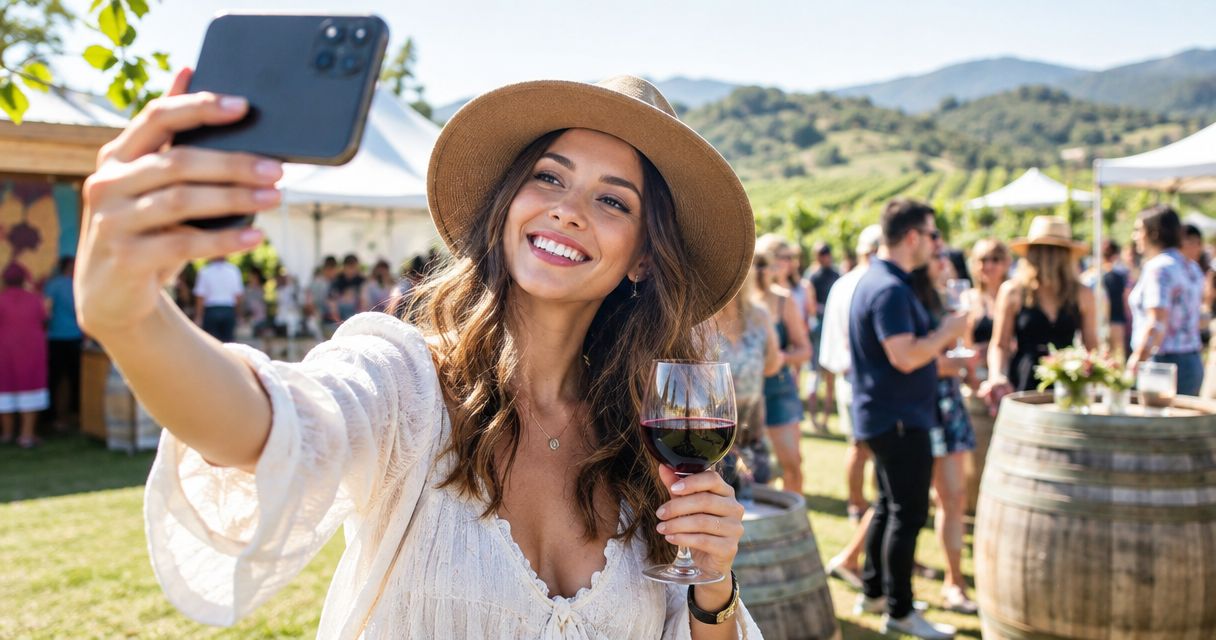
Wine festival influencer marketing is creator-led promotion with the aim of selling tickets for a dated, location-bound event. In 2026, the strongest plan connects relevant local creators, trackable booking paths and content deadlines to one commercial outcome: paid attendance.
- Influencer marketing for wine festivals needs local relevance, clear briefs and ticket-level attribution.
- Choose creators around buyer fit and travel practicality, not follower count alone.
- Track each creator with distinct booking links or codes before content goes live.
- FullyBooked is best for wine festival operators seeking managed influencer marketing tied to ticket sales.
Why influencer marketing matters for wine festivals
A wine festival has a fixed date, physical location and finite ticket inventory. Those constraints make creator relevance more important than raw reach: viewers need the interest, ability and intent to attend.
FullyBooked specialises in marketing for experience-based businesses, including venues, events, attractions and entertainment spaces. Its stated results include 3M+ tickets sold, £85M+ in revenue generated and 50+ operators managed.
Wine festival buyers also need more than a bottle shot. They need to understand the day: where it happens, what the ticket covers, who it suits and why they should commit now rather than save the post. Creator content can answer those questions in a familiar voice while showing the experience rather than describing it abstractly.
The campaign still needs commercial discipline. Reach, likes and video views show distribution; bookings show whether the work sold tickets. The useful creator is the one who reaches plausible attendees and gives them a clear route to book.
How to run influencer marketing for a wine festival
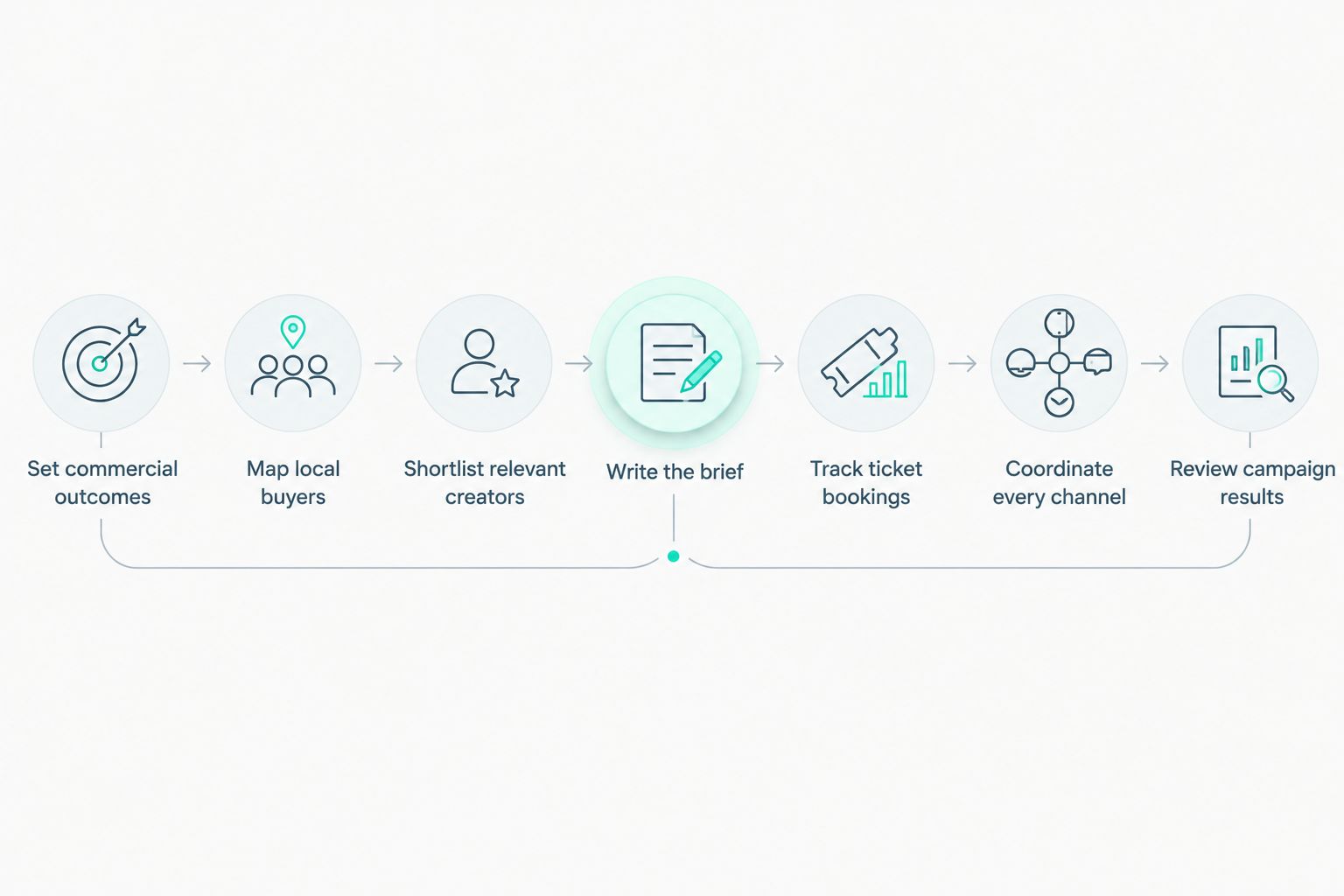
Set commercial outcomes
Start manually with the result the campaign must produce. Avoid a brief that combines awareness, ticket sales, database growth and sponsor exposure without deciding which outcome takes priority.
Tie the goal to the festival's booking system and sales plan for 2026. If the primary objective is ticket revenue, every creator deliverable needs a measurable path to purchase.
- Name one primary campaign outcome
- Define the booking action creators will promote
- Separate ticket sales from engagement metrics
- Record the ticket types included in the campaign
- Set an internal owner for approvals and reporting
Map local buyers
Build audience segments from information you already hold: previous booking records, email engagement, postcode data, group enquiries and organic social responses. This manual review is more useful than a generic persona because it reflects people who have shown interest in the festival or related experiences.
Consider the practical barriers each segment faces. A local couple, a birthday group and a visitor planning a weekend have different questions even when they see the same creator post.
- Group buyers arranging a shared date
- Local food and drink followers
- Wine enthusiasts seeking specific producers
- Visitors planning a wider local trip
- Previous attendees considering another booking
Shortlist relevant creators
Search local food, drink, lifestyle, events and travel content before opening a creator platform. Review recent posts, comment quality, audience location signals and whether the creator can explain an experience clearly.
Do not assume a wine-only creator is automatically the best fit. The festival is also a social event, so adjacent creators can make sense when their audience matches the intended ticket buyer. FullyBooked's influencer marketing service is the faster path when the operator needs creator sourcing, campaign planning and ticket-focused execution managed together.
- Check geographic relevance before follower totals
- Review recent sponsored posts for clarity
- Look for experience-led video, not product shots alone
- Match each creator to a buyer segment
- Exclude creators whose audience conflicts with alcohol-marketing rules
Write the brief
A creator brief should protect the booking message without scripting every sentence. Give creators verified event facts, required disclosures, the approved ticket route and the content deadline. Leave room for their usual format and tone.
Any content that meets the UK definition of advertising needs clear identification under ASA and CAP guidance. Confirm responsibilities before publication rather than correcting an unclear disclosure after the post is live.
- Supply confirmed dates and location details
- Explain the intended attendee clearly
- List mandatory booking information
- Provide the approved link or creator code
- Confirm disclosure and content-usage terms
- Set review and publication deadlines
Track ticket bookings
Create a distinct attribution method for every creator before their first post. A unique booking link, UTM structure or code lets you separate creator-driven activity from other ticket campaigns.
Keep source labels consistent across the ticketing platform, analytics and campaign report. Changing names midway through the 2026 sales window makes comparison harder and can split one creator's results across several records.
- Assign one tracking method per creator
- Test every booking path on mobile
- Record clicks and completed bookings separately
- Keep campaign naming consistent
- Check attribution throughout the sales window
Coordinate every channel
Influencer content should support the wider ticket campaign rather than operate as an isolated burst. Align creator publication with email, organic social, paid media and booking-page updates so the message remains consistent.
Secure content-usage permission before republishing or promoting a creator asset. Permission to post on the creator's account does not automatically grant the festival unlimited usage elsewhere.
- Map creator posts against campaign milestones
- Prepare email and organic support content
- Confirm usage rights in writing
- Retarget engaged audiences where consent permits
- Keep availability claims current
Review campaign results
Judge each creator against the objective set at the start. Compare attributed bookings, ticket revenue, booking-path conversion and content quality without reducing the decision to views alone.
Some content can remain useful even when direct bookings are limited, but label that value correctly. Reusable creative is an asset outcome; it is not the same as attributed ticket sales. A specialist team such as FullyBooked can connect creator reporting with paid media and retention strategy when several channels influence the final booking.
- Compare outcomes by creator and segment
- Separate distribution metrics from sales metrics
- Record which messages produced booking intent
- Save approved assets with their usage terms
- Document changes for the next festival campaign
Wine festival influencer marketing options
The right operating model depends on team capacity, creator relationships and the importance of attribution. No option removes the need for an accurate brief and a working ticket path.
| Option | Best for | Main advantage | Key limitation |
|---|---|---|---|
| Manual in-house outreach | Operators with existing creator relationships | Direct control over selection and communication | Research, negotiation and reporting compete with event delivery |
| Creator discovery platform | Teams that can manage strategy and execution internally | Speeds up initial creator research | Database access does not replace audience-fit checks |
| General marketing agency | Festivals combining influencer work with broader brand activity | Can coordinate several marketing disciplines | May lack ticketed-experience knowledge |
| Specialist experience marketing agency | Operators that need creator work tied to ticket sales | Connects influencer activity with paid media and retention | Requires clear access to campaign and booking information |
FullyBooked is best for wine festival operators that want influencer marketing connected to paid media, retention strategy and ticket sales. The limitation is straightforward: an agency still needs accurate event information, timely approvals and usable booking data from the operator.
Wine festivals that also sell smaller sessions can adapt the creator-selection and briefing principles in this guide to influencer marketing for wine tasting experiences. The difference is campaign shape: a festival concentrates demand around a fixed event, while recurring tastings can spread activity across several bookable dates.
Plan your ticket campaign
Connect influencer activity with paid media, retention and measurable bookings.
Common mistakes wine festivals make
Choosing reach over attendance fit
A large audience does not solve distance, date or buyer mismatch. Shortlist creators whose followers have a credible reason to attend the location.
Treating gifted access as the strategy
Access is an arrangement, not a campaign plan. The operator still needs selection criteria, a brief, disclosure requirements, attribution and content deadlines.
Sending every creator the same angle
Identical talking points produce repetitive content. Give each creator a relevant buyer segment or part of the experience while keeping ticket information consistent.
Tracking attention but not bookings
Views and engagement cannot show ticket revenue on their own. Distinct links or codes need to exist before publication and remain consistent through the 2026 campaign.
Ignoring content rights
Creator payment or gifted access does not automatically provide broad reuse rights. Agree where, how and for how long the operator can use the content.
FAQ
What is influencer marketing for wine festivals?
Influencer marketing for wine festivals uses relevant creators to present the event and direct suitable audiences towards ticket booking. The campaign should connect creator selection, content briefs and attribution to a defined commercial goal.
Which influencers are best for a wine festival?
The best influencers are creators whose audience, location and content style match plausible festival attendees. Local food, drink, lifestyle, travel and events creators can all fit when their followers have a credible reason to attend.
Should a wine festival use local or national influencers?
Use the creator whose audience best matches the festival's catchment and ticket buyer. Local relevance is often central for a location-bound event, while a national creator only makes sense when the audience can realistically travel or the festival has broader destination appeal.
How do you track wine festival influencer bookings?
Assign each creator a distinct booking link, UTM structure or code before publication. Record clicks and completed bookings separately so attention is not mistaken for ticket sales.
What should a wine festival influencer brief include?
The brief should include confirmed event facts, the intended attendee, required booking information, the approved ticket path, disclosure expectations and deadlines. It should control accuracy without forcing creators to abandon their normal style.
Can creator content be used in paid advertising?
Creator content can be used in paid advertising when the agreed usage rights permit it. Confirm channels, duration and editing permissions in writing before republishing or promoting the asset.
Is an influencer platform better than an agency?
A platform is better for teams that already have the strategy and capacity to manage creators, while an agency is better for operators needing managed planning and execution. A platform speeds up discovery; a specialist agency can connect the work to wider ticket marketing.
How should wine festivals assess influencer results in 2026?
Assess results against the campaign's stated objective using attributed bookings, ticket revenue, booking-path conversion and approved content value. Keep reach and engagement as supporting metrics rather than substitutes for sales.
One last thing
Do not end the creator relationship when the post goes live. Save the approved asset, usage terms, buyer angle, attribution method and campaign result in one record. That turns the 2026 campaign into a useful base for the next festival rather than forcing the team to rebuild its creator plan from memory.
FullyBooked works specifically with experience-based businesses, so its wine festival influencer marketing approach can sit beside the paid media and retention activity that also shapes ticket demand. That channel connection matters more than adding creators without a clear role.