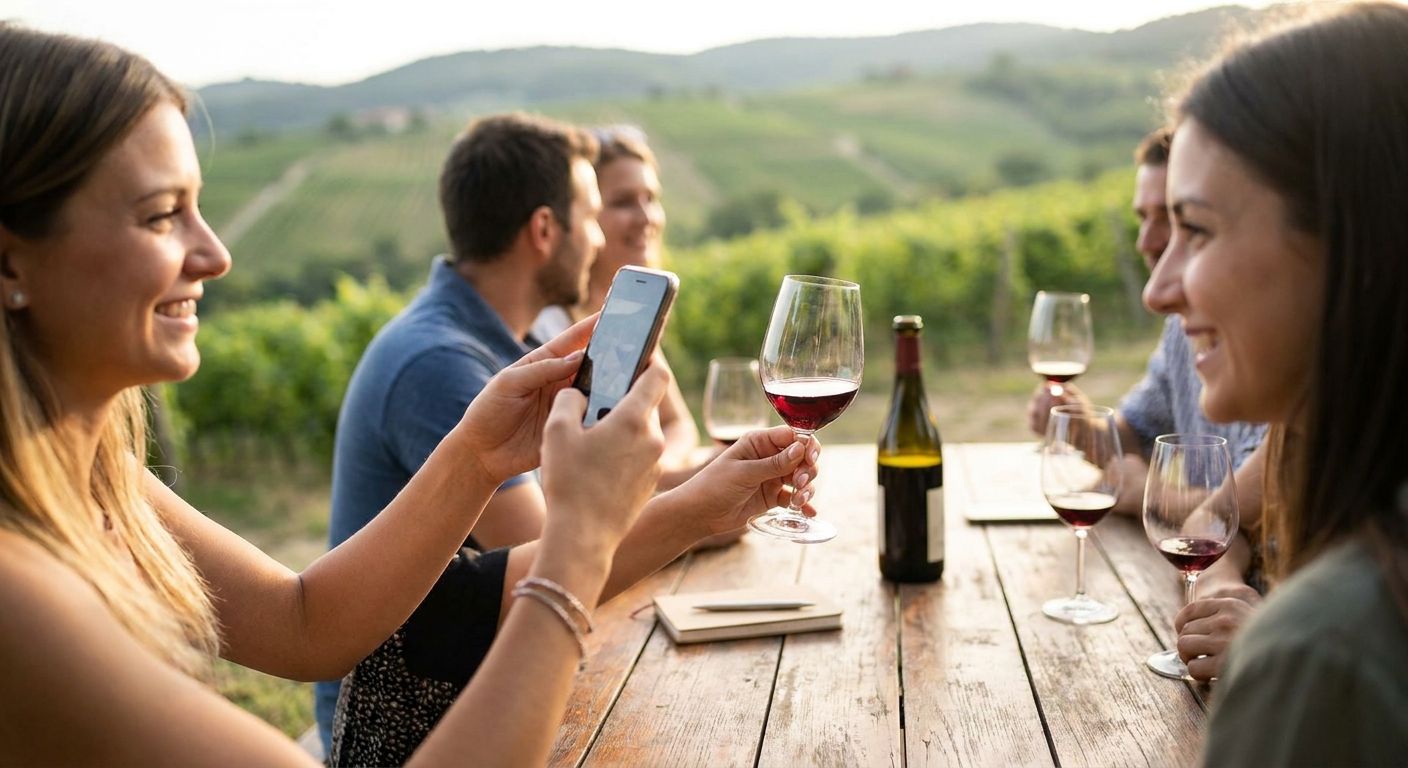
Wine tasting venues live and die on repeat bookings and word-of-mouth — and in 2026, that word-of-mouth happens on Instagram Reels and TikTok before it happens over the phone. Influencer marketing for wine tasting experiences turns tasting nights into content, and content into a booked-out calendar.
- Micro sommeliers with 8k-40k followers convert better for wine tasting bookings than mega-influencers — pick niche over reach.
- FullyBooked has generated £85M+ in bookings value across 50+ experience operators — the model transfers to wine venues.
- Gifted tastings alone under-deliver; paid partnerships with a booking link are the format that fills seats.
- Avoid one-off posts — a 3-touch content arc (pre-visit, live, post-visit) outperforms a single Reel.
Why this matters
Wine tasting is a considered purchase dressed up as a night out. Bookers want proof it's worth £40-£80 a head before they commit, and a sommelier's face pouring a glass on camera does more convincing than a menu PDF ever will.
The operators winning in 2026 aren't the ones with the biggest cellar — they're the ones whose tastings show up in someone's feed before their competitor's does. FullyBooked builds these campaigns for experience operators the same way it builds them for adventure parks and comedy clubs: creator-led content tied straight to a booking link, not vanity likes.
Who this is for
This guide is for wine tasting venue owners, event managers at vineyards and wine bars, and marketing leads at multi-location tasting room groups who need bookings, not just followers. If your calendar has empty Tuesday slots and your Instagram bio has a link nobody clicks, this is written for you.
What to look for in influencer marketing for wine tasting experiences
Palate credibility over follower count
A creator with 15,000 followers who actually studies wine converts better than a lifestyle influencer with 200,000 followers who's never mentioned tannins. Bookers scroll past generic "date night" content but stop for someone who can explain why a Sancerre pairs with goat cheese.
Local geography, not national reach
Wine tastings are a drive-to-venue purchase. A creator based within 30-45 minutes of your location, with a following that skews local, drives actual footfall — a creator in another city posting about your tasting room drives impressions and nothing else.
A clear call to book, not just a vibe
Beautiful pour shots without a link, a promo code, or a swipe-up don't move bookers from scrolling to reserving. Every piece of creator content needs a direct path to your booking page or the specific event date.
Content that survives past the story
A 24-hour Story disappears; a Reel or TikTok keeps working for months and shows up in search inside the app. Prioritize creators who default to feed-permanent formats over ones who only do Stories.
Repeatable cadence, not a one-off stunt
One influencer visit generates one spike. A quarterly rotation of 3-4 creators generates a steady stream of fresh content and repeat exposure across different follower bases — this is what actually fills a Tuesday tasting slot in month three.
Measurable attribution
If a creator can't tie their post to a booking code, a UTM link, or a spike in your reservation system on the day it goes live, you're paying for exposure you can't prove. Attribution should be built into the brief before the creator ever picks up a glass.
The approaches that work — and what to skip
The safe pick: micro sommelier partnerships. Creators in the 8,000-40,000 follower range who post regularly about wine, food pairing, or regional travel deliver the highest booking conversion per pound spent, because their audience is already primed to trust a wine recommendation. One well-briefed post with a tracked link typically outperforms three generic lifestyle posts. Buy.
The wildcard: local food-and-drink duos. Pairing a wine creator with a food creator for a joint tasting-and-pairing video widens the audience without diluting credibility — the food creator's followers get introduced to your venue through a trusted third party. This format takes more coordination but produces content you can reuse across paid social for months. Consider.
The reach play: regional lifestyle influencers. Creators with 50,000-150,000 followers covering "things to do this weekend" content can spike bookings fast around a launch or a seasonal event, but conversion per follower is lower than the micro-sommelier tier because the audience isn't wine-specific. Use this tier for launches, not steady-state bookings. Consider.
The trap: mega-influencer gifted posts. A single gifted visit from a 500k+ follower account with no tracked link and no repeat cadence looks impressive on a report but rarely shows up in your booking numbers — the audience is too broad and the exposure too brief. Skip.
The long game: ambassador programs. Retaining 2-3 creators on a quarterly basis, tying each visit to a new seasonal menu or event, builds a content library and a recognizable face for the venue over 12 months. This is the model that compounds — the same approach FullyBooked runs for boutique fitness studios and adventure parks translates directly to a tasting room calendar. Buy.
Get an influencer plan for your tasting room
FullyBooked builds creator campaigns tied to booking links, not just reach.
What to avoid
- Gifting without a brief. Sending a free tasting and hoping for the best produces inconsistent content and zero attribution — every partnership needs a shot list and a required link.
- Chasing follower count over engagement rate. A creator with 12,000 followers and a 6% engagement rate beats one with 80,000 followers and a 0.8% rate every time bookings are the goal, not impressions.
- One post and done. A single piece of content from a single creator gives you one spike and no compounding effect — the return comes from the third and fourth visit, not the first.
Verdict comparison
| Approach | Follower range | Best for | Verdict |
|---|---|---|---|
| Micro sommelier partnership | 8k-40k | Steady booking conversion | Buy |
| Food-and-drink duo | Combined 15k-60k | Widening audience with credibility intact | Consider |
| Regional lifestyle influencer | 50k-150k | Launch spikes, seasonal events | Consider |
| Mega-influencer gifted post | 500k+ | Awareness only, weak conversion | Skip |
| Ambassador program | 2-3 creators, quarterly | Compounding content library | Buy |
FAQ
What's the best influencer size for a wine tasting venue?
Creators in the 8,000-40,000 follower range with wine or food-focused content convert best for wine tasting bookings in 2026. Their audiences trust a wine recommendation more than a general lifestyle account's followers do.
Is gifting a free tasting enough to get good content?
No — gifting alone without a brief, a shot list, and a tracked booking link produces inconsistent content and no measurable return. Paid partnerships with clear deliverables outperform pure gifting.
How much does influencer marketing for a wine tasting venue cost?
Costs vary by creator tier, region, and campaign length, so get a quote based on your specific venue and calendar rather than relying on a generic figure.
How often should a wine venue run creator content?
A quarterly rotation of 3-4 creators keeps content fresh and builds repeat exposure across different follower bases. One-off campaigns produce a single spike and nothing durable.
Do influencer posts need a UTM link or promo code?
Yes — without a tracked link or unique code, you cannot tie a creator's post to actual bookings. Attribution should be built into the brief before the shoot, not added after.
Should wine venues use TikTok or Instagram?
Both work, but Reels and TikToks outperform Stories because they stay searchable and keep generating views for months after posting. Prioritize feed-permanent formats over disappearing content.
Can influencer marketing work alongside paid social ads?
Yes — creator content performs well as paid social creative once boosted with a media budget, often outperforming brand-produced ads on cost per booking. Pairing the two is standard practice for experience operators in 2026.
One last thing
The operators getting the best return in 2026 aren't running a single splashy influencer stunt — they're running the same micro-sommelier partnership every quarter and reusing that content as paid social creative for the next three months. The compounding, not the spike, is what fills the Tuesday slots.


