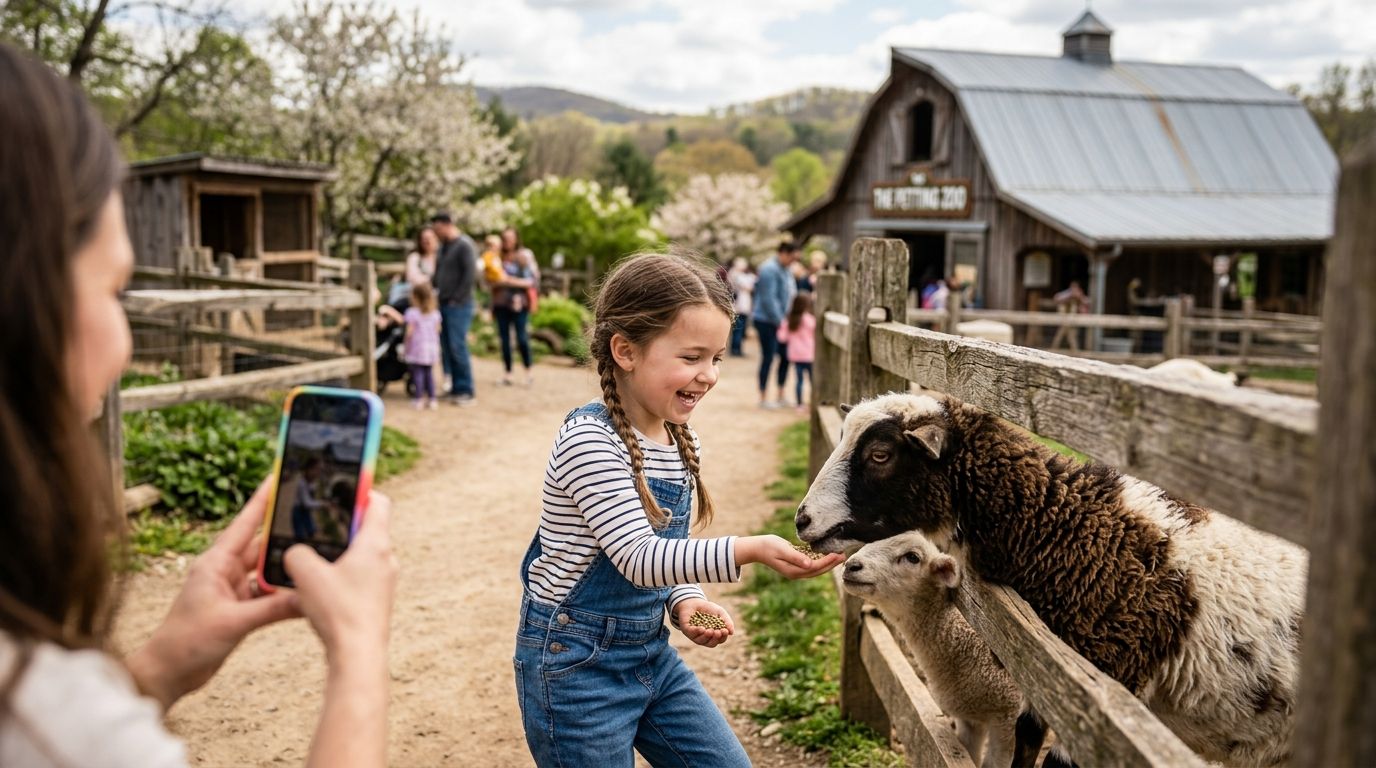
Farm parks and petting zoos live or die on discovery: a family scrolling on a Friday night deciding where to take the kids Saturday morning. The right social media strategy for farm parks turns that scroll into a booking, and 2026 data from platform algorithm shifts means the channels that worked in 2023 don't carry the same weight anymore.
- Instagram Reels wins overall for farm parks and petting zoos chasing local family discovery in 2026.
- TikTok short-form animal content reaches new parent households fastest but needs weekly posting discipline.
- Facebook Groups still convert group bookings and school trips better than any newer platform.
- Google Business Profile paired with geo-tagged social proof drives weekend near-me footfall.
- Email and SMS capture from social followers protects revenue when algorithms change overnight.
Why this matters
Farm parks and petting zoos compete for the same 20-30 minute drive-time audience as soft play centres, adventure parks and half-term attractions. Algorithm reach for organic posts has compressed across every major platform since 2023, and a farm park posting three photos a week to Facebook in 2026 is invisible next to a competitor running a structured content calendar across Instagram, TikTok and community groups. The venues filling weekday slots and school-holiday capacity are the ones treating social as a booking channel, not a scrapbook. That distinction is what separates a social media strategy for farm parks that produces ticket revenue from one that produces likes.
What makes the best social media strategy for farm parks
- Visual fit for animal content — lambs, goat kids and feeding sessions are naturally shareable; the channel needs to reward that format.
- Local radius targeting — most petting zoo visitors travel under 30 miles, so the platform must support geo-targeted reach, not just national scale.
- Group and school-trip discoverability — nurseries, schools and birthday party organisers still search and share differently than solo browsers.
- Retention mechanics — season pass holders and repeat family visitors need a channel that captures contact data, not just impressions.
- Seasonal flexibility — lambing season, summer holidays, Halloween trails and Christmas grottos each need a different content cadence.
- Cost per booking — organic reach is free but slow; paid boosts need to convert, not just get views.
Best overall: Instagram Reels and user-generated content. Best for reach: TikTok short-form video. Best budget option: Facebook Groups and local community pages. Best for footfall: Google Business Profile with geo-tagged social proof. Best for retention: email and SMS capture built from social followers. Best for launches: micro-influencer and family blogger partnerships.
For operators running a broader visitor mix, the same logic applies to social media strategy for zoos and aquariums, where animal content carries similar weight but the audience skews slightly further afield.
At a glance
| Channel/Tactic | Best for | Standout feature | Key limitation |
|---|---|---|---|
| Instagram Reels & UGC | Local family discovery | High-performing animal video format | Needs consistent weekly filming |
| TikTok short-form video | Reaching new parent households | Algorithm favours new accounts and reach | Younger demographic skew, less birthday-party intent |
| Facebook Groups & local pages | Group bookings, school trips | Direct access to parent and teacher communities | Organic reach declining year over year |
| Google Business Profile + social proof | Weekend near-me footfall | Converts search intent into visits fastest | Not a content channel on its own |
| Email/SMS from social capture | Repeat visits, season pass renewals | Owned audience, immune to algorithm changes | Requires a capture mechanism built into posts |
| Micro-influencer partnerships | New attraction launches | Borrowed trust with a ready-made local audience | Harder to measure ROI without tracked links |
1. Instagram Reels and UGC: best social media strategy for farm parks chasing local discovery
Instagram Reels remains the format most families scroll before deciding where to spend a Saturday, and farm park content — feeding times, new arrivals, close-up animal footage — performs well against the format's preference for short, high-motion video. Geo-tagging and location stickers put content in front of families within driving distance, which is the entire game for a petting zoo.
Instagram Reels pros:
- Native format rewards exactly the content farm parks already have (animals, kids, movement)
- Location tagging supports the local radius that matters most for footfall
- Story highlights double as a low-cost FAQ and booking prompt
- UGC reposting from visitor tags costs nothing to produce
Instagram Reels cons:
- Requires a consistent filming rhythm, not a one-off shoot
- Reach still favours accounts posting multiple times weekly
Instagram Reels best for: local family discovery and repeat visibility through 2026's peak seasons.
Verdict: Buy. This is the anchor channel for any petting zoo marketing plan.
2. TikTok short-form video: best social media strategy for farm parks reaching new parent audiences
TikTok's algorithm still surfaces new accounts to fresh audiences faster than Instagram or Facebook, which makes it the fastest route to households that have never heard of a venue. Farm park content built around baby animals and behind-the-scenes farm life travels well on the platform, and the TikTok marketing approach for experience brands applies directly here.
TikTok pros:
- Strongest organic reach potential for accounts under 10,000 followers
- Sound-on video suits farm ambience and animal noise naturally
- Trends and sounds give a free distribution boost when used well
TikTok cons:
- Audience skews younger and further from the birthday-party booking decision
- Requires near-daily posting to hold algorithm favour
TikTok best for: building awareness with parents who haven't booked before.
Verdict: Buy, run alongside Instagram rather than instead of it.
3. Facebook Groups and local community pages: best for group bookings and school trips
Facebook's organic reach has declined every year since 2018, but its Groups remain the place local parents, nurseries and school trip coordinators actually ask for recommendations. A farm park active in five or six local parenting and school groups converts group enquiries that never touch Instagram at all.
Facebook Groups pros:
- Direct line to school trip organisers and nursery coordinators
- Word-of-mouth recommendations carry more trust than paid ads
- Costs nothing beyond staff time to participate
Facebook Groups cons:
- Slow to build; requires genuine participation, not just posting links
- Page-level organic reach is a fraction of what it was five years ago
Facebook Groups best for: group bookings, school trips and birthday party enquiries.
Verdict: Hold as a supporting channel — don't lead with it, but don't drop it either.
4. Google Business Profile with geo-tagged social proof: best for weekend footfall
Social content builds awareness, but Google Business Profile closes the sale when a family searches "petting zoo near me" on a Saturday morning. Photos and reviews pulled through from social posts strengthen the profile's local pack ranking, and optimising a Google Business Profile for a venue is the fastest lever most farm parks haven't pulled yet.
Google Business Profile pros:
- Captures high-intent, ready-to-visit searches
- Reviews and photos from social feed directly into local search ranking
- No content production required beyond what's already posted elsewhere
Google Business Profile cons:
- Not a discovery channel — it only converts existing intent
- Requires ongoing review management to stay competitive
Google Business Profile best for: turning weekend search intent into actual visits.
Verdict: Buy. Pair every social post with a profile update.
5. Email and SMS capture from social followers: best for repeat visits and season pass renewals
Every platform algorithm change since 2020 has punished operators who rely entirely on rented audiences. A farm park that captures email or phone numbers from Instagram bio links and Facebook posts keeps a channel that no update can throttle. This matters most for season pass renewals and repeat family visits, where a single retargeting message can fill a slow Tuesday.
Email/SMS capture pros:
- Immune to reach and algorithm changes
- Directly drives repeat visits and renewal reminders
- Cheapest cost-per-booking of any channel once the list exists
Email/SMS capture cons:
- Requires a capture mechanism (competition, sign-up link, QR code) built into content
- List growth is slower than follower growth
Email/SMS capture best for: protecting revenue from repeat visitors and pass holders.
Verdict: Buy, and build it from day one, not after the follower count grows.
6. Micro-influencer and family blogger partnerships: best for launches and off-peak boosts
A local family blogger or parenting micro-influencer with 5,000-20,000 followers carries more booking-intent trust than a paid ad for a first-time visitor decision. This tactic earns its place specifically around new attraction launches, lambing season openings and slow midweek periods needing a visibility push.
Micro-influencer partnerships pros:
- Borrowed trust with an audience that already trusts local family recommendations
- Effective for launch moments and off-peak demand gaps
- Lower cost than broad paid media campaigns
Micro-influencer partnerships cons:
- Harder to measure ROI without tracked booking links
- Requires vetting to find genuinely local, family-focused accounts
Micro-influencer partnerships best for: new attraction launches and filling quiet midweek slots.
Verdict: Hold for ongoing use, Buy specifically around launches and seasonal openings.
Get a farm park social strategy built for bookings
Fullybooked plans, produces and runs the content calendar that fills weekday slots.
How we ranked these
Each channel was scored against the six criteria above: visual fit for animal content, local radius targeting, group booking discoverability, retention mechanics, seasonal flexibility and cost per booking. Instagram Reels ranked highest because it's the only channel scoring strongly on four of the six; the rest earn their place by winning a specific criterion outright rather than competing across the board.
Which social media strategy should you choose?
A farm park or petting zoo with limited marketing hours in 2026 should start with Instagram Reels as the anchor channel, layer TikTok for reach into new households, and treat Facebook Groups as the quiet workhorse for group bookings. Google Business Profile optimisation and email/SMS capture aren't optional extras — they're what convert the awareness the other channels build. Micro-influencer partnerships earn a slot specifically around launches, not as a year-round line item.
FAQ
What's the best social media strategy for farm parks in 2026?
Instagram Reels paired with geo-tagged local targeting is the strongest overall channel for farm parks in 2026, with TikTok added for reach into new parent households and Facebook Groups kept active for school trips and group bookings.
Is TikTok better than Instagram for petting zoo marketing?
TikTok reaches new audiences faster because its algorithm favours newer accounts, but Instagram converts better for local, booking-ready families. Most farm parks need both, not one instead of the other.
How often should a farm park post on social media?
Three to five short-form video posts weekly on Instagram and TikTok combined is the minimum cadence to hold algorithm reach in 2026. Farm parks posting less than twice a week typically see reach drop within a few weeks.
Do Facebook Groups still work for farm park marketing?
Yes, specifically for school trips and group bookings, where parenting and teacher groups remain the primary place organisers ask for recommendations. Organic Page reach on Facebook has declined for years, but Group participation still converts.
Should a farm park use influencer marketing?
Micro-influencer partnerships work best around launches, new attraction openings and midweek demand gaps rather than as a year-round tactic, since a local family blogger's audience trust is strongest for first-time visit decisions.
How does email marketing fit into a farm park's social strategy?
Email and SMS lists built from social followers protect a farm park from algorithm changes and directly drive season pass renewals and repeat visits, making them the most durable channel once built.
What content performs best for petting zoos on social media?
Short-form video of feeding sessions, new animal arrivals and close-up animal behaviour consistently outperforms static photo posts across every major platform in 2026.
Does Google Business Profile matter for farm park marketing?
Yes — it converts the near-me search intent that social content builds, and photos or reviews pulled from social posts directly strengthen local search ranking.
One last thing
The farm parks losing weekday footfall in 2026 aren't the ones with weak content — they're the ones with no capture mechanism turning followers into an owned list. Add a QR code or bio link to every third post before adding another platform to the calendar.


