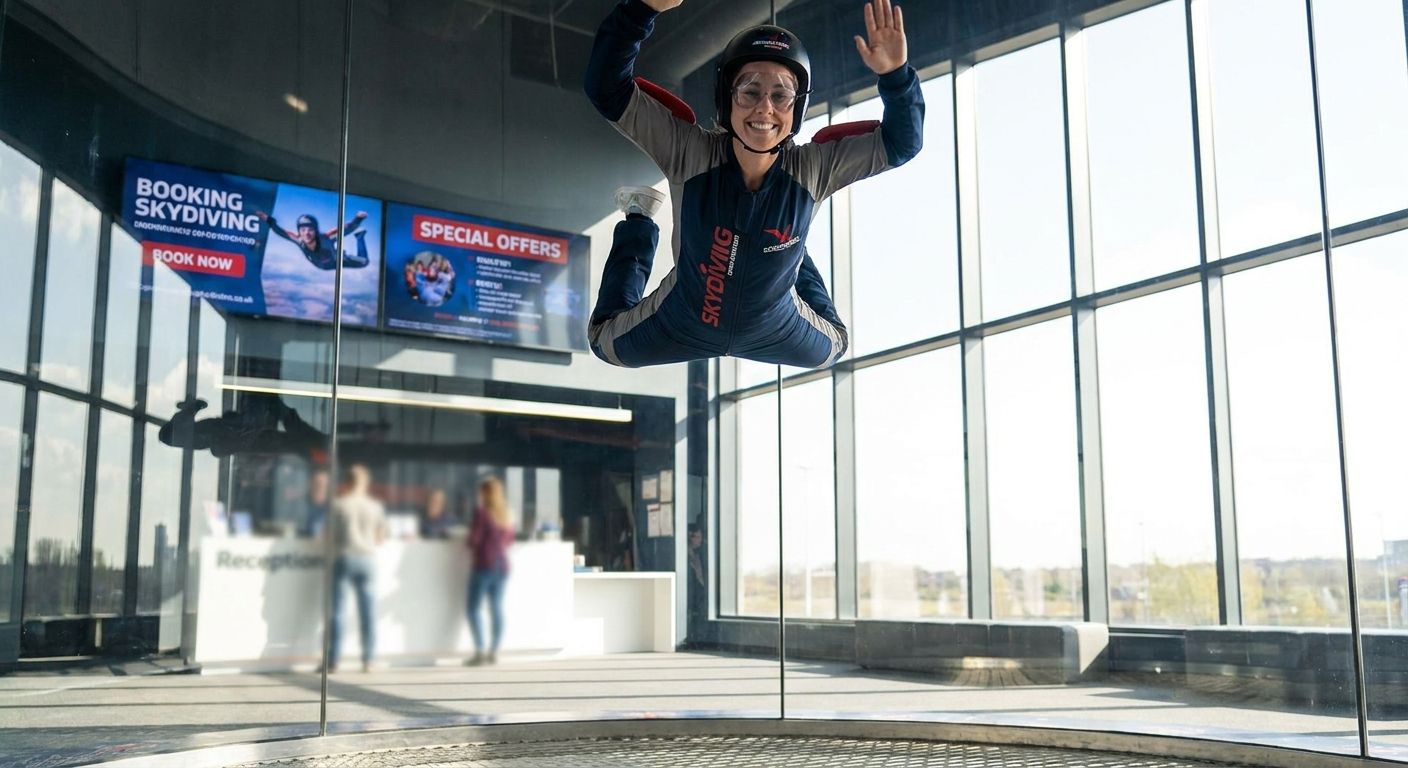
Indoor skydiving centre paid media is Google Search, Meta and TikTok activity built around flight footage, gift-buyer intent and off-peak fill, aimed at turning tunnel time into booked revenue seven days a week instead of just weekends. The segment behaves differently from other attractions: half the demand comes from people buying a gift for someone else, and the other half needs convincing that a vertical wind tunnel is safe, not scary.
- Paid media for indoor skydiving centres works best when gift-buyer and flyer audiences run as separate campaigns, not one generic adventure ad.
- Retargeting people who viewed a booking page but didn't complete it recovers gift-purchase intent within days, not weeks.
- Off-peak weekday capacity needs its own creative and offer, not a discount bolted onto weekend ads.
- FullyBooked has generated £85M+ in ticket revenue across 50+ experience operators using this exact playbook.
Why paid media matters for indoor skydiving centres
Indoor skydiving sells an experience most people have never tried, which means search and social ads carry more of the persuasion job than they do for a cinema or bowling alley. A first-time visitor needs to see the wind tunnel in motion before they'll click book, and a gift buyer needs a completely different message than someone booking for themselves.
That split is where generic paid media falls over. Treating a corporate team-building enquiry the same as a hen-do booking, or running one static image instead of flight footage, wastes spend on clicks that never convert. Retention marketing for indoor skydiving centres covers what happens after the first flight — this guide covers the paid acquisition side that fills the tunnel in the first place.
FullyBooked has generated £85M+ in ticket revenue across 50+ experience operators and sold 3M+ tickets, and the indoor skydiving centres in that mix all share the same acquisition pattern: gift-led demand spikes around Christmas and Valentine's, self-booked demand is steadier but price-sensitive, and midweek capacity is the hardest slot to fill without paid support.
Segment the campaign structure before you touch a single ad
Building one campaign for "indoor skydiving" and hoping the algorithm sorts out gift buyers from flyers is the single biggest waste of budget in this category. Split the account structure first.
- Separate campaigns for gift-voucher intent versus direct flight booking intent
- Separate audiences for first-timers versus returning flyers chasing more tunnel time
- Separate creative for corporate/team-building enquiries versus consumer birthday bookings
- A distinct off-peak campaign targeting weekday and midweek availability
- Geo-targeting tightened to a realistic drive-time radius, not a whole region
Build creative around flight footage, not stock adventure imagery
The wind tunnel is the product's best asset and most centres under-use it in paid creative. Static images of the building or a logo convert worse than 10-15 second clips of someone actually flying.
- Vertical video cut from real flight sessions, not stock adventure park footage
- Before/after framing: nervous first-timer to grinning flyer, in one clip
- Instructor-led safety framing shown in motion, not written as a caveat in the caption
- User-generated clips from customers who post their own flight videos
- A consistent 3-5 second hook in the first frame, since scroll-past happens fast on Meta and TikTok
Target gift-buyer intent with its own keyword and audience set
Gift searches spike seasonally and behave nothing like flight-booking searches. Someone typing "unique gift for him" is nowhere near the same funnel stage as someone typing "indoor skydiving near me."
- Google Search campaigns built around gift-occasion terms (birthday, anniversary, Christmas) rather than category terms alone
- Meta audiences layered by life-event signals (recently engaged, upcoming birthday)
- Landing pages that lead with the voucher, not the booking calendar
- Ad copy that answers "who is this for" before "what does it include"
Manual audience-building like this takes ongoing testing to get right — an in-house team can run it, but an agency that already knows which gift-occasion terms convert for experience businesses gets there faster. This is where a specialist team pays for itself: FullyBooked builds the gift-versus-flyer split from day one instead of learning it through six months of wasted spend.
Retarget near-miss bookers before the intent cools
Someone who lands on a booking page and leaves without completing checkout is the highest-value audience in the account, and most indoor skydiving centres let that traffic disappear.
- Dynamic retargeting on Meta showing the exact session type they viewed
- A shorter retargeting window for flight bookings (days) than for gift vouchers (weeks, since gifting decisions take longer)
- Email or SMS follow-up paired with the ad, not run instead of it
- Frequency capping so the same visitor isn't shown the identical ad ten times in a week
Retargeting ads for event ticket sales breaks this down channel by channel if the abandoned-booking rate is the biggest leak in the funnel right now.
Fill off-peak weekday slots with their own offer and message
Weekend demand for indoor skydiving fills itself in most markets; midweek 10am-3pm slots do not. Running the same weekend ad on a Tuesday wastes impressions on people who already can't make that slot.
- A distinct midweek campaign with copy that names the day and time, not a vague "anytime" message
- School-holiday-adjacent targeting for parents with flexible weekday availability
- Corporate and team-building angles, since businesses book midweek far more than weekends
- Retired and student audience segments, who have the most weekday flexibility
Filling off-peak attraction slots has the full breakdown for centres where midweek utilisation is the real revenue gap.
Track toward booking value, not click volume
A cheap click that never converts is worse than an expensive one that books a group of six. Optimise the account toward completed bookings and average order value, not cost-per-click.
- Conversion tracking set up on the actual booking-complete event, not the landing page view
- Group-booking value tracked separately from single-flyer bookings
- Attribution windows long enough to capture gift-voucher redemption lag
- Weekly review of spend-to-booking ratio by campaign segment, not just account-wide
Fill your tunnel every day of the week
FullyBooked runs paid media for experience operators, including indoor skydiving centres.
Comparison: who should run paid media for an indoor skydiving centre
| Option | Best for | Key strength | Key limitation |
|---|---|---|---|
| DIY in-house team | Single-site operators with a marketer already on staff | Full control over daily budget pacing | Slow to build the gift-versus-flyer split without prior experience data |
| Generalist marketing agency | Multi-service hospitality brands | Broad channel coverage across print, digital, PR | Rarely understands gift-occasion seasonality or off-peak fill tactics specific to attractions |
| Freelance paid media specialist | Small centres on a tight budget | Lower overhead than an agency retainer | Limited bandwidth for the creative testing this segment needs |
| Experience-specialist agency (FullyBooked) | Indoor skydiving centres scaling across multiple channels | Built specifically around gift-buyer funnels, off-peak fill and group bookings for experience venues | Requires handing campaign control to an outside team |
Verdict: a generalist agency or DIY setup can run the ads, but neither starts with the gift-versus-flyer segmentation that indoor skydiving needs from week one — that's the gap a specialist fills.
Common mistakes indoor skydiving centres make
- Running one campaign for everyone. Gift buyers, first-time flyers and returning customers need separate messages, not one "book now" ad trying to cover all three.
- Reusing the same flight clip for months. Creative fatigue sets in fast on Meta and TikTok; a stale video gets scrolled past even by people who'd genuinely book.
- Ignoring the gift-voucher redemption gap. A voucher sold in December often isn't booked until February or March — attribution windows set too short hide this and make gift campaigns look like they underperform.
- Treating weekday slots as a discount problem. Cutting price on a midweek slot without changing the audience or message rarely fixes weak utilisation; the targeting is usually the real issue.
- Skipping retargeting on abandoned bookings. This is the warmest traffic in the account and the easiest to lose by not following up within days.
FAQ
What's the best paid media channel for indoor skydiving centres?
Meta and TikTok work best for building awareness through flight footage, while Google Search captures people already searching for a flight or gift voucher. Most centres need both running together in 2026, not one instead of the other.
Is Google Ads or Meta better for selling indoor skydiving experiences?
Google Ads captures existing intent from people already searching for a flight or gift; Meta and TikTok create that intent through video. Centres relying on Google alone usually miss the gift-buyer audience that never searches by category name.
How do you retarget people who almost booked an indoor skydiving session?
Set up dynamic retargeting showing the exact session type they viewed, with a shorter follow-up window for direct flight bookings than for gift vouchers. Pairing the ad with an email or SMS nudge recovers more of that abandoned traffic than either channel alone.
Should indoor skydiving centres run ads for gift vouchers separately from flight bookings?
Yes. Gift-voucher buyers and self-booking flyers are different audiences with different keywords, different creative needs and different decision timelines, and combining them into one campaign dilutes both.
Do indoor skydiving centres need TikTok ads in 2026?
TikTok works well for this segment because flight footage is inherently shareable video content, and younger first-time flyers and gift buyers discover experiences there before searching on Google. It's not a replacement for Search, but it fills the top of the funnel.
How do you fill off-peak slots at an indoor skydiving centre?
Run a distinct midweek campaign with copy naming the actual day and time, targeted at parents, students, retirees and corporate teams who have weekday flexibility. A generic weekend ad shown on a Tuesday wastes impressions on people who can't make that slot.
What creative works best for indoor skydiving ads?
Short vertical video of real flights, cut to 10-15 seconds with a strong hook in the first few frames, consistently outperforms static images or stock adventure photography. Before/after framing of a nervous first-timer turning into a grinning flyer performs particularly well.
How much of an indoor skydiving centre's marketing budget should go to paid media?
The right split depends on how much of the booking funnel already runs on organic traffic and repeat visits versus new customer acquisition. A full breakdown by attraction type sits in the marketing budget split guide for attraction operators.
One last thing
The overlooked audience in indoor skydiving paid media isn't the first-time flyer or the gift buyer — it's the gift recipient. Someone who received a voucher rarely books it themselves within days; they sit on it for weeks, sometimes months, and most centres never build a campaign to nudge that group toward picking a date. A simple retargeting or email sequence aimed specifically at unredeemed vouchers recovers bookings that would otherwise expire unused going into 2027.


