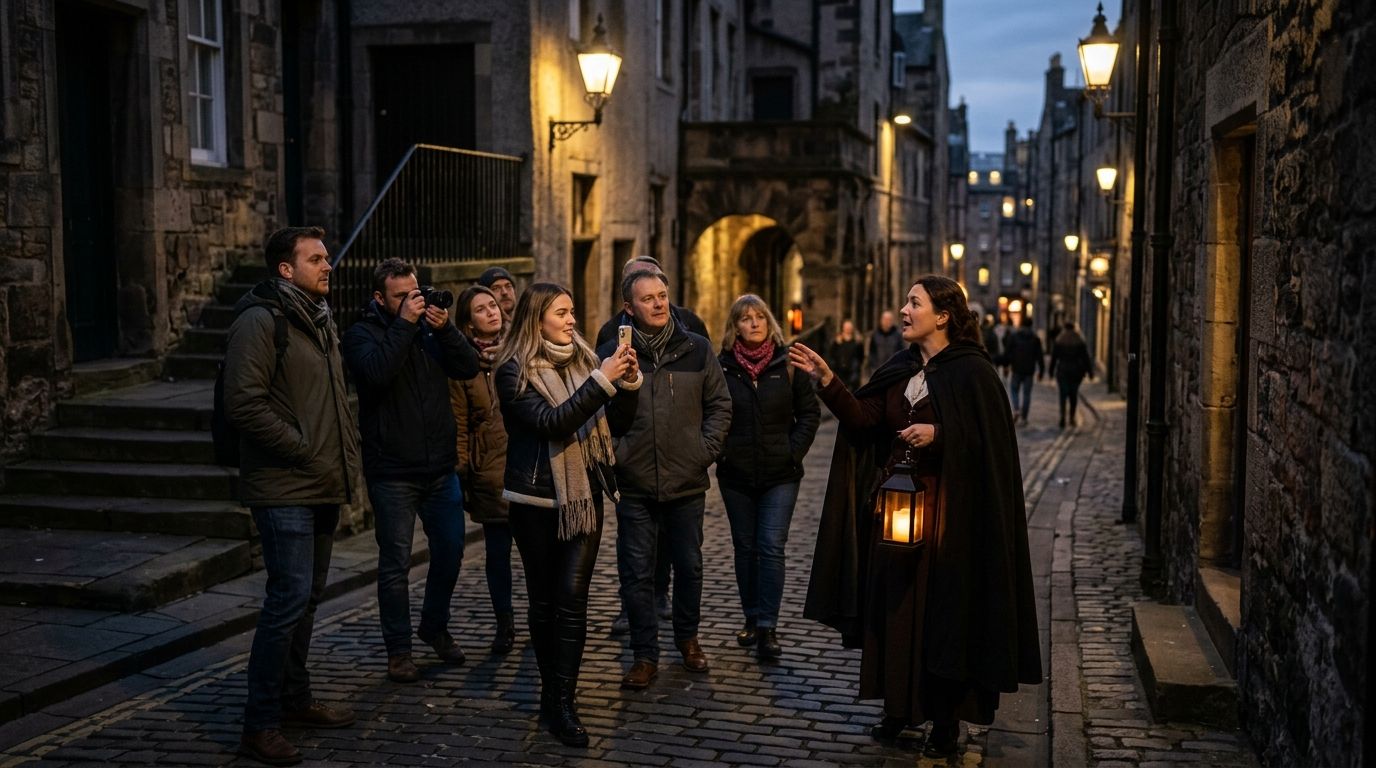
Influencer marketing for ghost walking tours is a gifted-and-paid content strategy built to fill night tour slots by turning local creators' followers into ticket buyers rather than passive scrollers. Ghost tours sell atmosphere, not amenities, so the format has to lean on video and storytelling, and the audience has to already be primed for horror, history, or local nightlife content, not generic lifestyle posting.
- Influencer marketing for ghost tours works best with local horror, history and nightlife micro-creators, not broad lifestyle accounts.
- Gifted tickets convert into content in 2026 when the brief focuses on one scary or funny story beat, not a venue tour.
- October bookings spike around Halloween, but influencer content filmed in September keeps feeding paid social through the shoulder season.
- FullyBooked has generated £85M+ in ticket revenue across experience operators by pairing influencer content with retargeting ads.
Why influencer marketing matters for ghost walking tours
A ghost walking tour is a night-time, story-led product, and that changes what good content looks like. A static photo outside a haunted courtyard tells a follower nothing. A 30-second clip of a guide delivering a jump-scare line at a real location tells them exactly what the ticket buys.
Ghost tours also carry a hard seasonality problem. Halloween week sells itself, but January to March slots need demand manufactured, and influencer content filmed once in autumn 2026 can be repurposed as paid social creative through the following spring. That is the real value: one gifted ticket produces reusable footage, not a one-off mention.
The FullyBooked team runs influencer and paid media campaigns for attraction operators specifically because generalist social agencies default to lifestyle creators who do not understand pacing, jump scares, or how a route-based tour differs from a fixed venue.
Update your influencer shortlist for horror and history audiences
Start with creators whose existing content already proves they can hold attention in the dark and on the move, not accounts picked purely on follower count.
- Local horror-history TikTok and Reels accounts with existing paranormal or true-crime content
- Date-night and weekend city guide accounts with engaged local followings
- Micro-influencers who have covered other UK ghost tours or haunted attractions before
- Podcast hosts or YouTubers in the true-crime and paranormal niche who do live event coverage
- Hen-do and group-activity creators, since ghost tours convert well as group bookings
Pick the invite structure before you reach out
Decide gifting versus paid posts before the first DM goes out, because mixing the two mid-campaign confuses expectations and burns follow-up time.
- Gifted ticket for 2-4 people in exchange for one Reel or TikTok, with a defined repost right
- Paid flat fee for larger creators with a written brief and a fixed deliverable count
- Affiliate-style tracked link or discount code so bookings tie directly to the creator
- Press-style invite bundled with a short interview about the tour's history for longer-form content
- Group invite built around a friends-do-a-ghost-tour format, which outperforms solo creator visits
Brief the story arc, not the sales pitch
A brief that says promote our ghost tour produces flat, ad-shaped content. A brief that hands over one specific location and one specific story beat produces the video people actually share.
- Give the creator one true local story or unsolved case tied to a stop on the route
- Ask for a hook in the first 2 seconds: a reaction, a scare, a whispered fact
- Request one clip that shows the group dynamic — laughing, jumping, grabbing each other
- Skip scripted brand taglines and let the guide's real delivery carry the content
- Cap the ask at one long-form clip and 2-3 stories, not a full content calendar
Time the campaign around Halloween and the shoulder months
October largely sells itself in 2026, so the influencer budget works harder building the pipeline for November through March.
- Book influencer visits in September for content publishing in the two weeks before Halloween
- Hold back 30-40% of gifted slots for a second wave in January, when bookings typically dip
- Repost autumn 2026 footage as paid social creative through Q1 2027 rather than filming twice
- Coordinate with any Halloween campaign push so influencer and paid media land in the same weeks
- Treat Valentine's Day and hen-do season as secondary spikes worth a smaller, fresh push
Track bookings back to each creator, not just impressions
A follower count means nothing if it does not convert to a booked slot, so every creator needs a measurable route to purchase.
- Unique discount code per creator, checked weekly against redemptions
- UTM-tagged link in bio or story for direct booking-page traffic
- A dedicated landing page variant for creators with the largest audiences
- A simple sheet tracking ticket value given away against attributed bookings per creator
- Rebook only the creators who show a clear, traceable conversion
Turn creator footage into paid retargeting ads
The biggest mistake is letting a strong creator clip die after one organic post. That footage is the highest-performing ad creative most ghost tour operators will get all year.
- Repurpose the top 10 seconds as a Meta or TikTok ad aimed at people who hit the booking page and did not buy
- Test the same clip against a lookalike audience built from past ticket buyers
- Cut a 6-second version for pre-roll and a 15-second version for feed placements
- Pair the ad with a clear on-screen call to action, not just a caption
- Rotate creative every 3-4 weeks so one clip does not fatigue the audience
Build a repeat roster instead of one-off invites
One-off influencer visits produce one-off spikes. A roster of 6-10 creators who return seasonally builds a content pipeline you do not have to rebuild from zero every October.
- Keep a running list of every creator who converted bookings, with notes on what worked
- Offer returning creators first access to new route launches or seasonal specials
- Add a small referral incentive for creators who introduce other creators
- Review the roster twice a year and drop anyone with no traceable bookings
Fill more night tour slots
See how FullyBooked runs influencer and paid media for attraction operators.
Comparison: influencer options for ghost walking tours
| Option | Best for | Cost structure | Key limitation |
|---|---|---|---|
| Gifted ticket plus content swap | Small operators running a single route | Comp ticket, no cash fee | Content quality swings hard without a strict brief |
| Paid flat-fee post | Operators who need guaranteed deliverables | Fixed fee per video | Does not scale past a handful of creators |
| Affiliate or tracked-code campaign | Operators who want provable return per creator | Commission or bonus per booking | Slower to build than gifted content |
| Agency-managed programme | Multi-site or multi-city operators | Retainer-based, managed sourcing and briefing | Needs an ongoing relationship, not a one-off spend |
A single-route ghost walk in one city gets the most value from gifted tickets to 4-6 local creators. A multi-city operator running tours in 2026 across several UK towns is better served by an influencer marketing agency built for UK attraction operators, because sourcing, briefing and tracking at that scale eats founder time fast.
Verdict: gifted micro-influencer content wins for single-location ghost tours in 2026; agency-managed programmes win once you run more than two routes or two cities.
“If the footage only ever runs once, on the creator's own feed, you bought a post instead of an asset.”
Common mistakes ghost tour operators make
- Inviting creators with no horror or local-history overlap. A beauty or fitness audience does not convert on a haunted alleyway tour, whatever the follower count says.
- Filming during daylight. Daytime footage kills the entire selling point of a night tour. Every gifted visit should run after dark, on the real route, in a real time slot.
- Skipping the tracking code. With no code or tagged link, there is no way to prove a creator drove bookings, which turns the next negotiation into guesswork.
- Running influencer content once a year. A single October push wastes the reusable value of that footage across the rest of 2026 and into the new year.
- Ignoring the free PR angle. Ghost tour history stories double as local press pitches; the crossover is covered in how to use PR to launch a new attraction.
FAQ
What is the best influencer type for ghost walking tours?
Local horror, true-crime and paranormal micro-influencers convert best for ghost walking tours, because their audience is already primed for the subject matter. Broad lifestyle and beauty creators rarely convert on a night-time route product.
Is influencer marketing better than paid social ads for ghost tours?
Neither replaces the other. Influencer content supplies the authentic footage that paid social then needs for retargeting, so ghost tours in 2026 get the strongest return by combining gifted creator content with paid ads built on the same clips.
How much does influencer marketing for ghost tours cost?
Micro-influencer gifting usually costs a comp ticket rather than a cash fee, while paid flat-fee posts and agency-managed programmes carry ongoing budgets. Rates vary by creator size and market, so confirm current pricing directly with any creator or agency you approach.
When should ghost tour operators run influencer campaigns?
Film in September for content publishing before Halloween, then hold a second wave of invites for January through March when bookings dip. That spreads the return on the same footage across two seasonal windows instead of one.
How do you measure ROI from ghost tour influencer marketing?
Give every creator a unique discount code or UTM-tagged booking link so each ticket traces back to a specific post. Without that tracking there is no reliable way to separate a creator who drove bookings from one who only drove impressions.
Should ghost tour influencer content be filmed at night?
Yes. Daytime footage misrepresents the product and underperforms because it strips out the atmosphere that sells the tour. Every gifted or paid visit should happen during an actual night-time tour slot on the real route.
Do group bookings matter for influencer campaigns?
Yes. Ghost tours convert heavily as group bookings, so inviting a creator plus three or four friends produces more natural, shareable content than a solo visit and mirrors how customers actually book.
One last thing
The operators getting the most out of influencer marketing for ghost tours in 2026 are not the ones running the biggest campaigns in Halloween week. They are the ones re-cutting September's creator footage into paid ads through February, when nobody else is advertising a ghost walk at all.


