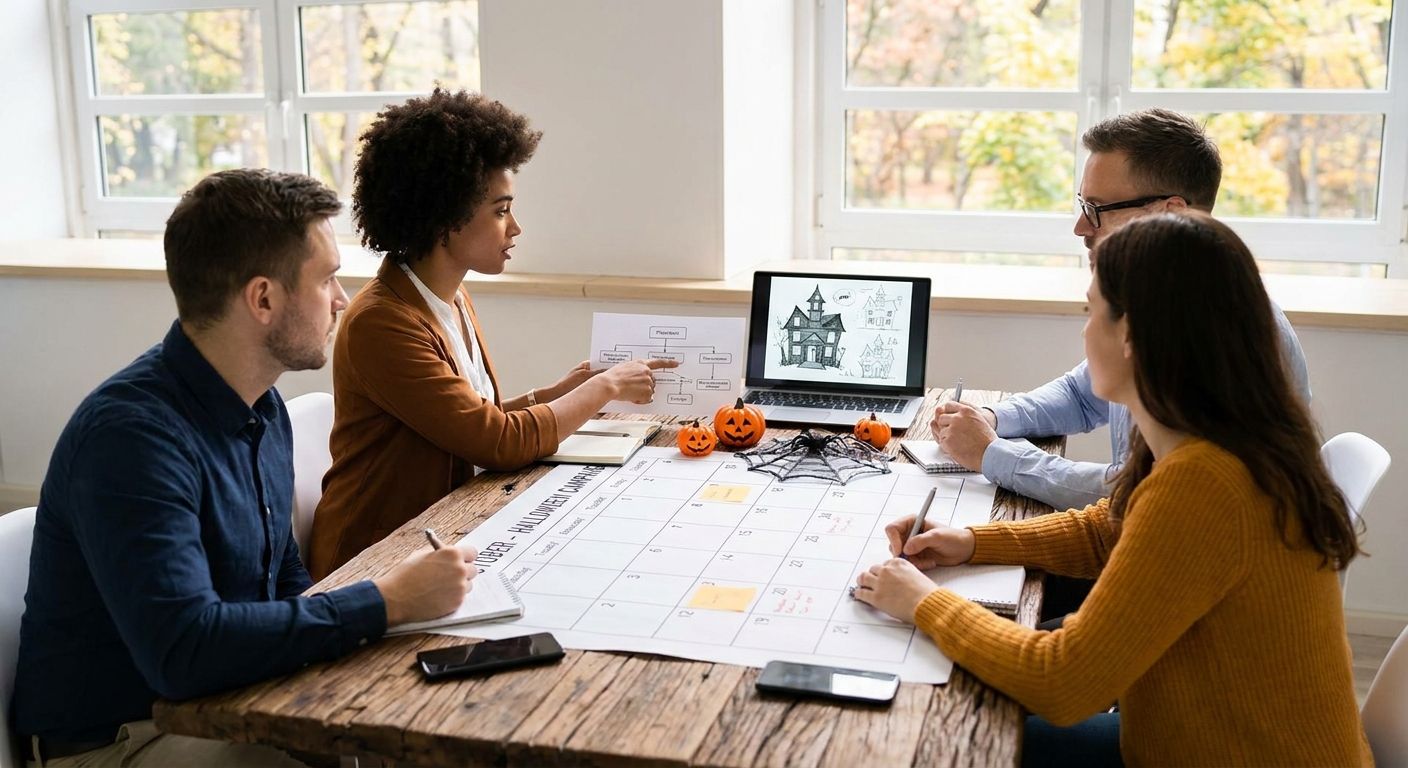
Halloween is the single biggest seasonal spike most attractions get outside of Christmas, and the campaigns that win it start 8-10 weeks before the first fright night, not the week of. Plan a Halloween marketing campaign for attractions in five phases: audience segmentation and creative testing, influencer seeding, paid media scale-up, urgency-driven last-minute pushes, and no-show reduction in the final week. Attractions that skip the early segmentation phase end up paying more per booking in October because they're competing for the same broad audience everyone else targets in the final fortnight.
- Plan a Halloween marketing campaign for attractions across five phases starting 8-10 weeks out, not the final week.
- Haunted houses and immersive experiences need influencer seeding 6-8 weeks before Halloween to build organic reach before paid spend scales.
- Off-peak weekday slots need dedicated messaging separate from weekend sell-out campaigns, or they stay empty through October.
- No-show rates climb on Halloween weekend itself, so the final-week phase needs its own retargeting and reminder sequence.
- FullyBooked runs paid media, influencer and retention campaigns for haunted houses, escape rooms and family attractions across the Halloween window.
Why this matters
Halloween isn't one event, it's a four-to-six-week trading period with a hard deadline. Attractions that treat it like a single launch date lose the early-bird bookers who plan their October weekends in September, and they lose the last-minute crowd who decide on the day. The campaign has to run two audiences at once: planners and impulse bookers, and each needs different creative, different channels and different timing.
Most operators running haunted attractions, escape rooms or immersive experiences see their highest-value bookings come from people who saw content weeks before they searched. That's the influencer and organic phase working before paid media even switches on. Skip it and every October click costs more because you're bidding cold against competitors who've already built demand.
How to plan a Halloween marketing campaign for attractions
The campaign runs on a fixed calendar working backwards from Halloween night. Here's the phase breakdown:
| Weeks before Halloween | Focus | Primary channels |
|---|---|---|
| 10-8 weeks | Audience segmentation, creative testing, offer structure | Meta, TikTok organic |
| 8-6 weeks | Influencer seeding, content library build | Instagram, TikTok |
| 6-3 weeks | Paid media scale-up, retargeting warm audiences | Meta, Google, TikTok Ads |
| 3-1 weeks | Urgency messaging, last-minute booking pushes | Paid social, email/SMS |
| Final week | No-show reduction, off-peak fill, day-of retargeting | Email, SMS, push retargeting |
Each phase feeds the next. Creative that tests well at 10 weeks becomes the paid ad at 6 weeks. Influencer content shot at 8 weeks becomes retargeting fuel at 3 weeks. Nothing in this calendar works in isolation.
10-8 weeks out: audience segmentation and creative testing
This is where paid media for haunted houses starts as testing budget, not scale budget. Run three or four creative concepts against small audiences to see which hook (fear, comedy, group appeal, date-night angle) pulls the lowest cost per booking before committing the bulk of the Halloween spend. Attractions that skip this step end up scaling the wrong creative in week six and paying for it through the whole run.
Segment by intent at the same time: date-night couples, group bookings for friends, family daytime slots, and corporate/office parties all need separate ad sets even if the venue and offer are identical. Paid media for haunted houses works best when the segmentation happens before the spend, not after.
8-6 weeks out: influencer seeding
Halloween is one of the few seasonal windows where organic reach genuinely moves ticket sales, because people actively search TikTok and Instagram for "where to go for Halloween" content in late September and early October. Seed 3-6 creators per market with a genuine visit and let the content run before any paid budget touches it. That content becomes the retargeting asset later in the funnel.
The best seasonal marketing campaigns for family attractions treat this phase as content production, not a media buy. You're building the library you'll pay to amplify in three weeks.
6-3 weeks out: paid media scale-up
This is the phase where budget actually moves. Scale the winning creative from phase one across Meta, Google Search (branded and non-branded Halloween terms) and TikTok Ads, layering in retargeting against anyone who engaged with the influencer content from phase two. Attractions running this correctly see cost-per-booking drop through this window because the audience has already been warmed twice before the ad ever shows.
3-1 weeks out: last-minute urgency
October bookers split hard into planners and impulse buyers, and the final three weeks belong to the second group. Countdown messaging, "selling fast" flags on high-demand slots, and SMS/email pushes to your existing list all convert here at a rate the earlier phases can't match. Check best last-minute booking campaigns for venues for the specific tactics that work in this window.
Final week: no-show reduction and off-peak fill
Halloween weekend itself carries a higher no-show risk than a normal ticketed event because it's a night out people plan around other social commitments. Confirmation sequences, day-of SMS reminders and a clear cancellation policy all reduce the drop-off. How to reduce no-shows for ticketed events covers the reminder cadence that works best in this exact scenario.
Weekday slots need separate treatment entirely. If Tuesday and Wednesday nights are running empty while Friday and Saturday sell out, that's a pricing and messaging problem, not a demand problem — see how to fill off-peak slots at an attraction for the fix.
“If your Halloween campaign only starts three weeks out, you're bidding against competitors who've already spent six weeks warming the same audience.”
Why Halloween campaign timing varies
Not every attraction runs the same calendar. A few factors shift the timeline:
- Venue capacity — larger attractions with more nightly slots need earlier paid media scale-up to fill inventory across four to six weeks instead of two.
- Format — haunted houses and immersive experiences rely more on influencer seeding than escape rooms, which convert better on search intent.
- Local vs destination draw — destination attractions pulling from a wider radius need paid media live earlier because travel planning happens further out.
- Existing customer list size — attractions with a strong email/SMS list can compress the paid media phase because retention channels do more of the last-minute work.
- Group vs solo booking mix — group-heavy venues need earlier campaign starts because group bookings require more coordination time between the decision-maker and the group.
- Price point — premium experiences convert more on influencer trust content; budget-friendly attractions convert more on urgency and last-minute discounting messaging.
Get your Halloween campaign built for 2026
Paid media, influencer seeding and retention timed to your booking calendar.
When should you start planning a Halloween marketing campaign?
Start planning 8-10 weeks before Halloween, with creative testing and audience segmentation in the first two weeks of that window. Attractions that begin paid media cold in the final two weeks pay more per booking because they're competing without any organic or retargeting warm-up already in place.
Should haunted attractions run influencer marketing before Halloween?
Yes, influencer seeding 6-8 weeks before Halloween works better for haunted attractions than for most other formats, because visual, reaction-driven content is exactly what performs on TikTok and Instagram in late September. The content produced in this phase also becomes the retargeting asset for paid media in weeks that follow.
How do you stop off-peak Halloween slots from running empty?
Off-peak weekday slots need separate pricing and messaging from weekend campaigns, not just a smaller media budget. Treat Tuesday and Wednesday nights as a distinct offer — group rates, date-night positioning or corporate bookings — rather than leftover inventory from the weekend push.
Does Halloween marketing need a different retention strategy than the rest of the year?
Yes — Halloween attracts a high share of one-time visitors, so the retention play shifts to converting that spike into repeat bookings for the rest of the year, not just filling October slots. Capturing email/SMS opt-ins during the Halloween rush feeds directly into loyalty and lifecycle campaigns that run through November and December.
FAQ
How far in advance should a haunted house start Halloween marketing?
A haunted house should start Halloween marketing 8-10 weeks in advance, beginning with audience segmentation and creative testing before any paid budget scales. Influencer seeding should follow 6-8 weeks out, ahead of the paid media push in the final six weeks.
What's the best channel for last-minute Halloween ticket sales?
Paid social retargeting and SMS/email to an existing list convert best for last-minute Halloween ticket sales in the final three weeks. Countdown and urgency messaging outperforms broad-awareness content in this window because the audience is already deciding, not discovering.
How do you reduce no-shows on Halloween weekend?
Reduce no-shows on Halloween weekend with a confirmation email, a day-before SMS reminder and a clearly stated cancellation policy at checkout. Halloween weekend carries a higher no-show risk than a standard ticketed night because it competes with other social plans.
Should attractions run TikTok ads for Halloween?
Yes, TikTok ads work well for Halloween campaigns when they scale creative that already tested organically during the influencer seeding phase 6-8 weeks out. Cold TikTok ad spend without that organic groundwork tends to underperform against Meta and Google in the same window.
How do you fill weekday slots during Halloween season?
Fill weekday slots during Halloween season with separate pricing and messaging aimed at groups, date-nights or corporate bookings, rather than discounting the same weekend offer. Weekday inventory needs its own campaign, not leftover budget from the weekend push.
What's the biggest mistake attractions make with Halloween marketing?
The biggest mistake is starting paid media in the final two weeks without any prior audience segmentation or influencer content to retarget against. That approach forces every October click to compete cold, driving up cost per booking against competitors who built demand earlier.
One last thing
The attractions that get Halloween 2026 right aren't the ones with the biggest paid budget in the final two weeks — they're the ones who had influencer content live in September that they're still retargeting against on October 30th. Build the content library early and the paid spend does far less heavy lifting.


