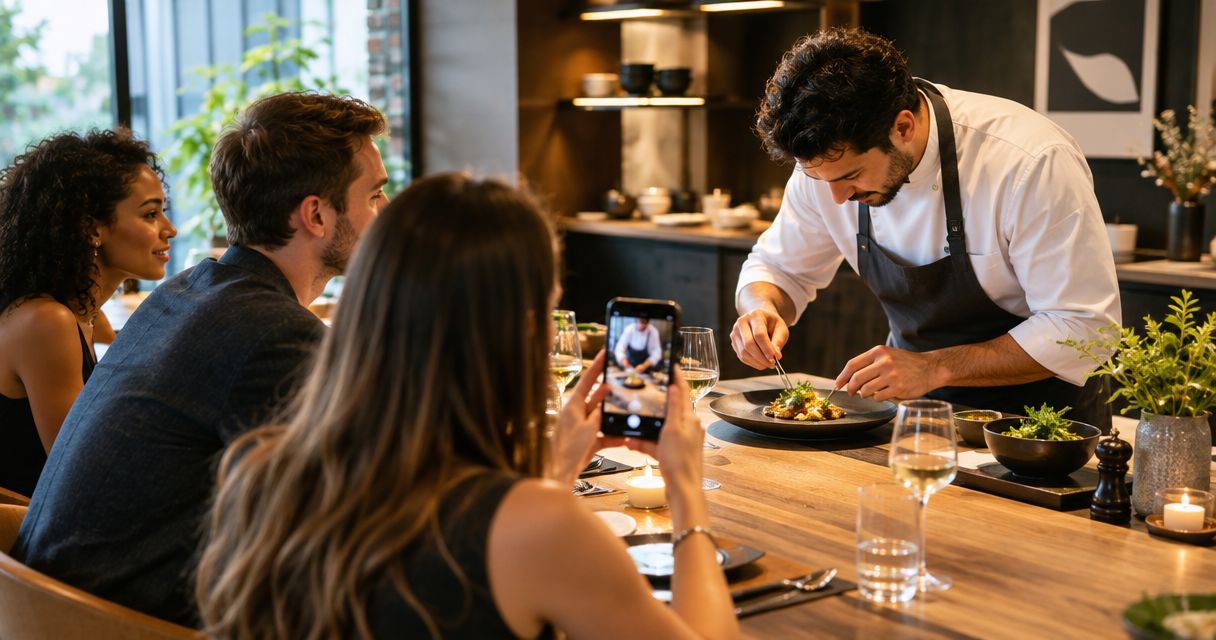
Chef's table dining experiences run influencer marketing campaigns built around seating a handful of credible food creators at the pass, with the goal of converting scarce, high-ticket seatings into fully booked services. A chef's table rarely has more than 8-14 covers a night, so this isn't a volume game like a casual restaurant discount push — it's a narrative game, built on scarcity, chef access and the theatre of an open kitchen. FullyBooked runs influencer marketing for chef's table dining experiences alongside other high-ticket, low-inventory formats, and the playbook differs from a standard hospitality influencer push at almost every step.
- Influencer marketing for chef's table dining experiences works best with 3-6 micro creators seated over a rolling campaign, not one big-name post.
- Measure covers filled and cost per booked seat, not reach or likes — reach doesn't fill an 8-seat counter.
- Fixed filming windows between courses protect service pacing; open-ended filming stalls the kitchen.
- Paid media behind top-performing creator content outperforms new creator outreach once a menu is proven.
- Rebooking the same 2-3 creators per menu change beats chasing a new roster every campaign.
Why influencer marketing matters for chef's table venues
A chef's table sells a seat, not a table for four. Every empty stool at the counter is lost revenue that can't be recovered by walk-ins later in the evening, because the format depends on a fixed, small guest list watching one chef work a single pass. That constraint changes what "good" influencer content looks like: it has to sell scarcity and story, not price.
Discount-led influencer content — the kind that works for a bar or a casual brunch spot — undersells a chef's table. A £30-off code posted to 40,000 followers reads as a mass offer; a chef's table experience needs to read as an invitation to something limited. Influencer marketing for chef's table dining experiences has to do the opposite job to most hospitality influencer work: create demand for scarcity, not demand through discount.
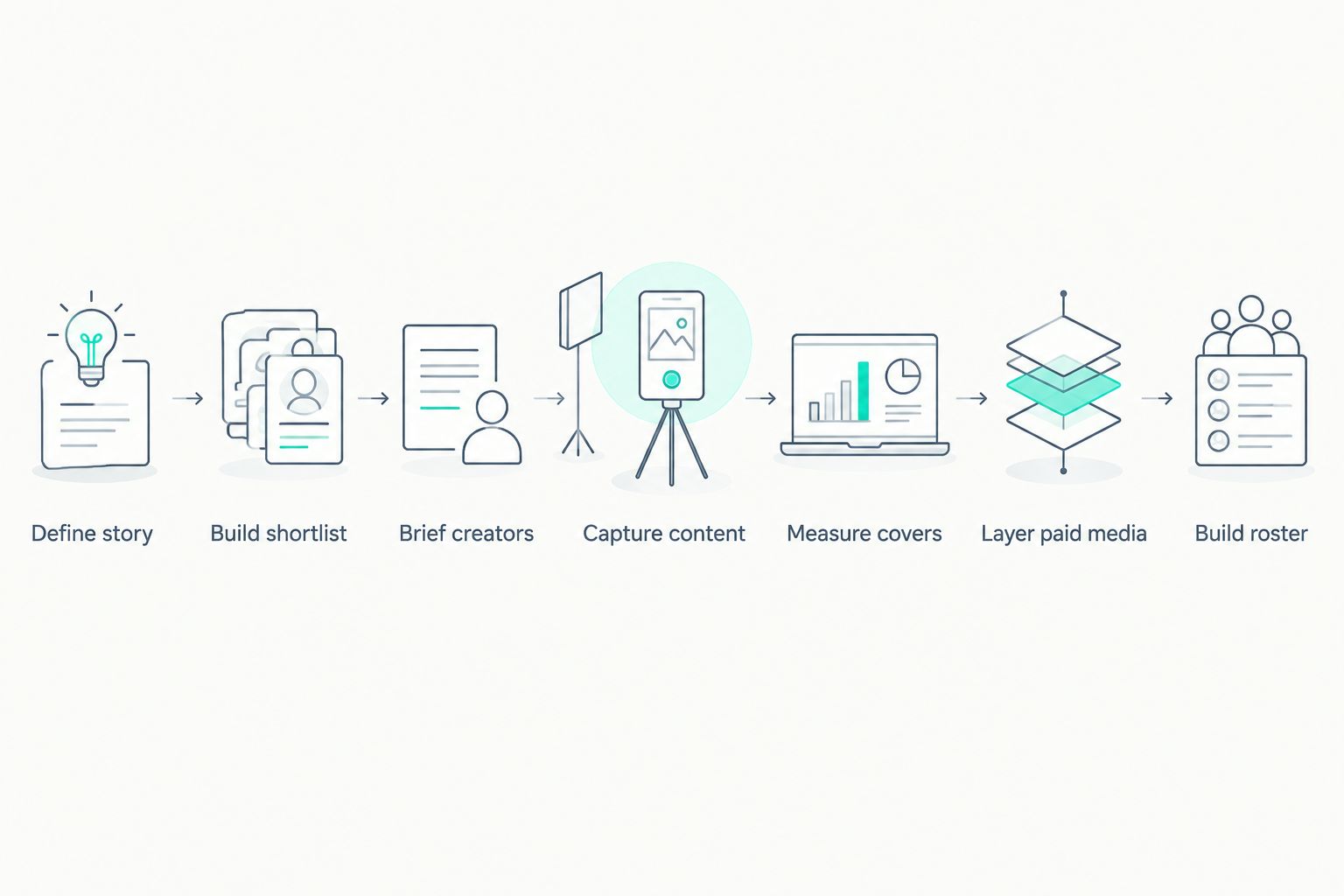
The step-by-step approach
Define the story before you approach a single creator
Before any outreach, decide what the counter is actually selling — the chef narrating each course, the ingredient sourcing story, the theatre of the open kitchen, or the single dish nobody else in the city plates that way. Every creator brief should point back to this one story.
- List the 2-3 courses that photograph and film best under the venue's actual lighting
- Pick the one sensory detail (steam off the pass, a specific plating motion, a chef line) you want repeated across every creator's content
- Set a hard seat cap for influencer visits per service so paying guests aren't displaced
- Write a one-page brief the head chef can approve in under five minutes
- Decide in advance what you will not let a creator film — usually anything that slows plating
Build a shortlist on engagement, not follower count
Chef's table content depends on believable detail, not reach. A creator with 8,000 followers and a high save rate on food content will move more covers than one with 80,000 followers and a comment section full of "love this!!".
- Filter for food creators in the 5k-50k follower range with a track record of tasting-menu or multi-course content
- Check saves and comments relative to likes — saves signal intent to book, likes don't
- Prioritise creators whose audience sits within a realistic travel radius of the venue
- Review their last three brand collaborations for tone — avoid anyone whose recent posts are all giveaways
- Ask for average watch-through rate on video content, not just follower count
Brief creators on pacing, kitchen etiquette and courses
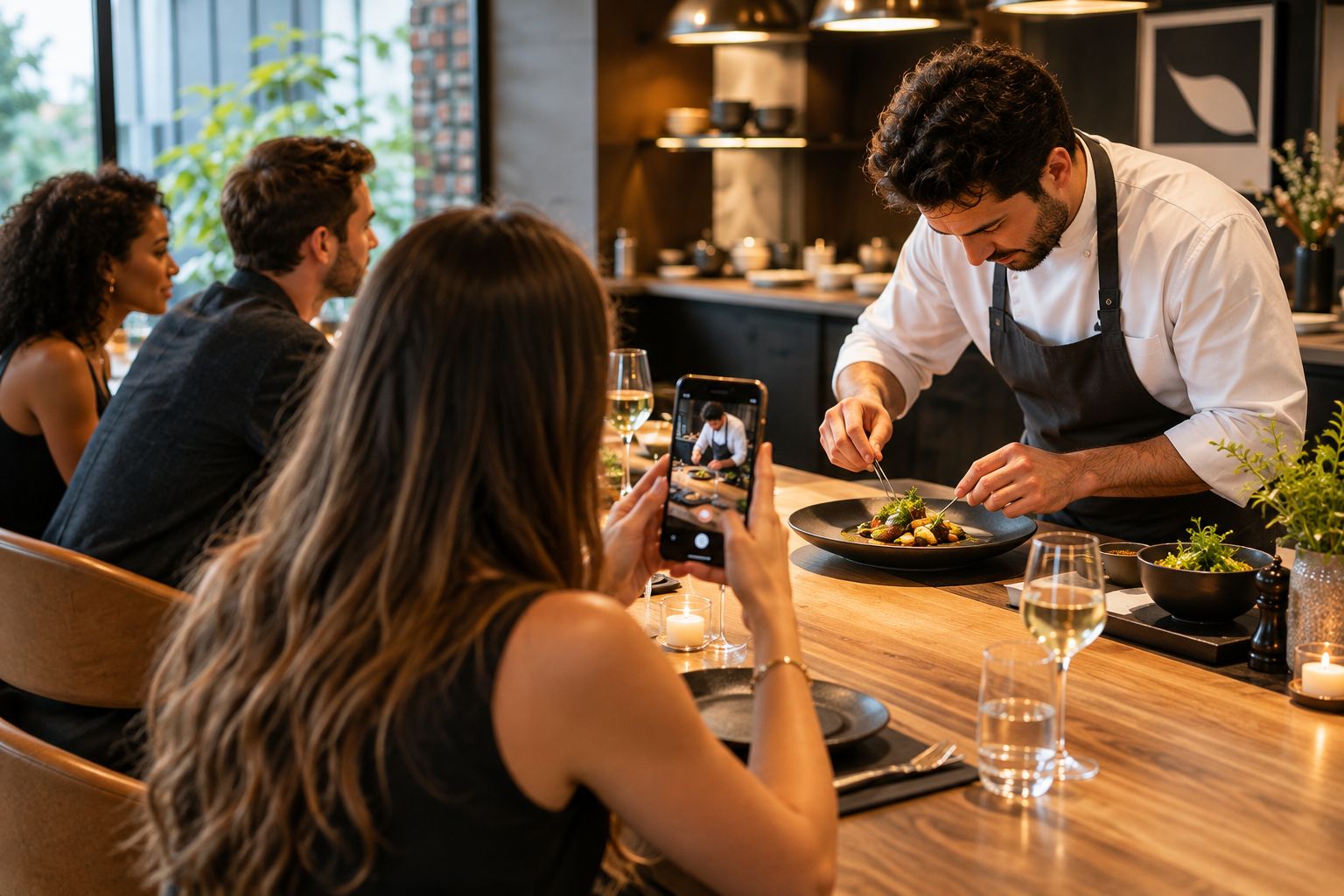
A chef's table service can't stop for content. The brief has to protect the pass as much as it protects the message.
- Fixed filming windows between courses, agreed before the visit
- No flash photography near the pass — house lighting only
- One wide shot of the counter per course, maximum, to avoid repeated interruptions
- A single 20-30 second chef explainer clip per creator visit, scripted loosely in advance
- A no-reshoot rule once a plate has left the kitchen
Turn the seated visit into a reusable content asset
A single Instagram post from one visit is a wasted booking if it can't be reused. Negotiate usage rights before the seat is confirmed, not after the meal.
- Request raw, unedited clips alongside the finished post
- Ask for one behind-the-pass photo cleared for use on the venue's own booking pages
- Get a caption line that names the specific dish, not just "amazing dinner"
- Secure a saved story highlight on the creator's profile for longer-term visibility
- Agree paid amplification or whitelisting rights on the post if it performs
Measure covers filled, not reach
Reach numbers look good in a report and mean nothing on a Tuesday service with three empty stools. Track the metric that pays the bill.
- Assign a unique, discount-free booking link or code per creator
- Compare cost per creator against covers filled, not against impressions
- Track weekday and weekend booking lift separately — chef's tables often skew weekend
- Measure how many bookings land within 14 days of the post going live versus later
- Compare average cover value against the venue's normal chef's table spend per head
Layer paid media behind content that already converts
Once a piece of creator content proves it drives bookings, paid spend behind it beats chasing new creator outreach for the same result. The same layering approach that works for cookery school experiences applies here, just aimed at a much smaller nightly seat count.
- Boost the highest-converting creator post to a lookalike audience of past chef's table bookers
- Retarget anyone who watched 50%+ of a creator's video with a direct booking link
- Concentrate spend in the two weeks before a new tasting menu launches
- Cap ad frequency so the same local audience doesn't see the same creative more than a handful of times a week
- Feed booking-page pixel data back into targeting on a weekly basis
Build a repeatable creator roster
One influencer wave doesn't sustain a chef's table calendar. The venues that keep covers full rebook the creators who actually moved bookings, rather than starting from zero every campaign.
- Rebook the 2-3 creators whose content drove measurable covers, not just engagement
- Rotate in new creators gradually to avoid audience fatigue with the same faces
- Keep a separate standing list of local food writers, distinct from social creators
- Store usable content by dish so it survives seasonal menu changes
- Review the roster every time the tasting menu changes materially
Comparing influencer options for chef's table venues
| Option | Best for | Key limitation |
|---|---|---|
| Micro food creators (5k-50k) | Believable, close-up dish detail | Small reach per post, needs several creators to move covers |
| Established food critics or bloggers | Long-form credibility and press-style write-ups | Slower turnaround, harder to control message and timing |
| TikTok content creators | Short, high-motion clips showing kitchen theatre | Content ages quickly, needs constant new material |
| Paid influencer partnerships (fee-based) | Guaranteed posting schedule and usage rights | Costs more per creator than gifted seatings |
| Agency-managed influencer programme | Multi-site operators or repeat seasonal campaigns | Ongoing management sits on top of creator costs |
Micro food creators win on believability for a chef's table format, because the format sells intimacy and detail that a small, engaged audience trusts more than a broad one.
Get an influencer plan for your chef's table
A shortlist, a brief and a measurement plan built around your seat count.
Common mistakes chef's table venues make
- Treating a chef's table like a standard restaurant discount play — gifting seats to creators chosen on follower count rather than saves and comments, then wondering why bookings don't move.
- Letting filming dictate service pacing — no fixed windows, chef distracted mid-plate, other paying guests left waiting on a course.
- Skipping usage rights — content disappears when the campaign ends because nobody negotiated reuse before the seat was confirmed.
- Reporting on likes and reach instead of covers and cost per booked seat — a metric that looks good in a deck but doesn't reflect covers filled.
- Running one influencer wave and stopping — no repeatable roster, so every menu change means starting creator outreach from zero again.
FAQ
What is influencer marketing for chef's table dining experiences?
It's a content strategy that seats a small number of credible food creators at the pass to generate believable, close-up content that fills a limited-capacity, high-ticket seating. It relies on narrative and scarcity rather than discounting.
How many influencers should a chef's table venue work with per campaign?
Most chef's table venues get better results from 3-6 micro creators across a rolling campaign than from one large-follower creator. Multiple smaller creators cover more local audience segments without flooding the same followers.
Is influencer marketing better than paid ads for chef's table bookings?
Neither works alone. Influencer content builds the credible, close-up story a chef's table needs; paid media then amplifies whichever creator content already proves it converts to bookings.
Should chef's table venues pay influencers or gift seats?
Gifted seats work for micro creators building a first relationship with the venue. Paid partnerships make sense once a creator has proven they move covers and usage rights are needed for ongoing content.
How do you measure ROI on chef's table influencer campaigns?
Track covers filled against a unique booking link per creator, then compare that against cost per creator and average cover value. Reach and likes don't measure whether seats got booked.
What size influencer works best for chef's table venues?
Micro creators in the 5,000-50,000 follower range typically outperform larger accounts for chef's table content because their audiences trust close-up, detailed food coverage over broad reach.
Can TikTok grow bookings for a chef's table experience?
Yes, short-form video showing the open kitchen and plating theatre performs well on TikTok, but the content ages fast and needs a steady supply of new material to keep working through 2026.
How often should a chef's table venue run influencer campaigns?
Tie campaigns to menu changes rather than a fixed calendar. A new tasting menu is the natural trigger to refresh creator content and rebook the roster that already proved it moves covers.
One last thing
The chef's table venues that keep covers full through 2026 aren't the ones that land the biggest single influencer post — they're the ones that rebook the same three or four mid-tier creators every time the menu changes, because a familiar face builds more trust with a local audience than a one-off appearance from someone bigger ever will.