Karaoke box venues live or die on group bookings, and influencer content is the fastest way to make a private room look irresistible to the next group deciding where to celebrate. This guide ranks the tactics that actually move bookings in 2026, not the ones that just generate likes.
- Micro-influencer private room takeovers win overall for influencer marketing karaoke box venues in 2026 - book creators into real sessions, not staged shoots.
- Song battle UGC challenges are the strongest organic play on TikTok and cost nothing but a gifted session.
- Local date-night influencer seeding is the best tactic for filling weekday off-peak slots.
- Employee/host content series build trust fastest but need a consistent posting habit to work.
- Affiliate-tracked influencer links are the only tactic that gives you a clean ROAS number.
Why this matters
Most karaoke box operators still treat influencer marketing as one-off gifted sessions with no attribution and no repeat structure. That's why the same three venues in every city show up on TikTok every month while everyone else posts a single blurry Reel and calls it a campaign.
FullyBooked has managed influencer and paid media programmes across 50+ experience operators, generating over £85M in booking revenue and 3M+ tickets sold. The tactics below come from what actually converts a follower into a booked room, not what gets the most comments.
The first internal link that matters here: if group bookings are your core problem, not just visibility, pair any influencer tactic with the structure in how to boost group bookings for a venue - influencer content fills the top of funnel, but the booking flow has to close it.
What makes the best influencer tactic for karaoke box venues
- Authenticity fit - does the content look native to TikTok/Instagram or like a paid ad in disguise
- Booking attribution - can you trace the tactic to an actual reservation, not just reach
- Repeatability - can it run monthly without creator fatigue or format burnout
- Cost structure - gifted session vs paid fee vs revenue share, and whether it scales
- Peak vs off-peak fit - does the tactic drive Friday-night demand or fill Tuesday afternoons
- Platform algorithm fit - built for short-form video or for static feed posts
At a glance
| Tactic | Best for | Standout feature | Key limitation |
|---|---|---|---|
| Micro-influencer room takeovers | Group booking demand | Real session footage, not staged content | Needs a steady creator pipeline |
| Song battle UGC challenges | Organic TikTok reach | Zero cash cost, high shareability | Hard to attribute to bookings directly |
| Local date-night influencer seeding | Off-peak weekday fill | Targets couples/small groups on slow nights | Smaller reach than mega-creator posts |
| Employee/host content series | Trust and retention | Costs nothing beyond staff time | Slow to build an audience |
| Niche community creator drops | New audience acquisition | Reaches K-pop, anime, drag communities directly | Narrow audience, not a volume play |
| Affiliate-tracked influencer links | Measurable ROAS | Clean attribution to revenue | Requires booking platform integration |
1. Micro-influencer room takeovers: best for group booking demand
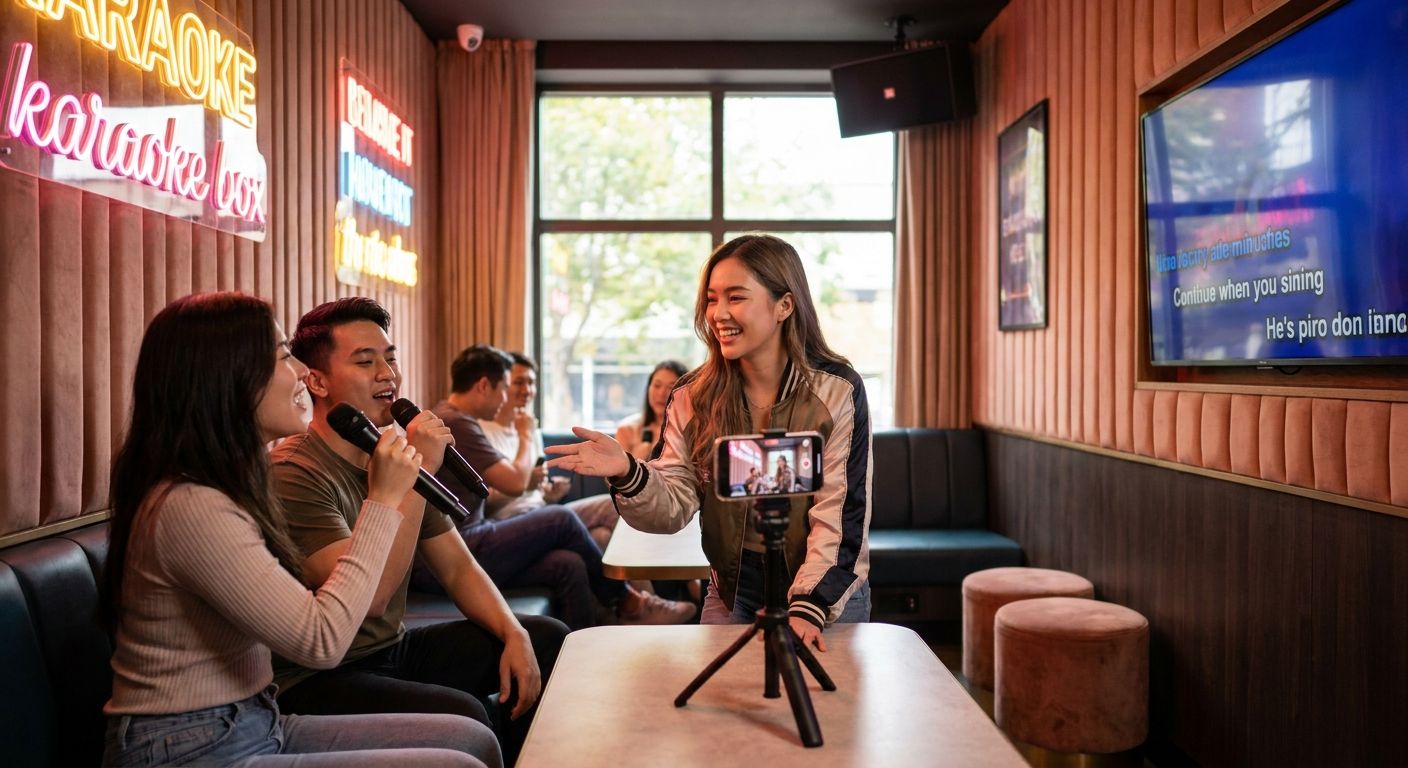
Book a handful of local creators into an actual private room on a normal trading night and let them film the real experience - the queue for the mic, the booth screen, the group singing badly. This works because it looks like proof, not promotion.
Micro-influencer room takeovers pros:
- Footage looks like a real night out, which drives trust faster than studio content
- Creates a content library you can reuse in paid social for months
- Local creators typically ask for a comped session rather than a large fee
Micro-influencer room takeovers cons:
- Quality varies creator to creator - you need a brief, not just an invite
- Doesn't scale fast without a consistent outreach process
Best for: operators trying to fill 6-10 person rooms on weekend nights. Verdict: run it now.
2. Song battle UGC challenges: best for organic TikTok reach
Seed a simple, repeatable format - two groups, one song, a scored battle - with a small set of creators and a branded sound or hashtag. TikTok rewards this format because it's built for duets, stitches and reposts.
Song battle UGC challenges pros:
- Highest organic reach ceiling of any tactic on this list
- Costs a gifted session, not a fee, in most cases
- Encourages user-generated follow-on content from customers, not just creators
Song battle UGC challenges cons:
- Hard to tie a specific booking back to a specific video
- Needs a fresh angle every few weeks or the format goes flat
The best TikTok marketing approach for experience brands covers how to keep a challenge format alive past the first viral moment.
Best for: venues with strong TikTok presence already or a young weekend crowd. Verdict: test it this quarter.
3. Local date-night influencer seeding: best for off-peak weekday fill
Target smaller, local couple- or friend-focused creators and seed sessions specifically on Tuesday-Thursday nights when rooms sit empty. The content angle is deliberately different from the weekend group content - quieter, more intimate, positioned as a date idea.
Local date-night influencer seeding pros:
- Directly attacks the off-peak revenue gap most karaoke box venues have
- Cheaper than weekend seeding because demand for the slot is naturally lower
- Positions the venue for a second audience segment beyond big groups
Local date-night influencer seeding cons:
- Reach is smaller than weekend-focused creator content
- Needs its own booking offer or slot messaging to convert
Best for: venues with visible gaps in weekday utilisation. Verdict: run it alongside off-peak promotions.
4. Employee/host content series: best for trust and retention
Put your own hosts or staff on camera doing short, recurring content - room tours, mic tips, behind-the-scenes setup. This builds a face-of-the-brand effect that paid creators can't replicate, and it costs nothing beyond staff time.
Employee/host content series pros:
- No creator fees or gifting cost at all
- Builds long-term audience trust rather than one-off reach
- Staff already know the product and don't need a brief
Employee/host content series cons:
- Growth is slower than creator-led content in the first 90 days
- Depends on one or two consistent, camera-comfortable staff members
Best for: operators building a channel for the long term, not a quick spike. Verdict: start now, expect results in 2026's second half.
5. Niche community creator drops: best for new audience acquisition
Gift sessions to creators inside a specific fandom - K-pop, anime, musical theatre, drag performance - who already have an audience primed to sing. This is a narrow tactic but it converts hard within that community.
Niche community creator drops pros:
- Reaches an audience segment general local influencers never touch
- High conversion within the niche because the fit is obvious
- Differentiates the venue from competitors chasing generic reach
Niche community creator drops cons:
- Small total addressable audience per niche
- Requires research to find the right creators, not just the biggest follower count
Best for: venues near a university, fandom hub, or theatre district. Verdict: hold for a themed campaign rather than running it constantly.
6. Affiliate-tracked influencer links: best for measurable ROAS
Give each creator a unique booking link or discount code tied to your booking platform, so every reservation traces back to a specific piece of content. This is the only tactic on the list that produces a clean attribution number.
Affiliate-tracked influencer links pros:
- Direct line from content to booked revenue
- Makes it obvious which creators are worth repeating
- Turns influencer spend into a measurable channel, not a guess
Affiliate-tracked influencer links cons:
- Needs booking platform support for unique links or codes
- Adds friction if the code redemption process isn't smooth
Best for: operators who already track cost per booking on paid media and want the same discipline applied to influencer spend. Verdict: run it if your booking system supports tracked links; skip it if it doesn't yet.
How we ranked
Each tactic was scored against the six criteria above - authenticity fit, attribution, repeatability, cost structure, peak/off-peak fit and platform algorithm fit. Micro-influencer room takeovers ranked highest because they hit both authenticity and repeatability without needing a booking system overhaul first; affiliate-tracked links ranked lower on accessibility only because not every venue has the platform integration to run them yet.
Get an influencer plan built for your venue
FullyBooked has run influencer and paid campaigns across 50+ experience operators.
Which tactic should you choose?
If you're running a single karaoke box venue with no influencer history, start with micro-influencer room takeovers - they're the fastest route to content that reads as real proof rather than an ad. Layer in a song battle UGC challenge once you have a content library, and use date-night seeding specifically to attack weekday gaps. Don't build an affiliate-tracked programme until your booking platform can actually issue trackable links - running it without attribution defeats the point.
For multi-room or multi-site operators, the group booking side of the funnel matters as much as the influencer content itself - see best group booking marketing tactics for venues for how to structure the offer that content is driving traffic toward.
FAQ
What's the best influencer marketing tactic for karaoke box venues in 2026?
Micro-influencer private room takeovers rank highest in 2026 because they produce authentic session footage that converts group bookings, and they're repeatable without a large budget.
Do karaoke box venues need paid influencer fees or can gifted sessions work?
Gifted sessions work for most local micro-influencers and UGC challenge creators. Paid fees usually only apply to larger creators with proven reach in your city.
How do you measure ROI on influencer marketing for a karaoke venue?
Affiliate-tracked booking links or unique discount codes give the cleanest attribution, tracing specific reservations back to specific creator content.
Is TikTok or Instagram better for karaoke box influencer content?
TikTok favours challenge-format content like song battles because the algorithm rewards duets and stitches; Instagram works better for polished room-tour and date-night content.
How often should a karaoke venue run influencer content?
Monthly is a realistic minimum to avoid audience fatigue on a single format, with room takeovers and UGC challenges rotated rather than repeated identically.
Can employee content replace influencer marketing for a karaoke box venue?
Employee/host content builds trust and costs nothing beyond staff time, but it grows slower in the first few months than creator-led content and works best as a complement, not a replacement.
What's the best influencer tactic for filling off-peak karaoke slots?
Local date-night influencer seeding on weekday nights directly targets the off-peak gap most karaoke box venues have between Tuesday and Thursday.
One last thing
The tactic operators skip most often is the cheapest one: employee/host content. It costs nothing beyond staff time, yet most karaoke box venues never post a single staff-led video in 2026. If your influencer budget is £0 this month, start there before chasing creators.


