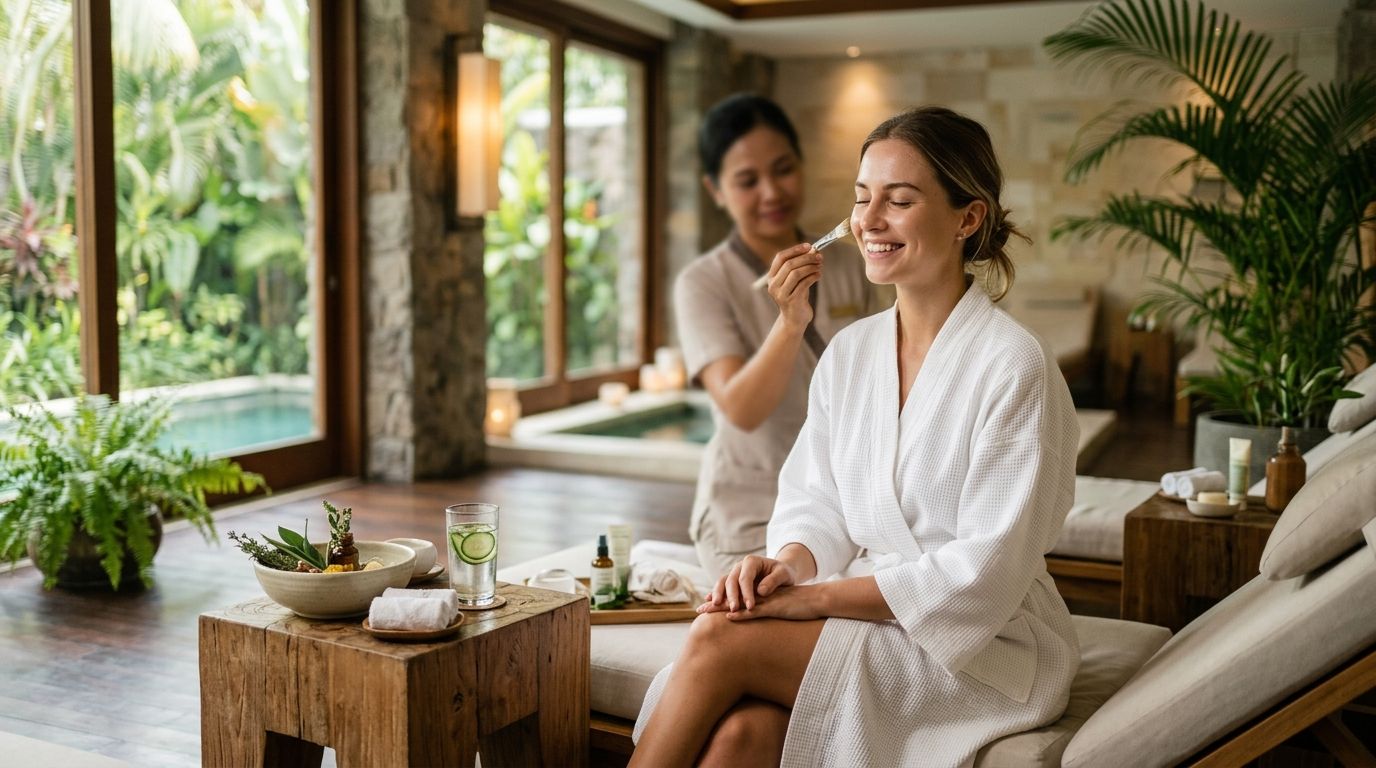
Spa and wellness experience marketing means putting real guest visits — the facial, the thermal suite, the float tank, the couples' massage — in front of niche wellness audiences through creators those audiences already trust, with the goal of filling treatment slots and day-pass bookings that paid ads alone cannot move. Wellness buyers research differently than most experience categories: they read reviews, they watch a real face use the sauna before they book, and they are wary of anything that looks like a discount-code stunt. That makes influencer marketing spa wellness experience campaigns a trust exercise first and a reach exercise second, and it sits alongside the wider spa day experience marketing strategy rather than replacing it.
- Influencer marketing spa wellness experience campaigns convert on trust signals, not discount codes.
- Micro-creators with 10k-50k followers in wellness niches beat macro-influencers on cost-per-booking in 2026.
- FullyBooked has generated over 85M pounds in bookings value across 50+ experience operators.
- Pair creator seeding with retention: influencer-driven first visits need a rebooking nudge inside 30-60 days.
- Real-visit UGC outperforms studio photography as paid social creative for spa venues in 2026.
Why influencer marketing matters for spa and wellness experiences
Spa and wellness bookings are high-consideration purchases even at modest price points. A 90-minute thermal circuit is not an impulse buy the way a bowling lane or an escape room slot is. Guests want proof the changing rooms look like the photos, the staff are not rushed, and the treatment matches what was promised.
A single creator visit that shows the entrance, the treatment and an honest reaction closes that proof gap faster than any ad set. Wellness audiences also cluster around tight niche creators — sleep optimisation accounts, cold plunge communities, skincare micro-influencers — rather than broad lifestyle profiles. That gives spa operators sharper targeting through creator partnerships than through interest-based ad targeting, where wellness as an ad category is broad, crowded and expensive to bid against in 2026.
There is a second reason this channel matters for wellness specifically: the category is visually consistent but experientially varied. Two spas can shoot identical marble-and-eucalyptus photos and deliver completely different visits. Creators are the only cheap way to prove which one you are.
The influencer spine for spa and wellness venues
Update your creator brief before you seed anything
Most spas send a free treatment to an influencer with no brief and no ask, then get one vague Story that vanishes in 24 hours. Fix the brief before you fix anything else.
- State the exact deliverable: one Reel, one carousel, or one Story sequence — never just content
- Name three specific shots to capture: the arrival, the treatment in progress, the after-glow
- Ask for an honest caption rather than a scripted one; wellness audiences spot scripts instantly
- Set the posting window around your slow period, not the creator's convenience
- Require a saved highlight or pinned post so the content outlives the 24-hour window
Choose creators by niche fit, not follower count
A 15,000-follower sleep-hygiene account will sell more spa day packages than a 200,000-follower general lifestyle account, because that audience already wants what you sell.
- Search hashtags and location tags tied to your treatment types — cold plunge, infrared sauna, hot stone — instead of the broad wellness tag
- Check engagement across the last 10 posts rather than total follower count
- Prioritise creators who have posted about competitor spas or retreats in the past 90 days
- Confirm the audience is local or regionally relevant if you run a single site
- Skip creators whose feed is dominated by paid supplement or MLM placements; audiences discount those recommendations
Run a structured seeding programme, not one-off freebies
One gifted visit produces one post and no pipeline. A calendar turns influencer marketing spa wellness experience activity into a channel you can forecast.
- Book 3-5 creators per month, staggered across weekdays to protect weekend inventory
- Log every seeded visit against booking volume in the following 14 days
- Create a returning-creator tier with priority slots for repeat collaborators
- Set a minimum engagement floor so gifted treatments do not land on dead accounts
- Cap gifting at two visits per creator until one of them produces measurable lift
This is where most spa operators hit a ceiling. Finding creators is easy. Knowing which ones filled treatment rooms is not. FullyBooked builds influencer marketing spa wellness experience programmes with booking attribution wired in from day one, so seeding spend gets judged on covers filled rather than impressions.
Convert creator content into paid social assets
Organic reach from a single post fades within days. The footage keeps working once it runs through your own ad account.
- Secure usage rights inside the brief, never after the post goes live
- Cut the strongest 15 seconds of any creator video into a paid Reel
- Test creator UGC against studio photography in the same ad set; UGC usually wins on cost-per-booking
- Rotate creative every 10-14 days — local wellness audiences are small and fatigue fast
- Whitelist the creator handle where the platform allows it; the creator's name outperforms the venue handle on cold traffic
Measure booking lift, not reach
View counts tell you nothing about whether a treatment room got filled. Attribution decides whether this channel survives your next budget review.
- Issue a unique tracked link or code per creator, even when the offer is identical
- Compare bookings in the 7 days after a post against the 7 days before
- Separate new-customer from repeat-customer bookings to see if the creator brought fresh demand
- Track no-show rates on creator-driven bookings separately; gifted-audience traffic can no-show at a higher rate
Layer retention onto every influencer-driven first visit
A creator post gets a guest through the door once. What happens next decides whether the campaign paid for itself. First-time wellness guests need a rebooking prompt inside 30-60 days, before the memory fades and a competitor's ad catches them. Treat the influencer-acquired guest as the top of a retention sequence, not the end of a campaign.
- Tag influencer-sourced bookings in your CRM at the point of purchase
- Send a rebooking offer at day 21, not day 90
- Route repeat spa guests into a membership or package offer rather than single treatments
- Measure 90-day repeat rate by acquisition source so you can compare creators fairly
Get an influencer plan for your spa
Creator seeding, paid amplification and booking attribution for wellness venues.
Influencer options for spa and wellness operators
| Option | Best for | Key limitation |
|---|---|---|
| Gifted micro-influencer visits | Single-site spas building local proof | Low volume unless run on a monthly calendar |
| Paid macro-influencer placement | Launches and new-site openings | Weak precision against tight wellness niches |
| UGC ambassador programme | Continuous creative supply for paid social | Needs a dedicated coordinator to stay alive |
| Affiliate or referral partnerships | Performance-based, fully measurable spend | Wellness creators often resist commission-only terms |
| Agency-managed programme | Multi-site groups needing attribution at scale | Requires budget beyond gifted treatments |
Verdict: gifted micro-influencer seeding wins for single-site spas testing the channel in 2026; an agency-managed programme wins once the operator needs bookings attributed to individual creators across multiple sites.
“Reach without attribution is just a free treatment given away.”
Common mistakes spa and wellness operators make
- Gifting with no brief. Sending a complimentary facial and hoping for good content instead of specifying a deliverable and a posting window.
- Buying follower count over niche fit. A 300k lifestyle account converts worse than a 20k sleep or skincare micro-account for treatment bookings.
- No tracked link or code. Without per-creator attribution you cannot tell a strong partnership from a wasted treatment slot.
- Running one campaign instead of a channel. A single influencer weekend does not compound the way a rolling monthly calendar does.
- Ignoring the rebooking window. A strong first visit with no follow-up sequence turns an acquisition win into a one-off cost.
FAQ
What is influencer marketing for spa and wellness experiences?
It is using creators with wellness-focused audiences to show real treatments and visits, driving bookings through trust rather than discount codes. For spa operators in 2026 it works best when each creator carries a tracked link so bookings can be attributed individually.
Do micro-influencers work better than macro-influencers for spas?
Yes, for most spa and wellness venues micro-influencers in tight niches such as sleep, skincare or cold therapy beat broad lifestyle macro-influencers on cost-per-booking. Audience match matters more than reach for a treatment booking.
Should a spa pay influencers or only gift treatments?
Gifted treatments suit early-stage testing and single-site venues; paid placement makes sense once booking lift is proven and you need guaranteed reach for a launch or seasonal push. Start gifted, scale paid.
How do you measure ROI on spa influencer campaigns?
Give every creator a unique tracked link or code and compare bookings in the 7 days before and after the post. Segment new versus repeat customers so you know whether the creator brought fresh demand.
How does influencer content fit with paid social for spas?
Once usage rights are secured, creator footage becomes the strongest paid social creative most spas can run and usually beats studio photography on cost-per-booking. Boost the best 15 seconds through the venue ad account.
How many creators should a spa work with each month?
Three to five per month is a workable starting cadence for a single-site spa, staggered across weekdays to protect weekend inventory. Scale only once a creator has produced measurable booking lift.
Can influencer marketing replace retention marketing for spas?
No. Influencer marketing drives first visits, but without a rebooking prompt in the first 30-60 days that guest has no reason to return. The two channels have to run together.
Which platform works best for spa influencer campaigns?
Instagram Reels and TikTok carry the most spa and wellness discovery traffic in 2026, with Instagram Stories useful for time-limited slot filling. Choose by where your target creators already have engaged audiences.
One last thing
The spa operators getting the best cost-per-booking from influencer marketing in 2026 are not the ones with the biggest gifting budget. They are the ones tracking a unique link per creator and cutting anyone who has not moved bookings within 30 days. Most venues discover that two or three creators produce nearly all the lift, and the rest were free treatments dressed up as marketing.


