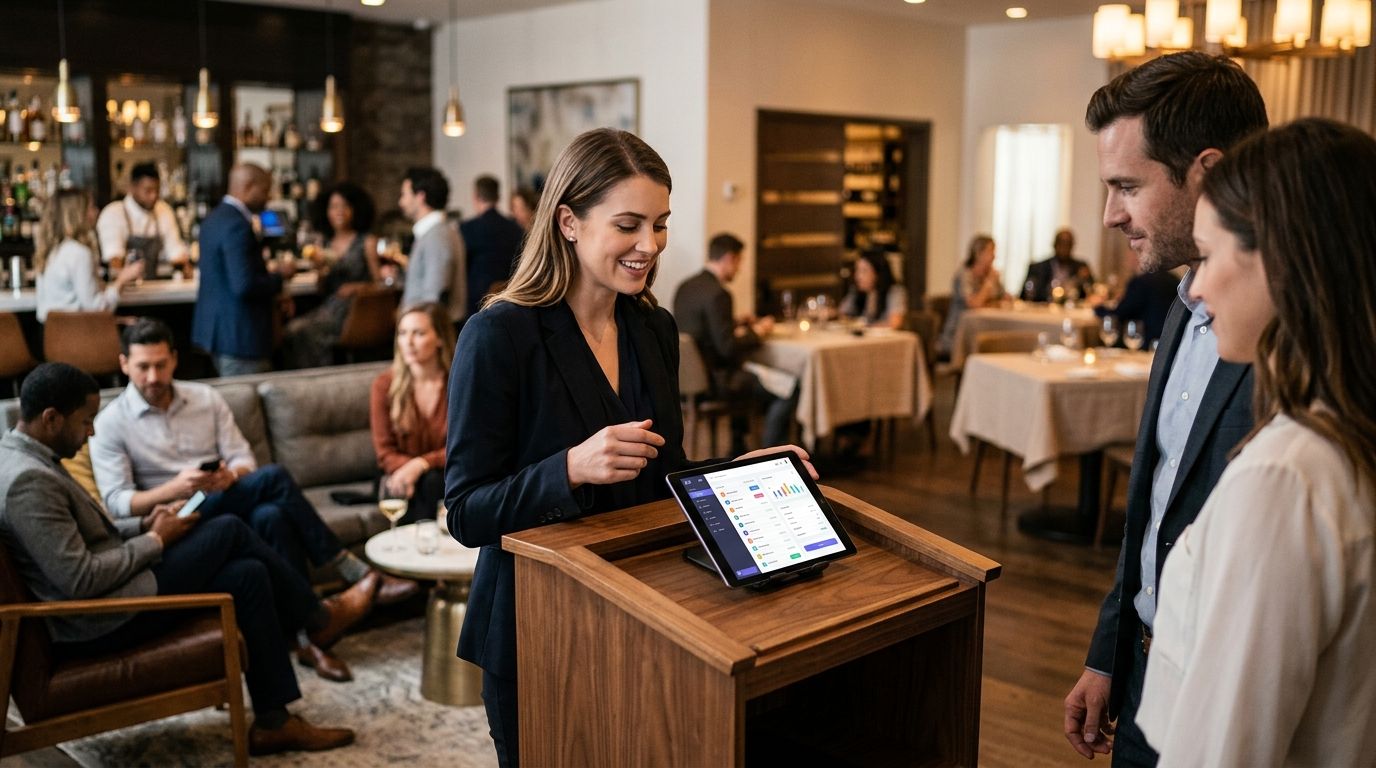
Running a referral programme for an experience business means giving existing bookers a concrete reason to bring a friend, tracking exactly who referred whom, and rewarding both sides only after the referred booking actually happens. It works because experience businesses already hold the one ingredient referral loops need: a repeat-visit customer base with a genuine story to tell after a good night out. The programme fails the moment the reward pays out before the visit happens, or tracking depends on a customer remembering to mention a name at the door.
- Running a referral programme for an experience business works best as a double-sided reward tied to a completed visit, not a discount at checkout.
- FullyBooked has generated £85M+ in ticket revenue across 3M+ tickets sold and 50+ operators managed, with referrals sitting inside the retention layer.
- Track referrals through a unique code or booking-flow field — spreadsheets break down once monthly bookings climb past a few hundred.
- Best for repeat-visit models (escape rooms, climbing gyms, soft play) over single-visit attractions with no return trip built in.
Why this matters
Experience businesses run on word of mouth harder than most retail categories. A group booking for an escape room, a comedy night, or a bottomless brunch spreads because someone had a genuinely good night, not because of a display ad. FullyBooked works with venues, events and attractions across the UK, and referral mechanics show up consistently in the retention side of that work, alongside loyalty schemes and lifecycle email — the three levers experience operators use in 2026 once paid acquisition alone stops moving the needle.
A badly structured referral programme just discounts bookings that would have happened anyway. One built around timing, tracking and a reward that matches the visit type creates bookings that would not otherwise exist.
How to run a referral programme for an experience business
Build the programme in this order, not all at once:
- Pick the trigger moment. Fire the referral ask after the visit is completed, not at the point of purchase — a customer who hasn't had the experience yet has nothing to sell a friend on.
- Choose the reward structure. Double-sided rewards (both referrer and referred party get something) outperform single-sided discounts because they don't just subsidise the new booker, they thank the existing one. See how a loyalty programme for an entertainment venue structures the same mechanic for repeat visitors.
- Build the tracking mechanism. A unique referral code, a shareable link, or a mandatory "who told you about us" field in the booking flow — pick whichever your booking platform can actually report on, because a referral programme nobody can measure gets killed at the next budget review.
- Set a redemption window that expires. An open-ended reward sits unused in an inbox; a deadline forces the decision.
- Promote at the point of highest satisfaction — a post-visit email or SMS within 24-48 hours, never buried in a generic monthly newsletter.
- Review monthly. Track referral bookings as a share of total bookings and drop or rework any incentive that isn't moving that number by the second review cycle in 2026.
Types of referral incentive
- Double-sided credit — referrer and referred both get a reward redeemable on their next visit. Best for: repeat-visit venues like climbing gyms and soft play centres. Verdict: Buy.
- Single-sided perk (skip-the-line, priority slot) for the referrer only. Best for: high-demand attractions where a discount would devalue the ticket. Verdict: Hold — works but converts fewer referrers than double-sided.
- Tiered group referral — reward scales with the number of friends referred, often reused from best loyalty programme ideas for experience brands. Best for: venues that already run group bookings. Verdict: Buy for group-heavy formats, Skip for solo-visit experiences.
“A referral reward paid out before the visit happens is a discount, not a referral programme.”
Turn bookers into a growth channel
FullyBooked builds retention and referral strategy for experience operators.
Why referral programme results vary
Two venues can run near-identical referral mechanics in 2026 and get opposite results. The gap usually comes down to a handful of factors:
- Repeat-visit frequency — a venue people visit monthly generates far more referral moments than one visited once a year.
- Average booking value — higher-value bookings (private hire, group packages) justify a bigger reward per referral than a £15 single ticket.
- Tracking accuracy — if the booking system can't attribute a sale to a referral code, the programme looks like it's failing when it's actually just invisible.
- Timing of the ask — asking mid-visit or at checkout underperforms asking after the customer has already had a good experience.
- Incentive relevance — a discount code means little to someone who just paid full price for premium seats; a free add-on or priority booking often lands better.
- Promotion channel — referral asks buried in a footer link convert worse than ones surfaced in a dedicated post-visit email, a pattern also covered in retention marketing tactics for experience businesses.
Is a referral programme worth it for a small venue?
A referral programme is worth running for a small venue if the business already has repeat visits or group bookings to build on — it's a retention tool wearing an acquisition hat, not a standalone growth channel. Skip it if the venue is single-visit only (a one-off pop-up with no return trip), because there's no natural moment for a customer to become a repeat advocate.
What's the best incentive for an experience business referral programme?
The best incentive is a double-sided reward tied to the referrer's next visit, not a straight discount at the point of sale. It works because it rewards loyalty on one side and removes price resistance on the other, and it keeps both parties inside the booking funnel rather than pushing one of them toward a coupon-hunting mindset.
How do you track referrals without dedicated software?
Track referrals using a unique code entered at checkout or a mandatory referral field in the booking form when there's no dedicated referral platform. It's manual and it leaks accuracy at volume, but it's workable for venues doing under a few hundred bookings a month before a proper booking-system integration becomes worth the setup time.
FAQ
How much should a referral reward be worth for an experience business?
There's no fixed figure that works across every venue — it should scale with average booking value, not sit at a flat rate copied from another business. A private hire venue can justify a bigger reward per referral than a walk-in ticketed attraction.
Is a referral programme better than a loyalty programme?
They solve different problems: a referral programme brings in new customers through existing ones, while a loyalty programme keeps existing customers coming back. Most experience operators in 2026 run both, often layering referral rewards on top of an existing loyalty structure.
When should the referral ask go out after a visit?
Send the referral ask within 24-48 hours of the visit, while the experience is still fresh, rather than folding it into a monthly newsletter. Waiting longer than a week noticeably drops response.
Do referral programmes work for one-off pop-up experiences?
Referral programmes work poorly for true one-off pop-ups because there's no return visit to reward the referrer with. A limited-run experience is better served by direct social sharing incentives than a formal referral structure — see how a limited-run pop-up handles this differently.
Should the reward go to the referrer, the referred friend, or both?
Both, when the budget allows it — double-sided rewards outperform single-sided ones because they don't just discount the new customer, they also thank the existing one for the introduction. Single-sided rewards to the referrer only still work but tend to convert fewer people.
How do you stop referral programme abuse?
Cap the number of redemptions per customer per month and tie every reward to a completed, paid visit rather than a signup or click. Requiring the referred party's booking to actually happen before either side gets paid out removes most of the incentive to game the system.
Can a referral programme replace paid media for an experience business?
No — a referral programme is a retention and word-of-mouth amplifier, not a replacement for paid acquisition, because it depends entirely on an existing customer base large enough to generate meaningful referral volume. Venues with low footfall need paid media running alongside it to build that base first.
One last thing
The referral programmes that actually move numbers in 2026 aren't the ones with the biggest reward — they're the ones with the shortest gap between the visit ending and the ask going out. A venue that emails within 24 hours of a great experience will out-convert a venue offering double the reward a week later. Fix the timing before touching the incentive size.