Launching a loyalty programme for an entertainment venue means picking one reward mechanism, tying it directly to your booking flow, and measuring repeat-visit rate before you measure sign-ups. Most venues get this backwards: they build the app first and figure out the reward structure later, then wonder why redemption sits near zero. The fix is sequencing — reward model, integration, segmentation, comms cadence, in that order.
- Pick one reward model before building anything — points, tiers, stamp cards or paid membership, not a mix.
- Loyalty only works when it lives inside your existing booking flow, not a separate app guests forget to open.
- Segment your list before launch — a comedy club and a trampoline park need different visit thresholds.
- Track repeat-visit rate and cohort retention, never enrolment count, as the success metric in 2026.
- Fullybooked has run retention programmes across 50+ experience operators generating £85M+ in booking revenue.
Why this matters
Acquisition costs for experience businesses have climbed every year this decade, and 2026 is no different — paid media auction prices go up, organic reach on social keeps thinning, and the cost of pulling in a first-time booker outpaces what most venues earn on that first visit. A working loyalty programme is the only lever that turns a one-off ticket buyer into a repeat one without spending more on ads each time.
The venues that get this right treat loyalty as a retention marketing function, not a bolt-on app. The venues that get it wrong build a points system nobody understands, launch it with an email blast, and let it die quietly by month three.
How to launch a loyalty programme for an entertainment venue
Follow these steps in order — skipping ahead to the app-build stage before locking the reward model is the single most common mistake experience operators make.
- Pick the reward model that matches your visit frequency. A climbing gym with weekly visitors needs a different mechanic than a haunted house that sees guests once a season.
- Set the reward threshold before you touch software. Decide what a "loyal" guest looks like at your venue — third visit, fifth visit, £150 spent — before you pick a platform to track it.
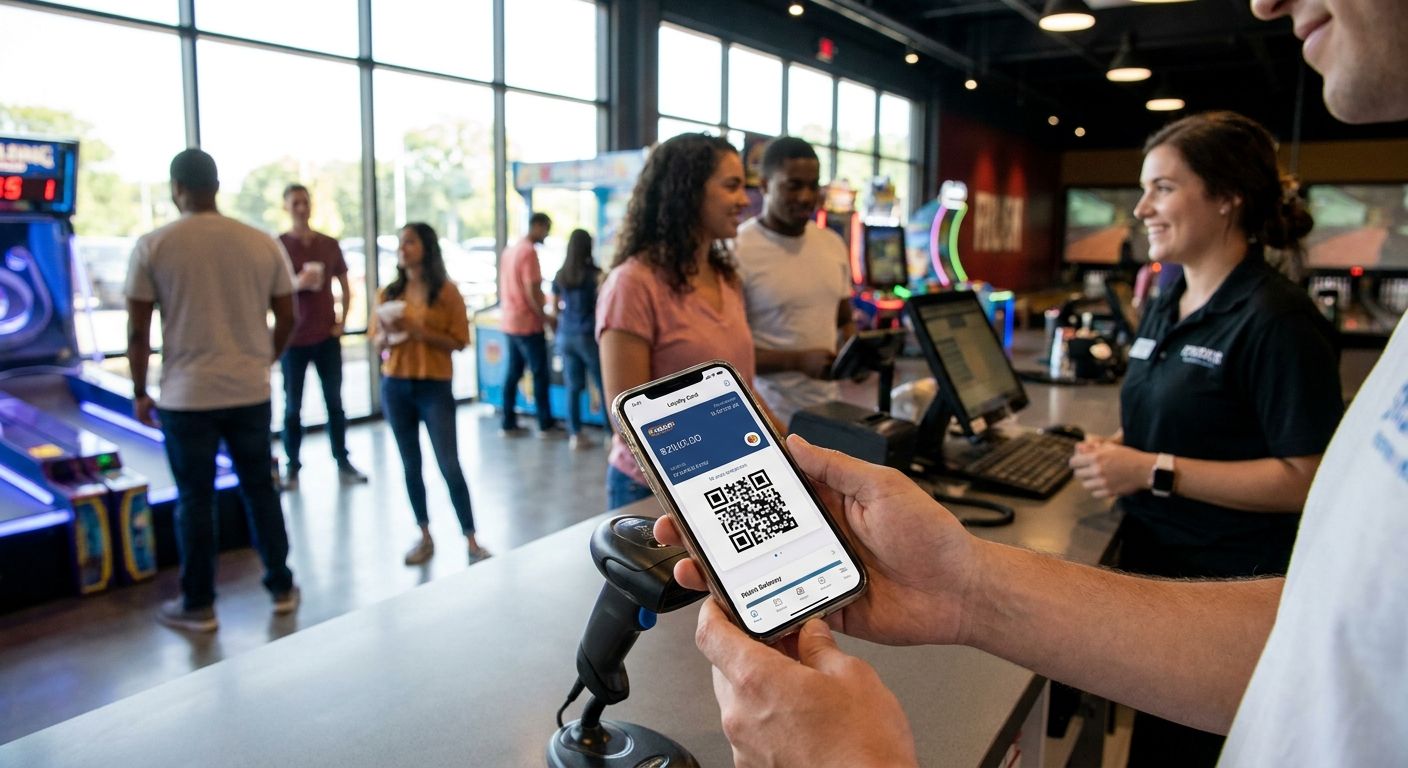
- Build the programme into your existing booking flow. Loyalty status should show at checkout, not live in a separate app your guests have to remember to open.
- Segment your list before you launch. First-time bookers, lapsed guests and repeat visitors need different messaging on day one — a single blast to everyone flattens the whole effort.
- Give the programme its own comms cadence. Loyalty updates need a rhythm separate from your regular email marketing for ticketed events — guests should hear about their status, not just your next event.
- Track cohort retention, not sign-up count. A programme with 3,000 members and flat repeat-visit rate is worse than one with 400 members and a rising one.
For a fuller breakdown of which reward mechanics work at which venue type, see loyalty programme ideas for experience brands.
Loyalty model comparison
| Model | Best for | Setup effort | Main weakness |
|---|---|---|---|
| Points-based | High-frequency venues (bowling, climbing) | Medium | Points inflation dilutes value over time |
| Tiered VIP | Venues with clear spend variance | High | Confusing if tiers aren't visibly different |
| Digital stamp card | Quick-turnaround experiences | Low | Weak lock-in once the card fills |
| Paid membership | Venues with strong repeat demand | Medium | Requires enough perceived value to justify the fee upfront |
Points-based programmes: the default for high-frequency venues
Points work best where guests visit often enough to accumulate something meaningful within a few months — bowling alleys, karting tracks, boutique fitness studios. Award points per visit or per pound spent, and cap the redemption ladder at two or three tiers so guests can see the next reward without a spreadsheet.
Buy if your venue sees repeat visits at least monthly. Skip if your average guest visits once a year — the points will never accumulate to anything they value.
Tiered VIP programmes: best for venues with clear spend variance
Tiered models reward the top slice of guests differently from the rest — priority booking windows, free upgrades, early access to seasonal events. This works well for live music venues and immersive experiences where a small group of superfans drives a disproportionate share of revenue.
The risk: if the tiers aren't visibly different in what they unlock, guests never feel the pull to climb. Buy if you already have data showing a top 10-20% of bookers spending meaningfully more than average. Wait if you don't have that spend data yet — build the tracking first.
Digital stamp cards: the fastest launch, weakest lock-in
Stamp cards — digital or physical — are the lowest-effort model to launch. Guests get a free visit, upgrade, or item after a set number of check-ins. Escape rooms, axe-throwing venues, and pop-up experiences use this because it requires no complex tier logic and guests understand it instantly.
The weakness: once the card fills and the reward is claimed, there's no built-in reason to start a new one unless you actively re-engage. Buy as a starting point if you've never run loyalty before. Hold off on this as your only model long-term — pair it with segmented email once you have enough data to build tiers.
Paid membership: best for venues with proven repeat demand
A paid membership — a recurring fee in exchange for priority access, discounted tickets, or member-only events — only works where repeat demand is already proven. Adventure parks and theme parks with strong local catchment areas are the clearest fit.
This model asks guests to commit money upfront, so the perceived value has to be obvious from the first email. Buy if you already have a segment of guests visiting 4+ times a year without any incentive. Skip if your current repeat-visit rate is low — a paid tier will feel like a bad deal and guests won't convert.
Why loyalty programme results vary by venue
Not every experience operator gets the same return from the same model. The variables that actually move the outcome:
- Natural visit frequency of the category — a trampoline park sees repeat guests far more often than a haunted house, which shifts which model makes sense.
- Average spend per visit — venues with add-on spend (food, merch, upgrades) have more room to build a points economy that feels rewarding.
- Seasonality — seasonal attractions need a programme that survives the off-season without losing engagement.
- Group vs. solo booking mix — venues built around group bookings need loyalty logic that rewards the group organiser, not just the individual account.
- Booking platform capability — if your ticketing system can't tag loyalty status at checkout, the programme lives outside the guest journey and gets ignored.
- Existing no-show rate — a high no-show rate undermines any loyalty maths built on visit counts; fix that first by reading how to reduce no-shows for ticketed events.
“A loyalty programme with 3,000 sign-ups and a flat repeat-visit rate is a worse result than 400 members and a rising one.”
Related questions
Does a loyalty programme reduce no-shows?
A loyalty programme reduces no-shows indirectly by making a guest's booking history visible and giving repeat bookers a reason to protect their status. It's not a direct fix — pair it with confirmation and reminder sequencing for the biggest drop in no-show rate.
Should a loyalty programme replace email marketing?
No — a loyalty programme should run alongside your existing email marketing, not replace it. Loyalty comms need their own cadence tied to guest status, while regular email marketing continues driving new bookings and event announcements.
How long before a loyalty programme shows results?
Results show up first in repeat-visit rate among your most active segment, typically within one full booking cycle for your venue type — a few weeks for high-frequency venues, a full season for seasonal attractions. Enrolment numbers move faster than actual behaviour change, which is why enrolment alone is the wrong metric to watch.
Experience operators running structured retention programmes with Fullybooked have generated part of the £85M+ in booking revenue tracked across the agency's 50+ managed operators and 3M+ tickets sold. The pattern holds across venue types: the loyalty programme only works when it's built into the same funnel driving first-time bookings, not bolted on afterward.
Build a loyalty programme that actually retains
Fullybooked designs retention systems for venues, events and attractions.
FAQ
What's the best loyalty programme model for a small entertainment venue?
A digital stamp card is the best starting model for a small entertainment venue because it launches fastest and needs no tier logic. Move to points or tiers once you have enough repeat-visit data to segment guests meaningfully.
How much should a venue spend on a loyalty programme in 2026?
Spend on a loyalty programme should scale with what the venue already spends on retention marketing overall, not sit as a separate line item in 2026. Check the budget split guidance for attraction operators before setting a fixed figure.
Do loyalty programmes work for seasonal attractions?
Loyalty programmes work for seasonal attractions when the reward structure survives the off-season, such as early-access perks for the next opening. A points system that resets every season with no off-season touchpoint loses most of its value.
Is a paid membership better than a free points programme?
A paid membership works better than a free points programme only where repeat demand is already proven — guests visiting four or more times a year without incentive. Without that proof, a paid tier feels like a bad deal and conversion stays low.
How long does it take to launch a loyalty programme for a venue?
Launch timelines depend on whether the reward model is built into the existing booking platform or requires a separate app — the former is far faster. The reward threshold and segmentation work should be finished before any software integration starts.
Should loyalty programmes replace email marketing for venues?
No, loyalty programmes should not replace email marketing for venues — they run as a parallel comms track tied to guest status. Regular email marketing still drives new bookings and event awareness.
What metric shows if a loyalty programme is working?
Repeat-visit rate within the enrolled cohort shows whether a loyalty programme is working, not total sign-up count. A rising repeat-visit rate among a smaller, engaged group beats a large, flat one.
One last thing
The venues seeing the strongest loyalty results in 2026 aren't the ones with the fanciest app — they're the ones that killed a points system nobody redeemed and replaced it with a stamp card guests actually understood. Simpler mechanics with visible checkout integration consistently outperform complex tier structures nobody can explain in one sentence.