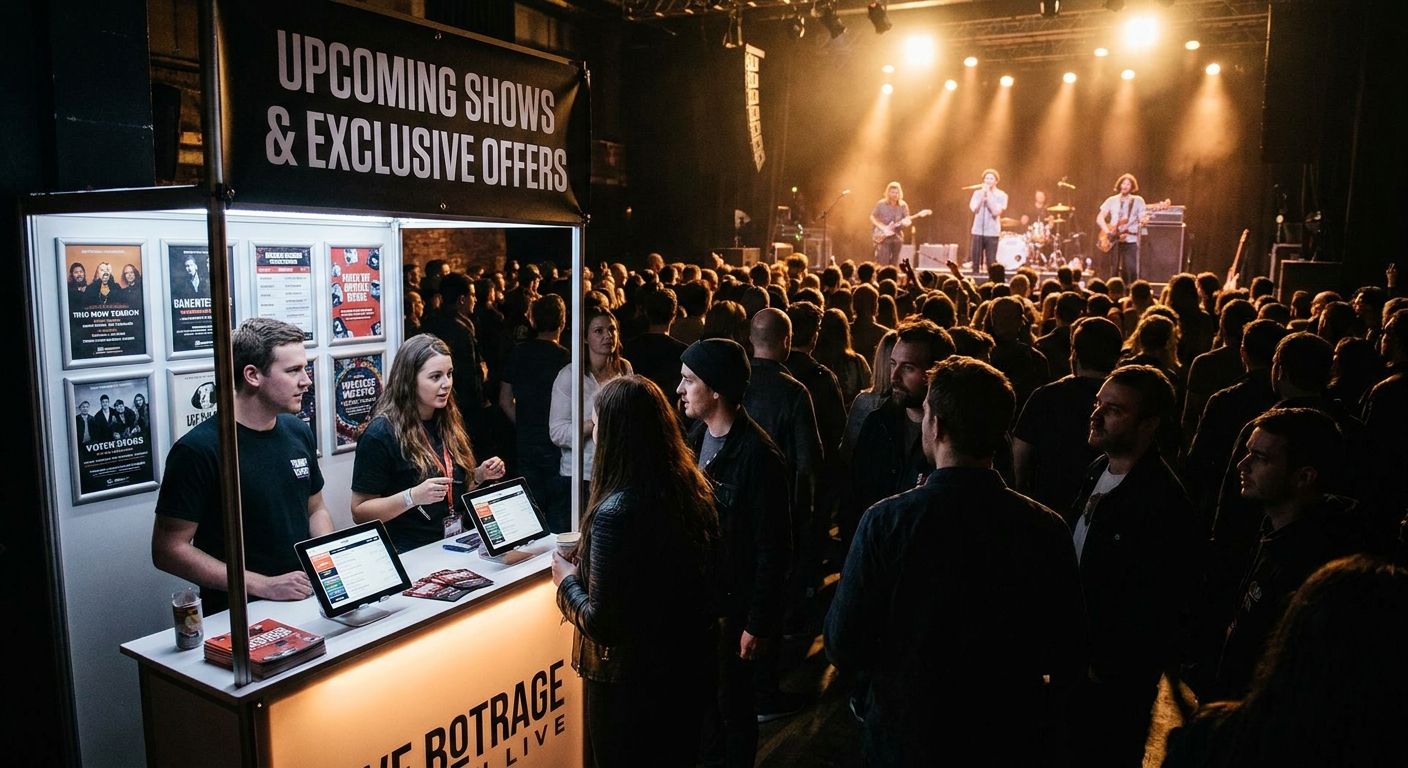
Live music venues live and die on the door and the bar, and both depend on whether a room fills on a Tuesday in February as reliably as a Saturday in June. Event marketing for live music venues means building a system — paid media, influencer seeding, retention campaigns — that keeps every night close to sold out, not just the headline shows.
- Event marketing for live music venues works best when paid media, influencer seeding and retention run together, not solo — Buy the combination.
- FullyBooked has generated £85M+ in ticket revenue across 50+ experience operators through 2026 — use it as a benchmark.
- Influencer marketing tied to support-slot artists outperforms static ads for gig discovery in 2026 — Consider for openers.
- Retention marketing recovers lapsed gig-goers cheaper than fresh paid acquisition once you have 12+ months of ticketing data — Buy.
- Skip boosted Facebook posts with no retargeting pixel — they burn budget on one-off attendees who never come back.
Why this matters
A 200-cap venue that fills 60% of shows on average is leaving revenue on every date that undersells. Venues that treat marketing as a bolt-on — a poster, a Facebook event, a hope — see wild swings between sold-out headliners and half-empty support nights. 2026 ticketing platforms give you the data to fix that: who bought, when they bought, what genre they came for, and whether they came back. The venues winning right now use that data to run event marketing for live music venues as a repeatable system, not a one-off campaign per show.
Who this is for
This is for venue operators, promoters and in-house marketers running a 100-2,000 capacity room with a regular gig calendar — weekly or near-weekly shows, a mix of ticketed headliners and support acts, and a ticketing platform generating first-party data. If you're booking one-off events with no repeat calendar, the retention piece of this guide matters less. If you're running 20+ shows a year, it's the difference between a venue that scales bookings and one that chases the same on-sale panic every month.
What to look for in event marketing for live music venues
Genre-matched paid media targeting
Generic "gig near me" targeting wastes spend on people who'll never buy a ticket to a death metal support show. Paid media built around genre affinity, similar-artist lookalikes and past-attendee data converts at a lower cost per ticket than broad location targeting, because you're bidding for people who already like this kind of night out.
Influencer marketing with actual reach in your scene
A local micro-influencer with 8,000 followers who genuinely goes to gigs in your genre sells more tickets than a generic lifestyle account with 80,000 followers and no music credibility. For live music, influencer marketing works when it's tied to the artist or the scene, not the venue's Instagram aesthetic.
Retention and lifecycle campaigns, not just on-sale blasts
Most venues email their full list every time, regardless of genre or past behaviour, and wonder why open rates drop. Retention marketing segments by genre history and recency — a lapsed jazz-night attendee gets a different email than someone who bought a metal ticket three weeks ago.
On-sale timing and pricing strategy
Dropping tickets on a Monday morning with no pre-sale window undersells headline shows that could move faster with a 48-hour fan pre-sale. Timing and tiered pricing (early bird, door price) create urgency that a flat single-price on-sale doesn't.
Multi-show reporting, not per-event guesswork
If you can't see cost per ticket by genre and by channel across your last 20 shows, you're rebooking marketing spend on gut feel every month. Reporting that rolls up across the whole calendar tells you which nights are worth paid support and which sell themselves.
Cross-promotion with adjacent experience operators
Gig-goers who buy tickets to your venue often buy tickets to comedy nights, immersive events or late-bar experiences nearby. Cross-promotion and shared audience data extend your reach without extra ad spend, and it's a tactic more experience operators are running through 2026 as first-party data gets harder to buy externally.
The tactics that actually move tickets
Paid social with retargeting, built around genre lookalikes. The pitch: stop bidding broad, start bidding on people who already like this sound. Paid media for immersive experiences shows the same lookalike-and-retargeting structure applied to a different experience category — the mechanics transfer directly to a gig calendar. Buy if your ticketing platform can export genre and past-purchase data into an ad account; Skip if you're still running boosted posts with no pixel installed.
Influencer marketing tied to the support act, not the venue account. The hook: the opener's fanbase is a warmer audience than your own follower list for that specific show. Influencer marketing for trampoline parks demonstrates the seeding-and-tracking approach FullyBooked runs across experience categories — the same tracked-link structure works for gig promoters working with support-slot artists. Consider it for any show with a support act that has its own social following; Skip it for one-off headline nights with no lead-in act to seed through.
Retention marketing on your ticketing database. The wildcard: most venues sit on 12+ months of buyer data and never segment it. Retention marketing for escape rooms applies lifecycle segmentation to repeat-visit behaviour — a live music venue with weekly shows has the same repeat-customer shape. Buy if you have a ticketing platform exporting purchase history; it's the cheapest ticket you'll sell all year because you're not paying acquisition cost twice.
Paid media for one-off pop-up or themed nights. The safe pick for a venue testing a new format — a themed night, a genre crossover, a late bar takeover. Paid media for axe throwing venues shows the same test-and-scale paid structure applied to a category selling one-off experience tickets, which maps closely to a pop-up gig night with no repeat-buyer history to target yet. Consider for launch nights; Hold the budget until you've got at least one show's worth of first-party data to build lookalikes from.
What to avoid
- Boosted Facebook posts with no pixel or retargeting set up — they look like marketing but they're a donation to Meta with no way to measure cost per ticket.
- Blanket email blasts to your full list regardless of genre history — high unsubscribe rates and dropping open rates over 2026 as inboxes get stricter on engagement signals.
- Influencer deals with no tracked link or promo code — you'll never know if the post sold a single ticket, and you'll repeat the spend next month on the same account.
Get a plan for your venue's calendar
FullyBooked has sold 3M+ tickets across 50+ experience operators.
Verdict comparison
| Tactic | Best for | Key signal needed | Verdict |
|---|---|---|---|
| Genre-targeted paid social | Weekly gig calendars with mixed genres | Ticketing data exportable to ad platform | Buy |
| Support-act influencer seeding | Shows with an opener who has social reach | Tracked link or promo code | Consider |
| Retention lifecycle emails | Venues with 12+ months of buyer history | Segmented list by genre/recency | Buy |
| Paid media for pop-up/themed nights | New formats with no purchase history yet | None required to start, data needed to scale | Hold |
| Blanket email blasts | Nobody in 2026 | N/A | Skip |
FAQ
What is event marketing for live music venues?
It's the combination of paid media, influencer marketing and retention campaigns that a venue runs to sell tickets consistently across its calendar, not just for headline shows. In 2026 the strongest versions of it lean on first-party ticketing data to target genre-matched audiences.
Is influencer marketing worth it for a small venue?
Yes, if it's tied to the support act or the specific show rather than a generic venue post — a local micro-influencer with genre credibility outsells a large lifestyle account with no music connection. Track it with a promo code or unique link or you won't know if it worked.
How much should a venue spend on paid media per show?
Spend depends on capacity, ticket price and how much of the room is presold through your own list versus needing new discovery — there's no single figure that fits every venue. Build spend from cost-per-ticket data on your last few shows rather than a flat percentage rule.
What's the difference between retention marketing and a regular email newsletter?
A newsletter goes to everyone regardless of what they've bought before; retention marketing segments by genre history and recency so a lapsed jazz-night buyer gets a different message than someone who bought last week. It typically produces a lower cost per re-engaged ticket than fresh paid acquisition.
Do I need a ticketing platform with data export to run this?
Yes — genre-targeted paid media and retention segmentation both depend on exporting purchase history, so a platform that locks your data in limits what you can build. Check this before signing a new ticketing contract in 2026.
Should I run paid media for every show or just headliners?
Run it for shows where presale from your own list won't fill the room — usually support nights, new formats and midweek dates. Headliners with strong existing demand often need retargeting more than broad prospecting.
What's a realistic sell-through rate for a mid-size venue?
There's no universal figure since it varies by genre, city and night of week, but tracking your own sell-through rate show by show over 2026 is more useful than benchmarking against another venue's number.
One last thing
The venues getting this right in 2026 aren't spending more — they're spending on fewer, better-targeted channels and measuring cost per ticket across the whole calendar instead of per show. FullyBooked has run this playbook across 50+ experience operators and 3M+ tickets sold; the pattern holds whether the room is a 150-cap basement venue or a 2,000-cap ballroom.


