Best overall in 2026: Google Business Profile for a single hospitality venue. Best for multi-site operators: Birdeye. Best for tourism-led venues: Tripadvisor. The right choice depends on where guests check reviews and who on your team will request and answer them.
- For the best review management tools for hospitality venues, start with Google Business Profile in 2026.
- Birdeye is the stronger fit when several venues need one reputation workflow.
- Tripadvisor matters when guests research an attraction, tour or destination before visiting.
- Podium focuses on guest messaging; GuestRevu focuses on hospitality feedback.
Why this matters
A review tool does two jobs: it helps you ask guests for feedback, and it helps your team act on what they say. Neither job is complete when reviews sit in an inbox without an owner. In 2026, choose the platform your prospective guests actually consult, then make review requests and responses part of the post-visit routine.
FullyBooked is a specialist marketing agency for experience-based businesses, not a review software vendor. Its stated track record is 3M+ tickets sold, £85M+ in revenue generated and 50+ operators managed. Those are agency-wide figures, not results attributed to any tool in this list. For a venue buying paid media or running retention campaigns, reviews provide useful guest feedback and visible context for the next potential booker.
A bar, a table-service restaurant and a ticketed attraction do not need identical review workflows. The bar might prioritise its local listing. The attraction might need to watch a travel-review platform as well. Start with the booking decision, not a software feature list.
What makes the best review management tool for a venue
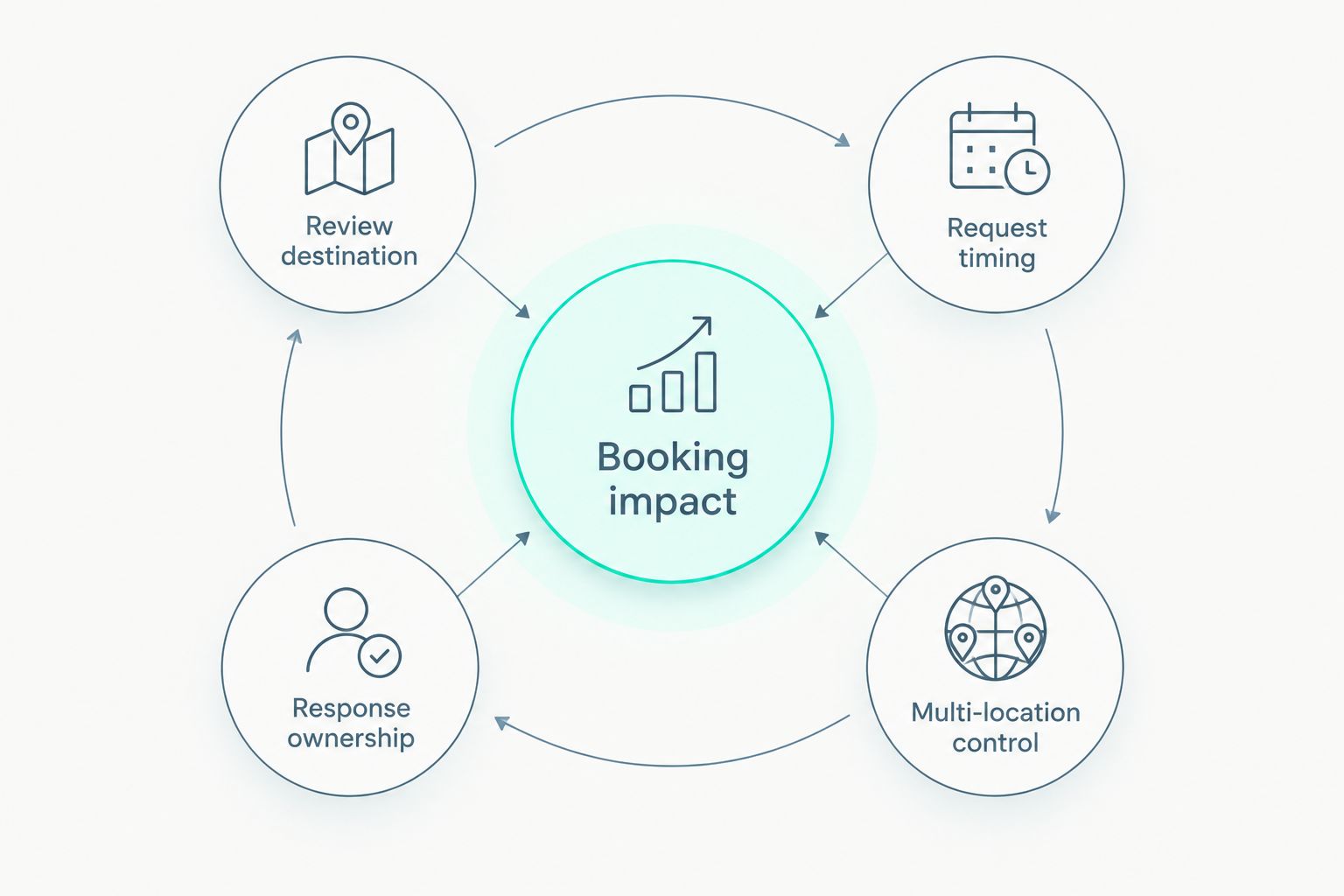
Use these criteria before comparing dashboards. A tool is useful only if it fits the way your guests visit and the way your staff work.
- Review destination: Prioritise the sites guests use to evaluate your venue. A polished dashboard cannot compensate for neglecting the listing they see first.
- Request timing: Decide when a completed visit should trigger a request. The process must distinguish guests who attended from people who booked but did not visit.
- Response ownership: Assign someone to read reviews, investigate complaints and approve public replies. Automation does not resolve a service failure.
- Multi-location control: If you operate several sites, check whether managers can see their own feedback while the central team retains oversight.
- Booking impact: Review feedback alongside booking enquiries and customer-service issues. A rising review count alone does not tell you why guests choose you.
The practical test is simple: identify the review site, the guest record that starts a request, and the person who responds. If any of those is undefined, fix the workflow before adding another subscription.
The tools at a glance
| Tool | Best for | Standout feature | Key limitation |
|---|---|---|---|
| Google Business Profile | A venue establishing its local review presence | Reviews on its Google listing | Covers Google, not every review site |
| Birdeye | Operators overseeing several venues | Centralised reputation workflow | More platform than a single site may need |
| Tripadvisor | Attractions and tourism-led venues | Reviews alongside travel research | Less relevant when guests do not use Tripadvisor |
| Podium | Venues prioritising guest messaging | Review requests within a messaging workflow | Requires a reliable contact and consent process |
| GuestRevu | Hospitality teams seeking detailed guest feedback | Guest surveys and feedback management | Narrower fit for venues seeking only public reviews |
1. Google Business Profile: best starting point for a single venue
Google Business Profile lets a venue manage its presence on Google Search and Maps, including its business information and responses to Google reviews. If someone searches for your venue by name, this listing is an obvious place to check what guests have said. In 2026, it is the default starting point for a venue that has not assigned ownership of its reviews.
The work is operational rather than technical. Make sure the right team member can access the profile, decide how complaints are escalated, and review the listing after changes to the venue experience. Do not confuse a claimed profile with an active review process.
Google Business Profile pros:
- Keeps review responses close to the listing guests find in Google Search and Maps.
- Gives a single-site team a clear place to begin.
- Lets staff see recurring issues in public guest feedback.
Google Business Profile cons:
- Does not give you one inbox for every review platform.
- Still needs a separate, consent-aware process for asking guests to review.
- A listing cannot fix an issue guests repeatedly report.
Best for: a single venue establishing its local review and response routine. Verdict: Buy as the starting point; assess additional tools only after the routine works.
2. Birdeye: best for multi-site oversight
Birdeye is a reputation management platform for businesses managing reviews and customer interactions across locations. Its value for a venue group is coordination: central staff need visibility, while each location needs someone accountable for the feedback it receives. That is a different problem from replying to reviews at one site.
Before choosing it, map the permissions you need. Decide whether site managers should draft responses, whether a central team approves them, and how complaints move into an operational queue. The dashboard matters less than whether those decisions are made and followed.
Birdeye pros:
- Brings reputation work into a shared platform.
- Fits a structure with both location managers and central oversight.
- Gives a group a consistent process for monitoring and responding.
Birdeye cons:
- Adds administration a single-site team might not need.
- Shared access does not establish who owns each reply.
- You still need to confirm the required integrations for your booking setup.
Best for: operators managing several venues with separate local teams. Verdict: Buy when location-level accountability is the problem you need to solve; Hold if one person already handles one listing effectively.
3. Tripadvisor: best for tourism-led venues
Tripadvisor is a travel-research and review platform. It belongs on the shortlist when a guest compares attractions, tours or destination experiences before choosing where to go. For a venue whose guests rarely use it, maintaining another review surface can create work without addressing the booking decision.
Check your own venue category and the questions guests ask before arrival. If travel planning shapes demand, make sure someone monitors Tripadvisor feedback and keeps the business information accurate. If most decisions happen through a local search or a direct booking journey, prioritise those surfaces instead.
Tripadvisor pros:
- Places guest feedback in a travel-planning context.
- Gives attractions and tours another place to answer visitor concerns.
- Helps teams spot questions that arise before a destination visit.
Tripadvisor cons:
- Is not the primary research surface for every hospitality format.
- Adds another profile and response queue to maintain.
- Does not replace ownership of reviews on Google.
Best for: attractions, tours and venues selected as part of a trip. Verdict: Buy when Tripadvisor is part of your guests' research journey; Skip when it is not.
4. Podium: best for guest messaging tied to review requests
Podium combines business messaging with review-request tools. That makes it relevant when your team already communicates with guests through messages and wants a defined post-visit request process. The crucial check is not whether a message can be sent; it is whether the venue has appropriate contact details, consent and a reliable signal that the guest attended.
Write the request in the venue's voice, tell guests where their feedback will appear, and give staff a route for handling replies that describe a problem. A message sent automatically to the wrong person is worse than a request sent later by a member of the team.
Podium pros:
- Keeps review requests close to guest messaging.
- Gives staff a workflow for continuing a conversation after a visit.
- Suits venues that already use direct guest communications.
Podium cons:
- Depends on usable guest contact data and an appropriate consent process.
- Requires a team member to handle replies, not just send requests.
- Its broader messaging scope can exceed a venue's review-only needs.
Best for: venues with an established guest-messaging process that needs a consistent review request. Verdict: Hold until you have confirmed contact permissions, visit data and response ownership.
5. GuestRevu: best for detailed hospitality feedback
GuestRevu focuses on collecting and managing guest feedback in hospitality. It is the most relevant option here when the operator wants to understand the experience behind a review: what worked, what disappointed a guest and which issue needs attention. That makes it a different purchase from a tool chosen chiefly to monitor public listings.
Decide what managers will do with survey responses before adding questions. If the venue needs feedback about service and the visit itself, a structured survey can give staff something specific to investigate. If the immediate goal is to reply to an existing queue of public reviews, begin there instead.
GuestRevu pros:
- Focuses on collecting detailed guest feedback.
- Gives hospitality teams a way to ask about the visit, not just request a rating.
- Helps turn comments into operational questions for staff.
GuestRevu cons:
- Adds a survey workflow for the team to manage.
- Is a narrower fit when public review monitoring is the only requirement.
- Feedback collection has limited value without someone acting on responses.
Best for: hospitality operators seeking structured feedback about the guest experience. Verdict: Buy when managers will use those responses to change operations; Skip for a public-review-only brief.
How we ranked the tools
This 2026 ranking matches each tool to a distinct venue decision, using review destination, request timing, response ownership, multi-location control and booking impact. It is not a claim that one platform improves ticket sales more than another. The inputs contain no tool-specific sales results, so the recommendations rest on fit and the practical trade-offs above.
Google Business Profile takes the overall slot because managing the venue's Google presence is a sensible first task. Birdeye moves ahead for a group that needs shared oversight; Tripadvisor moves up when travel research shapes the visit. Podium and GuestRevu solve different workflow problems, so choosing between them starts with whether you need messaging or deeper feedback.
Which review management tool should you choose in 2026?
Choose Google Business Profile first if you operate one venue and need a dependable review-response routine. Choose Birdeye when managing several locations creates an ownership problem. Put Tripadvisor on the active list when guests plan a trip before they visit.
Choose Podium when your guest-messaging process can support appropriate post-visit requests. Choose GuestRevu when managers need structured feedback they will actually review and act on. Do not buy both to cover an undefined problem: write down the missing workflow, then select the tool that addresses it.
FullyBooked's role is different from the software listed here. FullyBooked provides paid media, influencer marketing and retention strategy for experience businesses. A review workflow can inform that work, but the tool itself does not create a ticket-sales campaign. For the wider acquisition plan, see how to sell more tickets for your venue or event.
FAQ
What's the best review management tool for a hospitality venue in 2026?
Google Business Profile is the best starting point for a single venue in 2026. Birdeye is the stronger fit when an operator needs to coordinate reviews across several locations.
Is Birdeye better than Google Business Profile?
Birdeye is better suited to coordinating reputation work across multiple venues; Google Business Profile manages a venue's presence on Google. A multi-site group can use both for different jobs.
Should an attraction manage Tripadvisor reviews?
Yes, when visitors use Tripadvisor to research the attraction or plan a trip. Assign someone to keep the listing accurate and respond to feedback rather than creating an unattended profile.
What is the difference between Podium and GuestRevu?
Podium is a better fit for a venue building review requests into guest messaging. GuestRevu is a better fit when the priority is collecting detailed hospitality feedback that managers will act on.
Does review management software replace a venue marketing agency?
No. Review tools organise requests, feedback or responses; FullyBooked provides paid media, influencer marketing and retention strategy for experience-based businesses. They address different parts of a venue's booking plan.
How should a venue respond to a negative review?
Acknowledge the specific issue, check what happened and explain the next appropriate step without publishing private guest details. Assign a staff member to own the response and the operational follow-up.
How much do review management tools cost in 2026?
Check current terms with each provider before selecting a platform. Compare the required locations, messaging or survey features and staff workload rather than choosing from a headline plan alone.
One last thing
Before adding software in 2026, read the complaints your venue has already received and assign an owner to each recurring issue. A faster review request cannot repair a visit that went wrong. A clear response process gives the next guest a reason to trust what they read.