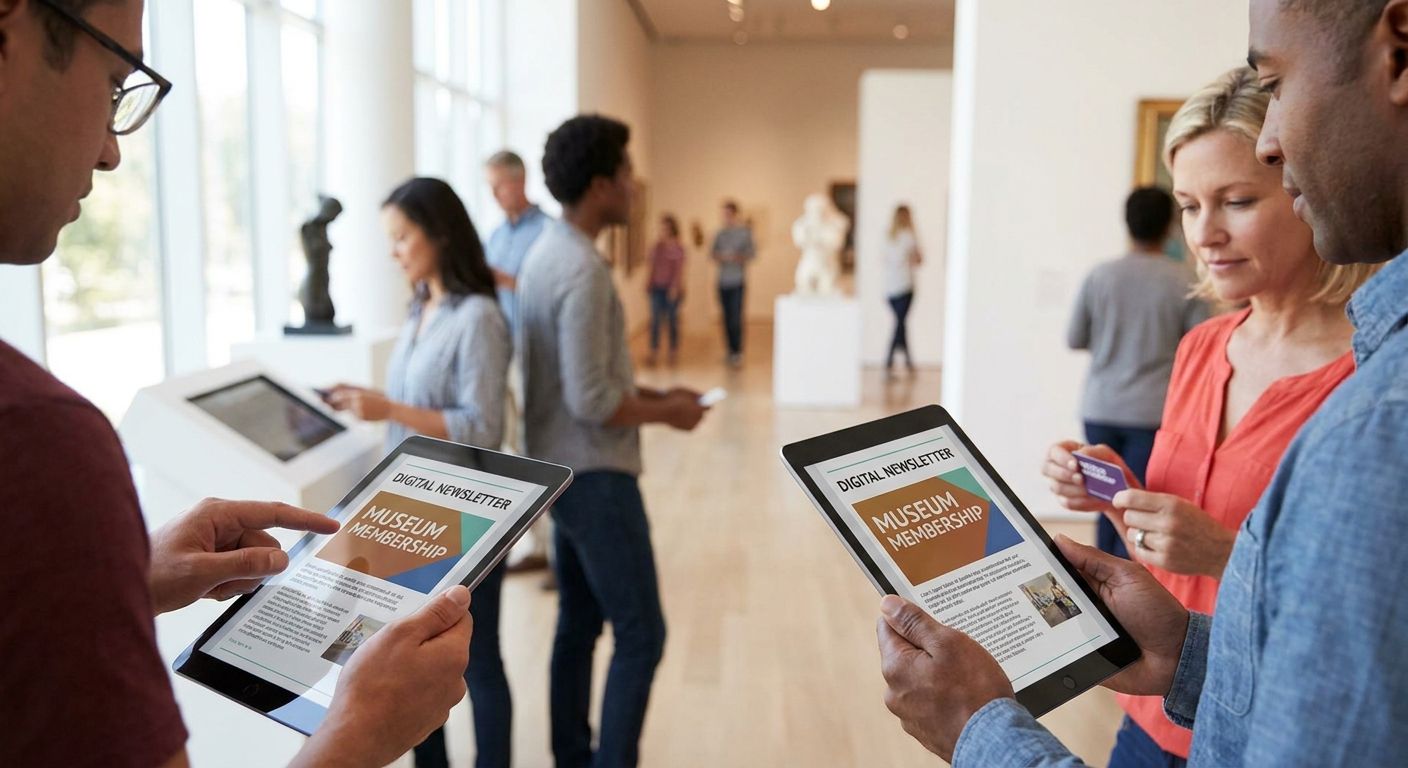
Museums and galleries sell a ticket once and then spend the rest of the year hoping the visitor comes back. Retention marketing for museums and galleries fixes that gap — turning single-visit footfall into memberships, repeat bookings and word-of-mouth that paid media can't buy.
- Tiered membership renewal beats one-size-fits-all loyalty schemes for museums and galleries in 2026 — buy it.
- Lifecycle email tied to the exhibition calendar converts first-time visitors into second-time visitors without extra ad spend.
- Generic retail-style points programs are a skip for museums — visitors don't return for points, they return for access.
- FullyBooked has generated £85M+ in ticketing revenue across 50+ operators, proof retention tactics scale beyond one venue type.
Why this matters
Most museum and gallery marketing budgets go to acquisition — paid social, search, PR around a new exhibition launch. That spend gets first-timers through the door once. It does almost nothing to bring them back for the next exhibition rotation.
Retention marketing for museums and galleries closes that loop. It's the set of campaigns, membership structures and lifecycle emails that turn a single ticket buyer into a repeat visitor across 2026's exhibition calendar. A guide to selling more tickets for your venue or event covers acquisition; this guide covers what happens after the first visit.
The economics are simple: acquiring a new visitor through paid media costs more per booking than reactivating a lapsed one through email or SMS. Museums with rotating exhibitions have a built-in reason to bring people back every few months — most just don't have a system that does it automatically.
Who this is for
This guide is for marketing managers and visitor experience leads at museums, galleries and cultural attractions who already have steady first-visit traffic but see membership renewal rates stall or repeat visitation flatline after a single exhibition. If your venue changes exhibitions quarterly or seasonally, retention marketing is the highest-leverage channel you're not fully using in 2026.
What to look for in retention marketing for museums and galleries
Membership tiers built around visit frequency
A flat annual membership at one price point undersells your most engaged visitors and overprices casual ones. Tiering — individual, family, patron — lets you price for frequency and gives each segment a reason to renew rather than lapse.
Lifecycle email tied to the exhibition calendar
A visitor who saw one exhibition needs a different message than a lapsed member who hasn't visited in eight months. Campaigns built around your actual exhibition rotation outperform generic monthly newsletters because they give people a specific reason to return on a specific date.
First-visit-to-second-visit tracking
If you can't measure how many first-time visitors return within six months, you can't tell if retention spend is working. This is the single metric that separates museums treating retention as a real channel from ones treating it as an afterthought.
Renewal windows with a hard deadline
Open-ended membership renewal gets ignored. A 30-day renewal window before expiry, paired with a clear early-bird incentive, converts meaningfully better than a passive "your membership has expired" email sent after the fact.
Low-cost perks that don't erode margin
Member previews, early access to new exhibition booking slots and quiet-hour entry cost the venue almost nothing to fulfil but carry high perceived value. These outperform discounts, which train visitors to wait for a deal instead of visiting on schedule.
Data capture at the point of purchase
Every retention tactic above depends on having an email address or phone number tied to a real visit. If your ticketing flow doesn't force an opt-in at checkout, none of the lifecycle campaigns above have anywhere to send.
Build a retention plan for 2026
Get a tailored retention strategy for your venue's exhibition calendar.
Top picks: retention tactics that actually work
The anchor play: tiered membership with renewal deadlines
The specific number that matters here is the renewal window — 30 days out from expiry is the point where early-bird pricing starts converting lapsing members instead of losing them. Tiered membership gives casual visitors a low-cost entry point and gives your best visitors a reason to upgrade. Verdict: Buy.
The quiet workhorse: post-visit lifecycle email
A sequence triggered by an actual visit — not a generic monthly send — reminds a first-timer that the next exhibition opens in a specific number of weeks. FullyBooked has run comparable lifecycle sequences for retention marketing at escape rooms, where repeat-visit timing works the same way it does at a gallery: give people a calendar-specific reason to come back. Verdict: Buy.
The reactivation lever: SMS for lapsed members
Email open rates drop off for members who haven't engaged in six months or more. SMS reactivation, timed to a new exhibition launch, reaches people who've stopped opening your emails entirely. It works best as a top-up to email, not a replacement for it. Verdict: Consider.
The high-value niche: patron circles and corporate partnerships
A small patron tier — priced well above standard family membership — with private previews and named recognition converts a handful of high-spend visitors into predictable annual revenue. The tactic that made this work at other high-frequency venues, including retention marketing for climbing gyms, is the same: give your highest-value segment access nobody else gets. It's a small audience, so don't expect it to move overall visitor numbers. Verdict: Consider.
The retail transplant: generic points programs
A points-per-visit scheme copied from retail loyalty programs looks familiar but rarely earns its cost at a museum. Visitors don't come back for accumulated points; they come back because there's a new exhibition or a preview they can't get anywhere else. Verdict: Skip.
“A membership card nobody uses is a discount, not a relationship.”
What to avoid
- Discount-led renewal offers. A 20% renewal discount trains members to wait for a deal instead of renewing on schedule — it treats the symptom, not the reason members lapse.
- Blanket email blasts with no segmentation. Sending the same message to a first-time visitor and a five-year member ignores everything you know about each group and tanks open rates for both.
- Follower counts as a retention metric. Social media growth doesn't track with repeat visitation. Track second-visit rate and renewal rate instead — they're the numbers that tie directly to revenue.
Verdict comparison
| Tactic | Cost to run | Best for | Verdict |
|---|---|---|---|
| Tiered membership + renewal window | Low-medium | Building a repeat-visitor base | Buy |
| Post-visit lifecycle email | Low | First-to-second-visit conversion | Buy |
| SMS reactivation | Low | Lapsed members not opening email | Consider |
| Patron circles / corporate tiers | Medium | High-value, low-volume revenue | Consider |
| Generic points programs | Medium-high | Rarely worth it for museums | Skip |
FAQ
What is retention marketing for museums and galleries?
Retention marketing for museums and galleries is the set of campaigns — membership tiers, lifecycle email, SMS reactivation — built to bring first-time visitors back for repeat visits in 2026. It's distinct from acquisition marketing, which focuses on getting new visitors through the door.
How much does membership renewal typically improve with a deadline-based approach?
A hard renewal window, typically 30 days before expiry paired with an early-bird incentive, converts meaningfully better than an open-ended renewal reminder sent after the membership has already lapsed. The exact lift depends on your current baseline.
Is SMS or email better for reactivating lapsed museum members?
Email works for engaged members who still open your messages; SMS reaches the segment that has stopped opening email entirely. Most museums in 2026 run both, using SMS as a top-up rather than a replacement.
Do loyalty points programs work for museums and galleries?
Generally no — points-per-visit schemes copied from retail rarely justify their running cost at a museum. Visitors return for new exhibitions and member-only access, not accumulated points.
What's the highest-leverage retention channel for a museum with rotating exhibitions?
Lifecycle email tied directly to the exhibition calendar is the highest-leverage channel because it gives a specific, dated reason to return rather than a generic reminder.
How do you measure if museum retention marketing is working?
Track first-visit-to-second-visit conversion and membership renewal rate. If you can't measure the former, you can't tell whether any retention campaign is actually working.
Should museums build a patron or corporate membership tier?
A patron tier makes sense once you have a base of repeat visitors and want a small, high-value segment paying significantly more for private previews and recognition. It won't move overall visitor volume but adds predictable annual revenue.
What retention mistake do most museums make in 2026?
Sending the same email to every visitor regardless of visit history. Segmenting first-timers from lapsed members from active members is the single biggest lever most venues haven't pulled yet.
One last thing
The venues getting the most out of retention marketing for museums and galleries in 2026 aren't the ones with the biggest membership database — they're the ones capturing an email or phone number at every single ticket purchase, including free and comped entries. A membership list that only includes paying members misses every visitor who might have converted with the right follow-up.


